
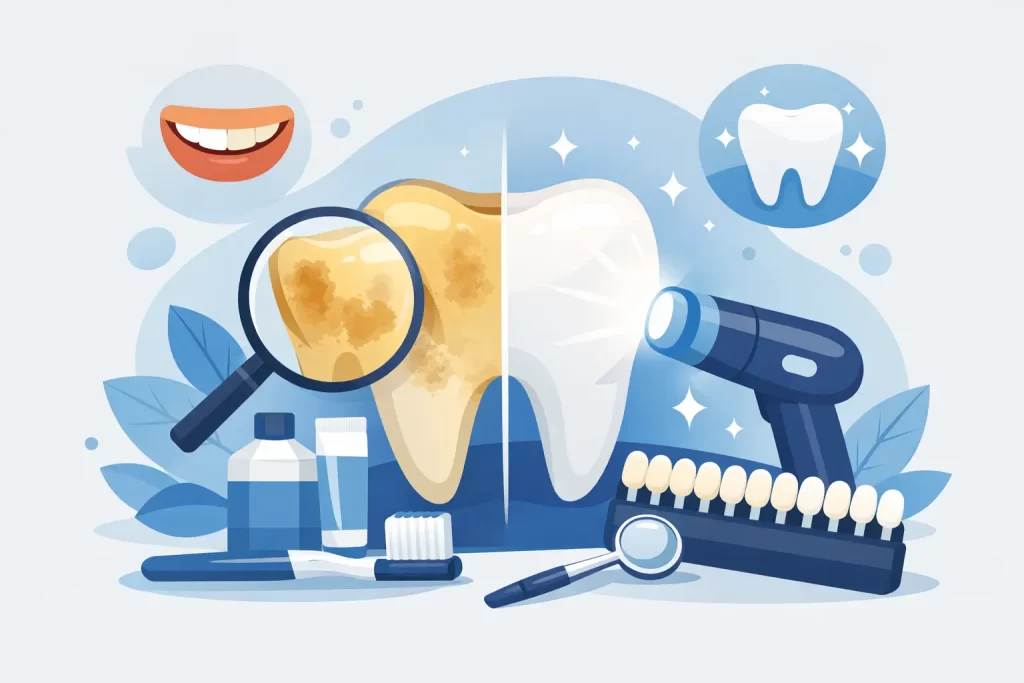
How to Fix Stained Teeth the Right Way
Coffee in the morning, tea in the afternoon, red wine at dinner – stains can build up slowly until one day your smile looks duller than you remember. If you are wondering how to fix stained teeth, the best answer depends on what caused the discoloration in the first place. Some stains sit on the surface and respond well to cleaning or whitening, while others go deeper and need a more customized dental solution.
That distinction matters because not every whitening product is the right fit for every smile. If the stain is external, a simple polish or supervised whitening treatment may make a visible difference. If the tooth is dark because of injury, old dental work, enamel wear, or internal discoloration, stronger whitening alone may not give you the result you want.
How to fix stained teeth starts with the cause
Stained teeth are not all the same, and treating them as if they are can waste time and money. Surface stains, also called extrinsic stains, are often linked to coffee, tea, tobacco, deeply pigmented foods, and inconsistent brushing. These usually affect the outer layer of the tooth and are often the easiest to improve.
Internal stains are different. These can happen after trauma, certain medications, aging, enamel thinning, or changes inside the tooth itself. In some cases, a tooth may appear darker because it is no longer healthy. That is why a proper dental assessment is so useful before you buy another whitening product and hope for the best.
A dentist can often tell whether the issue is buildup, staining, decay, a failing filling, or something deeper. With digital imaging and a close clinical exam, the treatment plan becomes much more precise. That means less guesswork and a better chance of seeing an improvement you are actually happy with.
What you can try at home first
If your teeth have gradually picked up everyday staining, a few home care changes can help. Brushing twice a day with a whitening toothpaste may lift mild surface discoloration over time. These products do not bleach the teeth dramatically, but they can help remove fresh stains and keep your smile brighter between professional cleanings.
Your toothbrush habits matter too. A soft-bristled brush, gentle technique, and enough time at the gumline can make a real difference. Stains and plaque often collect in the same places, especially around the edges of the teeth and near existing dental work.
It also helps to be realistic about stain sources. If you drink coffee, tea, cola, or red wine often, your teeth will usually pick up some discoloration again after whitening. That does not mean treatment failed. It just means maintenance matters. Rinsing with water after dark beverages, using a straw when appropriate, and keeping up with cleanings can slow the return of stains.
Home whitening strips or trays may also help with mild to moderate staining, but results vary. Some people see a noticeable brightening, while others experience patchy results or sensitivity. If your teeth are already sensitive, if you have crowns or fillings on front teeth, or if one tooth is much darker than the others, it is smart to get advice before starting.
When professional cleaning is enough
Sometimes stained teeth do not need whitening at all. They need a thorough scale and polish.
Plaque, tartar, and surface buildup can make teeth look yellow or brown even when the natural tooth shade has not changed much. A professional cleaning removes deposits that regular brushing cannot fully reach, especially in tight spaces and along the gumline. After that visit, many patients notice their smile looks fresher and brighter without any bleaching treatment.
This is often the best first step because whitening works better on clean tooth surfaces. If tartar or stain buildup is still present, you may not get even results. A cleaning also gives your dentist a chance to check for gum irritation, early decay, worn enamel, or old restorations that could affect the next step.
Professional whitening offers faster, more even results
If the goal is to noticeably brighten natural teeth, professional whitening is usually the most reliable option. It is designed to lift stains more effectively than over-the-counter products, and it is done with your comfort and safety in mind.
In-office whitening can be a good choice for patients who want a quicker result. Take-home professional systems are also popular because they offer more control and can be easier for patients with sensitivity. Neither option is automatically best for everyone. It depends on your starting shade, your schedule, your budget, and how your teeth respond.
One important point many people do not realize is that whitening does not change the color of crowns, veneers, fillings, or bonding. If those restorations are on visible teeth, the surrounding natural enamel may lighten while the dental work stays the same. That can create a mismatch. In those cases, your dentist may recommend a different cosmetic approach or plan whitening before replacing older restorations.
How to fix stained teeth when whitening is not enough
There are times when whitening helps only a little, or not at all. This is common with deeper internal staining, uneven discoloration, fluorosis, dark spots from trauma, or old restorations that affect the look of the smile.
That is where cosmetic and restorative dentistry can make a major difference. Bonding may improve small discolored areas, especially if the problem is localized. Veneers can cover more stubborn stains and reshape the smile at the same time. Crowns may be the better option when a tooth is both discolored and structurally damaged.
This is a good example of why the right answer is not always the simplest or cheapest one upfront. A whitening kit may sound easier, but if the stain is tied to a cracked tooth, leaking filling, or non-vital tooth, the real fix is addressing the health issue first. A smile can only look its best when the underlying tooth is healthy and stable.
A dark single tooth deserves extra attention
If one tooth is much darker than the others, do not assume it is a normal stain. A single dark tooth can sometimes point to previous injury, internal damage, or a nerve problem inside the tooth.
That does not always mean severe pain or an emergency, but it does mean you should get it checked. In some cases, root canal therapy followed by internal whitening or a crown may be recommended, depending on the tooth and its condition. In others, the tooth may simply need monitoring or cosmetic improvement. The key is not to ignore a sudden or isolated color change.
Avoid harsh shortcuts
Patients are often tempted by viral whitening hacks, abrasive charcoal products, or repeated use of strong bleaching agents. These can do more harm than good.
Scrubbing the teeth with abrasive powders may wear away enamel and make teeth look even more yellow over time as the underlying dentin shows through. Overusing whitening products can also trigger sensitivity and gum irritation. If your teeth already feel sharp with cold drinks or brushing, pushing through with stronger products is rarely the right move.
A safer approach is to work with a dentist who can tell you what is realistic for your smile and what will protect your enamel along the way. Good cosmetic results should still support long-term dental health.
How to keep teeth from staining again
Once your teeth are looking better, maintenance becomes the next priority. This part is often less exciting than whitening itself, but it is what helps your results last.
Daily brushing and flossing remain the foundation. Regular professional cleanings help remove buildup before stains become more stubborn. If you smoke or use tobacco, cutting back or quitting can make a significant difference not just for tooth color, but for your gums and overall oral health as well.
For patients who enjoy staining drinks, simple habits help. Drink water afterward, avoid sipping over long periods, and keep recall visits on schedule. If you have had professional whitening, your dentist may also recommend occasional touch-ups to maintain the shade comfortably rather than waiting until the discoloration becomes obvious again.
At Restorative Dental Jamaica, we often remind patients that a brighter smile should still feel like your smile – healthy, natural, and cared for properly. The best results come from choosing treatment that fits your teeth, not just the trend.
If your teeth look stained and you are not sure what will actually work, that uncertainty is completely understandable. Some smiles respond beautifully to a cleaning or whitening treatment, while others need a more tailored plan. The most helpful next step is a professional evaluation that gives you clarity, confidence, and a path forward that makes sense for your teeth.
Leave a reply







Leave a reply