
How Does Teeth Whitening Work?
Coffee in the morning, curry at lunch, a glass of wine at dinner – over time, even healthy teeth can start to look dull. If you have ever wondered how does teeth whitening work, the short answer is this: whitening agents break down stain compounds so teeth appear lighter and brighter. The longer answer matters, especially if you want results that look natural, feel comfortable, and last.
Teeth whitening is one of the most requested cosmetic dental treatments because it can make a noticeable difference without changing the shape of your teeth. It is also a treatment where expectations need to be realistic. Whitening can improve many common stains, but it does not work the same way for every smile.
How does teeth whitening work on real teeth?
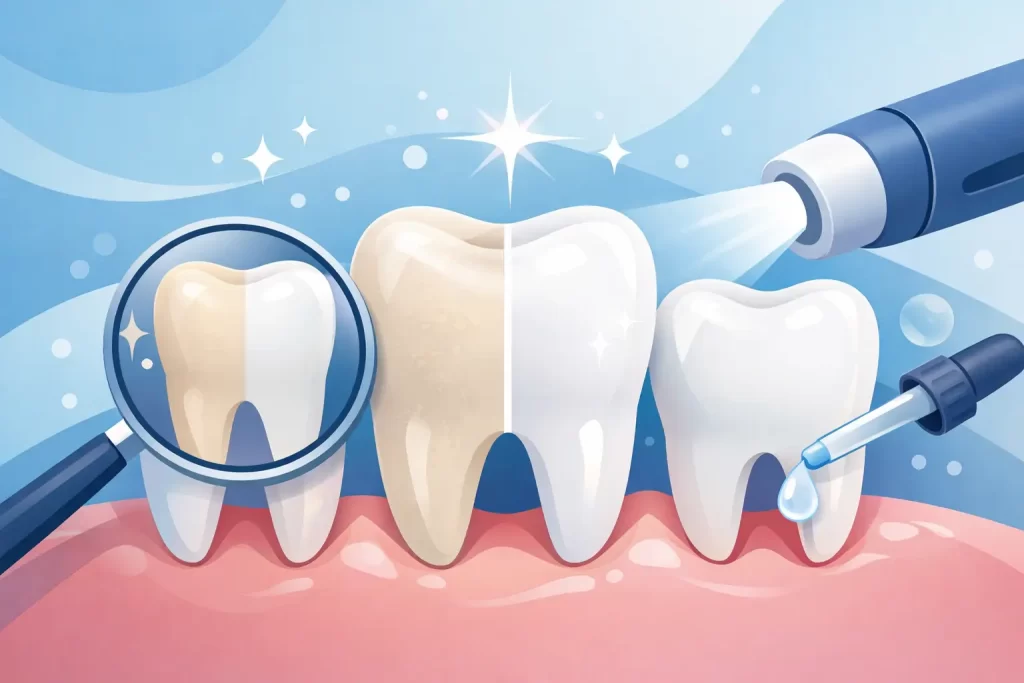
Most whitening systems use either hydrogen peroxide or carbamide peroxide as the active ingredient. These ingredients release oxygen molecules that move into the porous outer layer of the tooth, called enamel, and begin to break apart the compounds causing discoloration.
Think of stains as tiny pigmented particles that settle into the tooth surface over time. Whitening does not scrub them off the way a cleaning removes plaque or tartar. Instead, it chemically changes the stain molecules so they reflect less color. That is why teeth can look several shades lighter after treatment.
This process works best on external stains caused by things like coffee, tea, smoking, dark sodas, and richly colored foods. It can also improve some deeper discoloration, but that depends on the cause. Yellow-toned teeth often respond better than gray or blue-toned discoloration, which can be more stubborn.
Surface stains vs deeper discoloration
Not all staining is the same, and that is where a professional assessment becomes helpful.
Surface stains sit on or near the enamel and are often linked to diet, tobacco use, or inconsistent polishing. These usually respond well to whitening once the teeth are clean. Sometimes what looks like a whitening problem is actually a buildup problem, and a scale and polish is the first step before any whitening treatment.
Deeper discoloration may be related to aging, injury, certain medications, or changes inside the tooth. In those cases, whitening may help only slightly, or a different cosmetic option may give a better result. Bonding or veneers can sometimes be more predictable if the shade change is severe or uneven.
This is one reason whitening should not be treated as one-size-fits-all. The right approach depends on what is causing the color change in the first place.
Professional whitening vs over-the-counter products
Many store-bought whitening products can brighten teeth to a degree, but they are not all equally effective. Whitening strips, toothpaste, pens, and generic trays usually contain lower-strength ingredients than professional systems. That can mean slower results and less dramatic change.
Whitening toothpaste, for example, mostly helps remove surface staining with mild abrasives or polishing agents. It does not usually change the natural shade of the tooth very much. Strips and gels can work better, but they may not fit evenly, which can lead to patchy results.
Professional whitening offers a few clear advantages. The whitening gel is stronger, the application is more controlled, and your dentist can check that your teeth and gums are healthy before treatment begins. If you have cavities, leaking fillings, gum irritation, or exposed roots, whitening without addressing those issues first can lead to unnecessary sensitivity or uneven results.
For many patients, the biggest benefit is guidance. A dentist can tell you whether whitening is likely to work well for your smile, how light you can reasonably expect to go, and whether another cosmetic treatment would serve you better.
What happens during professional teeth whitening?
The exact method varies, but the process is usually straightforward. First, your teeth are examined to make sure whitening is appropriate. Existing dental work matters here because crowns, fillings, veneers, and bonding do not whiten the way natural teeth do. If you whiten your natural teeth, those restorations may no longer match.
If your teeth are a good candidate, the whitening agent is applied carefully while the gums and soft tissues are protected. Some in-office systems use a special light to support the process, while others rely on the gel alone. The appointment may take about an hour, depending on the system used and the level of whitening desired.
There are also professional take-home options with custom trays. These are designed to fit your teeth more precisely than store-bought trays, which helps the gel stay where it should and improves comfort. Take-home whitening can be a very good option for patients who want flexibility or prefer a more gradual change.
Both approaches can be effective. In-office whitening gives faster results, while custom take-home whitening gives you more control over pace and maintenance.
Does teeth whitening damage enamel?
This is one of the most common concerns, and it is a fair one. When used correctly, professional whitening does not strip away healthy enamel. The whitening process changes stain molecules, but it does not drill, scrape, or shave the tooth.
That said, stronger does not always mean better if the treatment is used too often or without supervision. Overuse of whitening products can lead to irritation, dehydration of the teeth, and temporary sensitivity. This is why a personalized plan matters. The goal is a brighter smile, not pushing teeth beyond what is comfortable or appropriate.
A professional approach keeps that balance in mind. At Restorative Dental Jamaica, patient comfort and long-term oral health matter just as much as the cosmetic result.
Why sensitivity can happen after whitening
Some people notice temporary sensitivity after whitening, especially with cold drinks or air exposure. This usually happens because the whitening agent passes through enamel and briefly affects the inner part of the tooth. It can also happen if the gums are irritated by excess gel.
Sensitivity is often short-lived and manageable, but it is not something to ignore. If your teeth are already sensitive, your dentist may recommend adjusting the strength of the gel, shortening treatment time, spacing out applications, or using products that help calm the teeth before and after whitening.
This is another reason professional supervision matters. A treatment that looks simple online can feel very different if you have recession, worn enamel, untreated decay, or cracked teeth.
How long do whitening results last?
Whitening is not permanent. Results can last anywhere from several months to a few years, depending on your habits, the method used, and your starting shade.
If you drink a lot of coffee, tea, red wine, or dark sodas, staining can return faster. Smoking also shortens how long whitening lasts. On the other hand, regular hygiene visits, good brushing habits, and occasional touch-ups can help maintain a brighter smile for much longer.
It also helps to remember that “white” is not a single finish line. The best result is usually one that looks fresh and healthy rather than unnaturally bright. A good whitening plan respects your natural features and aims for an improvement that still looks like you.
When whitening may not be the best option
There are times when whitening should be postponed or avoided. If you have untreated cavities, active gum disease, significant enamel wear, or loose restorations, those issues should come first. Whitening on an unhealthy foundation is rarely a good experience.
Pregnant patients often choose to delay elective whitening as well. And if discoloration is caused by trauma or internal changes in the tooth, whitening alone may not solve the problem.
This is where a dental exam adds real value. Instead of guessing, you get a clear answer about what is causing the discoloration and the safest way to improve it.
How to get the best whitening result
A clean, healthy mouth gives whitening the best chance to succeed. If there is plaque buildup or tartar on the teeth, the whitening agent cannot work evenly. Starting with a professional cleaning often improves both comfort and final shade.
It also helps to be honest about your goals. If you want a subtle refresh before an event, a gentle approach may be enough. If you want a more noticeable cosmetic change, your dentist can recommend whether in-office whitening, custom trays, or another treatment is more suitable.
Patience matters too. Some teeth whiten quickly, while others need a more gradual approach. Pushing too hard usually increases sensitivity without guaranteeing a better outcome.
A brighter smile should feel like a confidence boost, not a gamble. The safest and most satisfying results usually come from understanding what your teeth need first, then choosing a whitening option that matches your smile, your comfort level, and your long-term oral health.
Leave a reply







Leave a reply