
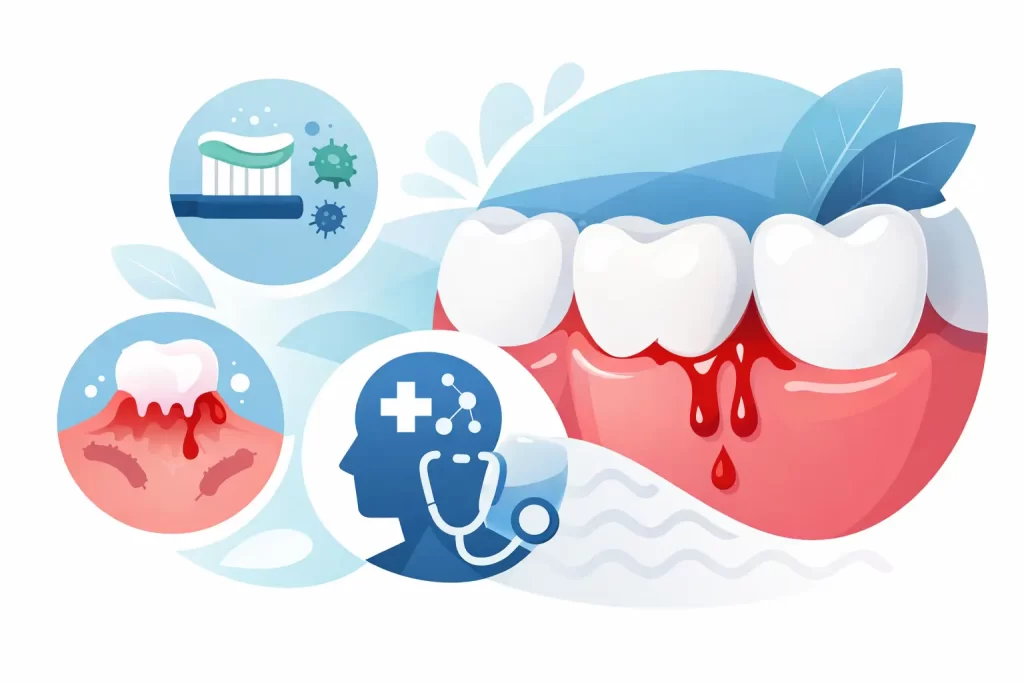
Why Are My Gums Bleeding? Common Causes
You spit into the sink after brushing and see pink in the foam. It is easy to think, maybe I brushed too hard. Sometimes that is true. But if you keep asking, why are my gums bleeding, your mouth may be telling you something that should not be ignored.
Healthy gums do not usually bleed during brushing, flossing, or eating. When they do, it often points to irritation, inflammation, or a problem developing below the surface. The good news is that bleeding gums are common, and in many cases, they can be treated early before they turn into pain, infection, or tooth loss.
Why are my gums bleeding when I brush or floss?
The most common reason is plaque buildup along the gumline. Plaque is a sticky film of bacteria that forms on teeth every day. If it is not removed well with brushing and flossing, it can irritate the gums and cause gingivitis, which is the earliest stage of gum disease.
Gingivitis often starts quietly. Your gums may look redder than usual, feel a little puffy, or bleed when you brush, floss, or bite into certain foods. Many people do not feel pain at this stage, which is why they put it off. That delay matters. Gingivitis can often be managed with professional cleaning and better home care, but if it is left alone, it can progress into a more serious gum infection.
Bleeding can also happen when someone has not flossed in a while and then starts again. That does not mean flossing is the problem. More often, it means the gums are already inflamed and reacting to contact. With proper technique and consistency, healthy gums usually bleed less, not more.
Common causes of bleeding gums
Gum disease is the leading cause, but it is not the only one. Sometimes the explanation is simple, and sometimes it takes a dental exam to sort out what is really going on.
Gingivitis and early gum disease
This is the cause dentists see most often. Plaque and tartar collect around the teeth, bacteria irritate the gum tissue, and the gums become inflamed. If caught early, treatment is usually straightforward. A scale and polishing appointment, combined with better brushing and flossing habits, can make a significant difference.
Brushing too aggressively
A hard-bristled toothbrush or heavy-handed brushing can irritate the gums and even wear away tooth structure over time. People often think scrubbing harder means cleaning better, but gentle and thorough is usually more effective. If your toothbrush looks flattened or frayed quickly, you may be brushing too hard.
Poorly fitting dental work or appliances
Crowns, dentures, aligners, and other dental appliances should feel comfortable and function well. If something is trapping food, rubbing the gums, or making it harder to clean around certain teeth, bleeding can follow. This is one of those situations where a small adjustment can make a big difference.
Hormonal changes
Pregnancy, menstruation, and menopause can all make gums more sensitive and prone to bleeding. Hormones can increase the body’s response to plaque, so even a small amount of buildup may lead to more noticeable inflammation. That does not mean bleeding should be ignored. It means gum care becomes even more important during these phases.
Medical conditions and medications
Some people bleed more easily because of blood-thinning medications, certain health conditions, or vitamin deficiencies. Diabetes can also affect gum health and healing. If your gums are bleeding often and your oral hygiene seems good, your dentist may ask about your medical history to help connect the dots.
Smoking and tobacco use
Tobacco can mask some early signs of gum disease, but it also damages gum tissue and affects healing. In some cases, people who smoke may not notice much bleeding until the condition is more advanced. That is one reason regular dental visits matter so much.
When bleeding gums are a sign of something more serious
A little bleeding once in a while is different from gums that bleed frequently, look swollen, or pull away from the teeth. If you notice persistent bleeding, bad breath that does not improve, tenderness, pus, loose teeth, or gum recession, the issue may have moved beyond simple irritation.
Advanced gum disease can affect the tissues and bone that support your teeth. That is where the real risk begins. Teeth can become unstable, sensitivity may increase, and treatment can become more involved. The earlier gum problems are found, the more options you usually have to protect your natural teeth.
This is especially important for busy adults who tend to push dental concerns down the list until something hurts. Bleeding gums are one of those early warning signs that can save you from a much bigger problem later.
What you can do at home right away
If your gums are bleeding, do not stop brushing and flossing altogether. That usually makes the underlying problem worse. Instead, focus on being gentle and consistent.
Use a soft-bristled toothbrush and angle it toward the gumline without scrubbing. Brush twice a day for two minutes. Floss carefully once a day, especially around areas where food tends to get trapped. If your gums are sore, that first week of improved cleaning may still bring some bleeding, but it should start to ease as inflammation goes down.
You can also rinse with warm salt water to soothe irritated tissue. Staying hydrated helps, and reducing sugary snacks can cut down on plaque buildup. If you smoke, cutting back or quitting will help your gums heal and improve the long-term health of your mouth.
Still, home care has limits. If tartar has already hardened around the teeth, brushing alone cannot remove it. That is where a professional cleaning becomes essential.
Why a dental exam makes a difference
When patients ask why are my gums bleeding, the answer is not always visible in the mirror. A dental exam helps identify where inflammation is starting, whether there is plaque or tartar below the gumline, and whether another issue is contributing, such as a damaged filling, a failing crown, or crowding that makes cleaning difficult.
Modern dental technology can make this process more precise and more comfortable. Digital x-rays and intraoral cameras help show what is happening beneath the surface and allow patients to see the problem clearly for themselves. That kind of clarity matters. It helps people make confident decisions about treatment instead of guessing and hoping the issue goes away.
At a family-focused practice like Restorative Dental Jamaica, the goal is not just to stop the bleeding for the moment. It is to protect the teeth, calm the gums, and create a practical plan that fits your needs and your schedule.
Treatment depends on the cause
There is no one-size-fits-all answer for bleeding gums. If the issue is mild gingivitis, a professional cleaning and improved home care may be enough. If gum disease has progressed, deeper cleaning and closer follow-up may be recommended.
If the problem is mechanical, such as a rough edge on a restoration or a denture that no longer fits well, correcting that irritation may solve the issue. If dry mouth, medication use, or a medical condition is playing a role, treatment may include a combination of dental care and coordination with your physician.
That is why self-diagnosing can be misleading. Two people can both have bleeding gums and need very different solutions.
How to help prevent bleeding gums going forward
Prevention is usually simpler than treatment. Regular checkups and cleanings matter because they catch early changes before they become expensive or uncomfortable. Daily brushing and flossing are still the foundation, but technique matters just as much as frequency.
It also helps to replace your toothbrush regularly, keep up with dental work that needs maintenance, and avoid waiting until there is pain. Gums often send signals early. Bleeding is one of the clearest ones.
If you have braces, aligners, crowns, bridges, or dentures, your cleaning routine may need a few adjustments. A dentist or hygienist can show you how to clean effectively around the areas that are easiest to miss.
Seeing blood when you brush can be unsettling, but it is also useful information. Your gums are asking for attention, not punishment. A calm, timely response can often stop a small issue from becoming a serious one. If your gums have been bleeding more than once or twice, it is worth having them checked while the fix is still simple.
Leave a reply








Leave a reply