
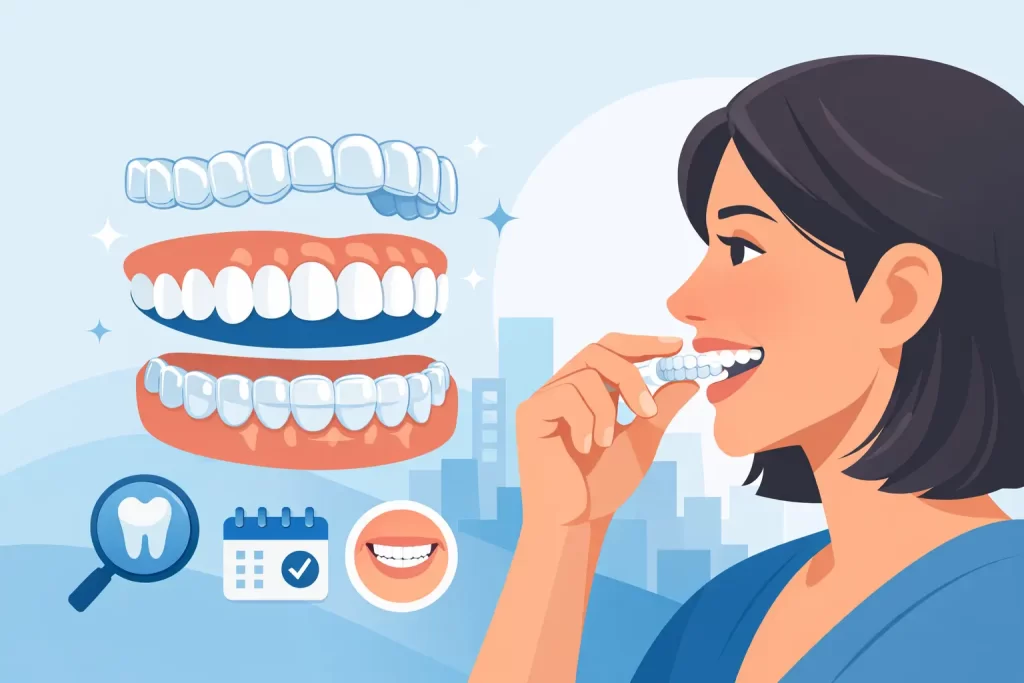
Clear Aligners for Adults: What to Expect
You do not have to be a teenager to want straighter teeth. Many people ask about clear aligners for adults because they want a more confident smile without the look and feel of traditional braces. For working professionals, parents, and anyone with a busy schedule, the appeal is easy to understand – the treatment is discreet, removable, and designed to fit more comfortably into everyday life.
Why adults choose clear aligners
For many adults, orthodontic treatment is not just about appearance. Crowded or uneven teeth can make brushing and flossing more difficult, which may increase the risk of plaque buildup, gum irritation, and wear on certain teeth. In some cases, bite issues can also contribute to discomfort or uneven pressure when chewing.
That is why clear aligners often appeal to adults who want both cosmetic and practical benefits. They are transparent trays that gradually guide teeth into better positions over time. Because they are removable, many patients appreciate being able to eat normally, brush more thoroughly, and attend meetings or social events without feeling self-conscious about metal brackets and wires.
Adults also tend to value predictability. Clear aligner treatment usually starts with a detailed assessment, digital imaging, and a personalized plan that maps out tooth movement in stages. That planning process can help patients feel informed and comfortable before treatment even begins.
Are clear aligners for adults a good fit?
Clear aligners for adults can be an excellent option, but the right answer depends on your teeth, your bite, and your consistency. Some patients are ideal candidates because they have mild to moderate crowding, spacing, or relapse after previous orthodontic treatment. Others may have more complex bite concerns that are better treated with braces or a different approach.
This is where a proper dental assessment matters. Teeth do not move in isolation. The health of your gums, the condition of your enamel, any existing fillings or crowns, and your overall oral health all play a role in determining whether aligners are appropriate. If there is untreated decay or gum disease, those issues should be addressed first.
Commitment is another important factor. Aligners only work as planned if they are worn for the recommended number of hours each day, often around 20 to 22 hours. If you know you are likely to remove them often and forget to put them back in, treatment can take longer and results may be affected.
What clear aligner treatment usually involves
The process is usually straightforward, which is part of why adults find it manageable. It begins with a consultation, where your dentist examines your smile, discusses your goals, and determines whether clear aligners are suitable. Digital scans or impressions are then used to create a series of custom trays.
Each set of aligners is worn for a specific period before moving on to the next one. As you progress through the series, your teeth shift gradually. You will also have periodic check-ins so your dentist can monitor progress and make sure everything is tracking properly.
Some cases are simple and move efficiently. Others require attachments, which are small tooth-colored shapes bonded to certain teeth to help the aligners grip and guide movement more precisely. These are common and can make a significant difference in achieving a better result.
It is also worth knowing that treatment does not end the day your teeth look straight. Retainers are typically needed afterward to help maintain your result. Teeth naturally have a tendency to shift over time, especially in adulthood, so retention is a key part of protecting your investment.
Comfort, appearance, and daily life
One of the main reasons adults ask about aligners is comfort. Compared with traditional braces, clear aligners generally feel smoother and less intrusive because there are no brackets or wires rubbing against the cheeks and lips. That said, comfort does not mean you will feel nothing. It is normal to experience pressure for a day or two when switching to a new set. That pressure is usually a sign the trays are working.
Appearance is another major benefit. Aligners are designed to be discreet, which matters to adults who spend their day speaking with clients, attending events, teaching, or being on camera. Most people will not notice them at a glance.
Daily routines do require some adjustment. You will need to remove your aligners before eating or drinking anything other than water. You will also need to clean your teeth before putting them back in. For many adults, that becomes second nature after the first few weeks, but it does require discipline.
The trade-offs adults should know
Clear aligners offer real advantages, but they are not a perfect fit for every lifestyle. Because they are removable, success depends heavily on patient compliance. Traditional braces keep working whether you remember them or not. Aligners only work when they are in your mouth.
They can also be easy to misplace if removed during meals or while out for the day. If you travel often, have a hectic schedule, or snack frequently, you may need to be more intentional about wear time and oral hygiene.
There are also clinical limits. While aligners can treat many alignment concerns very effectively, some severe rotations, jaw discrepancies, or more advanced orthodontic problems may respond better to braces or require a different treatment plan. A trustworthy dentist will explain those limits clearly rather than trying to force every case into the same solution.
How long do clear aligners take?
Treatment time varies. Some adults complete treatment in a matter of months, while others need a year or longer. The timeline depends on how much movement is required, how consistently the aligners are worn, and whether refinements are needed along the way.
Refinements are not unusual. Sometimes, after the initial series is completed, additional trays are needed to fine-tune the final result. That does not mean treatment failed. It simply reflects the reality that teeth can respond a little differently than predicted.
If you are looking for a quick cosmetic improvement, it is best to ask what is realistic for your specific case. Straightening teeth is a process, and the safest results usually come from controlled, steady movement rather than rushing.
Cost and value for adults
Cost is often one of the first questions adults have, and understandably so. The price of clear aligners depends on the complexity of your case, the length of treatment, and the level of planning and monitoring involved. A minor correction is not priced the same as a full-case orthodontic treatment.
What matters most is value. A professionally planned aligner case includes proper diagnosis, clinical oversight, and support if adjustments are needed. That can make a major difference in both safety and final results. Teeth are not something to move casually without understanding the health of the roots, gums, and bite.
For many adults, the investment feels worthwhile because it improves both confidence and function. Straighter teeth can be easier to clean, more comfortable in the bite, and more harmonious in appearance. When treatment is thoughtfully planned, those benefits can last for years.
Choosing the right provider for clear aligners for adults
Experience, technology, and communication all matter. Adults usually want more than a quick cosmetic sales pitch. They want to know whether treatment is truly right for them, what the process will involve, and how their comfort will be handled along the way.
A patient-centered dental office should take time to evaluate your smile carefully, explain your options in plain language, and answer questions honestly. Digital imaging and modern diagnostics can also improve planning and help you understand what is happening with your teeth before treatment starts.
Just as important, your provider should look at the full picture, not only alignment. If you have worn teeth, old restorations, gum concerns, or other dental needs, your plan should reflect that. At Restorative Dental Jamaica, that kind of comprehensive, comfort-focused care is a central part of helping patients make confident decisions about their smiles.
For adults, straighter teeth are not about chasing perfection. They are often about feeling more comfortable when you smile, making oral care easier, and choosing a treatment that fits your life. If clear aligners seem like the right next step, the best place to start is with a conversation that is honest, personalized, and centered on your long-term dental health.
Leave a reply







Leave a reply