
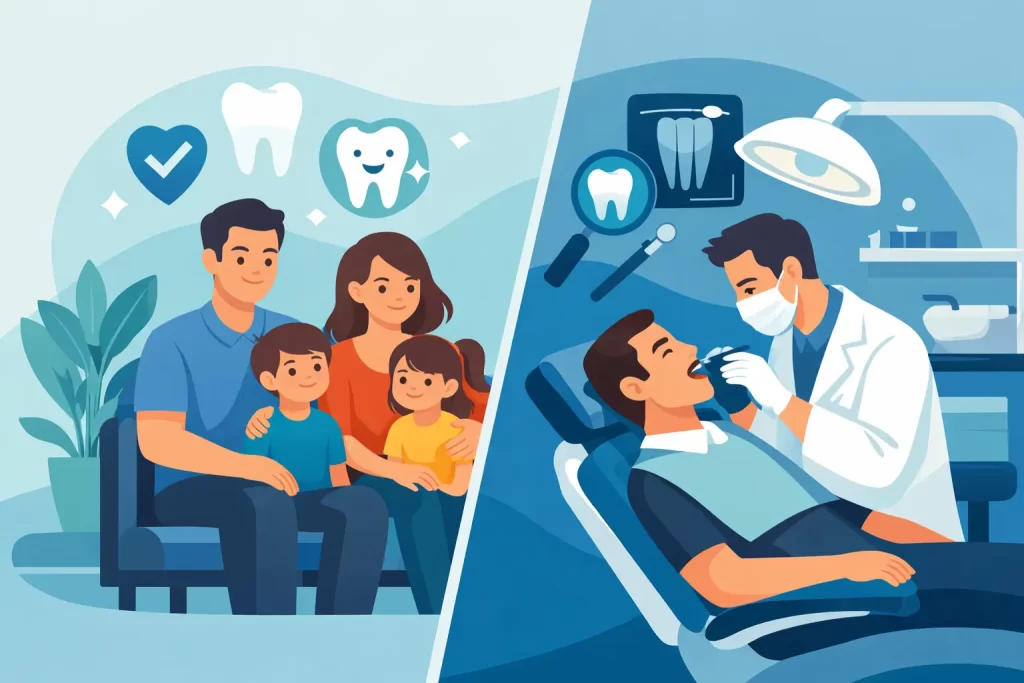
Family Dentist vs General Dentist
If you are trying to choose between a family dentist vs general dentist, the decision usually comes down to one practical question: do you want one dental home for everyone, or are you looking for care tailored to a specific stage of life or treatment need? For many patients, the difference is less about which one is “better” and more about which one fits your routine, comfort level, and long-term goals.
That distinction matters more than people expect. A dental practice is not just where you get a cleaning. It is where cavities are caught early, damaged teeth are restored, cosmetic concerns are discussed, and small issues are often prevented from becoming expensive ones. When you choose the right provider, dental care feels more manageable and a lot less stressful.
Family dentist vs general dentist: what is the difference?
A general dentist provides broad dental care for patients and is usually the first point of contact for routine exams, cleanings, fillings, crowns, extractions, and preventive treatment. General dentistry focuses on maintaining oral health, diagnosing problems, and treating common dental conditions before they worsen.
A family dentist is also a general dentist in terms of training and core services, but the practice is structured to care for patients across multiple age groups, often from young children to older adults. In other words, family dentistry is usually a type of general dentistry with a wider day-to-day focus on serving households rather than individual adults alone.
This is why the comparison can feel confusing. In many cases, the services overlap significantly. Both may offer exams, digital x-rays, white fillings, crowns, gum care, and treatment planning. The real difference often shows up in the patient experience, scheduling flexibility, and how comfortable the office is in managing changing needs through every stage of family life.
What a general dentist typically offers
A general dentist is trained to handle a wide range of common dental needs. That usually includes preventive care such as exams, cleanings, fluoride treatments, and sealants, along with restorative procedures like fillings, crowns, root canal therapy, dentures, and extractions. Many modern general dental offices also provide cosmetic services such as whitening, bonding, veneers, and aligners.
For adults and working professionals, a general dentist may be a very practical fit. If your main focus is maintaining your teeth, fixing damage, improving appearance, or replacing missing teeth, a general practice may already cover everything you need in one place.
This can be especially helpful if you want continuity in restorative care. Patients who need treatment for broken teeth, old fillings, tooth pain, or worn-down smiles often benefit from a dentist who emphasizes preservation and repair, not just routine maintenance. That kind of approach can make a real difference when the goal is to save natural teeth for as long as possible.
When a family dentist may be the better fit
A family dentist is often ideal for households that want simplicity. Parents can schedule multiple appointments on the same day, children can get used to the same office over time, and adults do not have to coordinate care across separate providers unless a specialist is needed.
There is also a comfort factor. Children who grow up visiting the same practice as their parents often feel less anxious about dental visits. That familiarity can encourage better long-term habits, especially when routine checkups start early and feel normal rather than intimidating.
For busy families, convenience matters just as much as clinical skill. Having one office that understands the needs of different age groups can make regular care easier to keep up with. And when dental care becomes easier to keep up with, problems are more likely to be caught early.
Family dentist vs general dentist for adults
Adults sometimes assume a family dentist is mainly for children, but that is not necessarily true. Many family practices offer the same adult services you would expect from a general dental office, including crowns, root canals, dentures, whitening, bonding, and treatment for damaged or decayed teeth.
The better question is whether the office matches your priorities. If you want a calm environment, modern imaging, clear treatment recommendations, and support for both routine and more advanced restorative care, a family-focused practice can still be an excellent choice. In fact, many adults prefer an office that feels warm and welcoming rather than overly clinical.
On the other hand, if a general dentist has a strong focus on the exact treatment you need, that may be the more sensible route. For example, an adult with extensive restorative work may care less about child-friendly scheduling and more about treatment planning, technology, payment flexibility, and preserving as much healthy tooth structure as possible.
What parents should look for
If you are choosing for your household, it helps to look beyond the label. Not every family dentist provides the same level of comfort, communication, or treatment range. Not every general dentist is limited to adults.
What matters is whether the practice can care for the people in your home with consistency and confidence. That means looking at how the office handles preventive care, whether they explain treatment clearly, how they manage nervous patients, and whether they offer services that support your family over time instead of sending you elsewhere for every next step.
A practice with digital x-rays, intraoral cameras, and a patient-centered approach can make care feel more transparent and less overwhelming. Parents often appreciate being able to actually see what the dentist sees, especially when discussing cavities, worn fillings, or early signs of damage.
The overlap is real, but the experience can be very different
This is the part many people miss. The biggest difference in family dentist vs general dentist is not always the procedure list. It is often the experience around the care.
Some offices are designed around efficiency alone. Others are built around comfort, trust, and long-term relationships. If you have ever delayed treatment because the idea of going to the dentist felt stressful, you already know how much that experience matters.
A welcoming waiting area, friendly communication, flexible payment options, and a dentist who takes time to explain your choices are not small details. They can be the reason a patient finally gets the crown, filling, denture, or cleaning they have been putting off for months.
For many patients, especially families and professionals with full schedules, that kind of environment makes it easier to stay consistent with care. And consistency is what helps prevent emergency visits, advanced decay, and avoidable tooth loss.
How to choose the right dentist for your needs
Start with your actual situation, not just the title on the website. If you are a parent managing appointments for children and adults, a family dentist may be the most practical choice. If you are an adult focused on repairing damaged teeth, replacing missing teeth, or improving your smile, a general dentist with strong restorative and cosmetic services may be exactly what you need.
Then consider the office itself. Look at the services offered, the type of technology used, the tone of communication, and whether the practice seems committed to preserving natural teeth whenever possible. That last point matters. Good dental care is not only about treating problems after they happen. It is about catching issues early and helping you keep your own teeth healthy, functional, and attractive for years to come.
It is also worth paying attention to how the practice makes patients feel. Comfortable care is not a luxury. It helps people return for regular visits, ask questions, and move forward with treatment before a small issue turns into a bigger one.
If you are looking for a practice that combines preventive, restorative, and cosmetic care in one welcoming setting, Restorative Dental Jamaica reflects what many patients want from both family and general dentistry – modern treatment, personalized attention, and a strong focus on saving and restoring natural teeth.
The best choice depends on your long-term plan
There is no universal winner in the family dentist vs general dentist question because both can offer excellent care. What matters is whether the practice supports your next step and your future needs. A young professional may need reliable preventive care today and crowns or aligners later. A parent may need one office for cleanings, sealants, fillings, and restorative treatment for multiple family members. Someone recovering from years of neglected dental work may need a dentist who is calm, encouraging, and focused on rebuilding oral health without judgment.
The right dental home should make that path feel clear. You should know what is happening, why it matters, and what your options are. You should feel cared for, not rushed.
If your dentist helps you stay consistent, protects your natural teeth when possible, and gives you confidence in every visit, you are likely in the right place.
Leave a reply








Leave a reply