
Porcelain Veneers Versus Crowns Compared
A chipped front tooth can make you hesitate before a photo. A painful tooth with a large filling can make every meal feel uncertain. Although both treatments can improve a smile, the choice between porcelain veneers versus crowns is not simply about which option looks better. It is about how much healthy tooth structure remains, what the tooth needs to function comfortably, and the result you want to see in the mirror.
At Restorative Dental Jamaica, we believe patients deserve a clear explanation before deciding on treatment. Veneers and crowns can both create beautiful, natural-looking results, but they solve different problems. The right recommendation should protect your long-term oral health as well as your confidence.
Porcelain Veneers Versus Crowns: The Main Difference
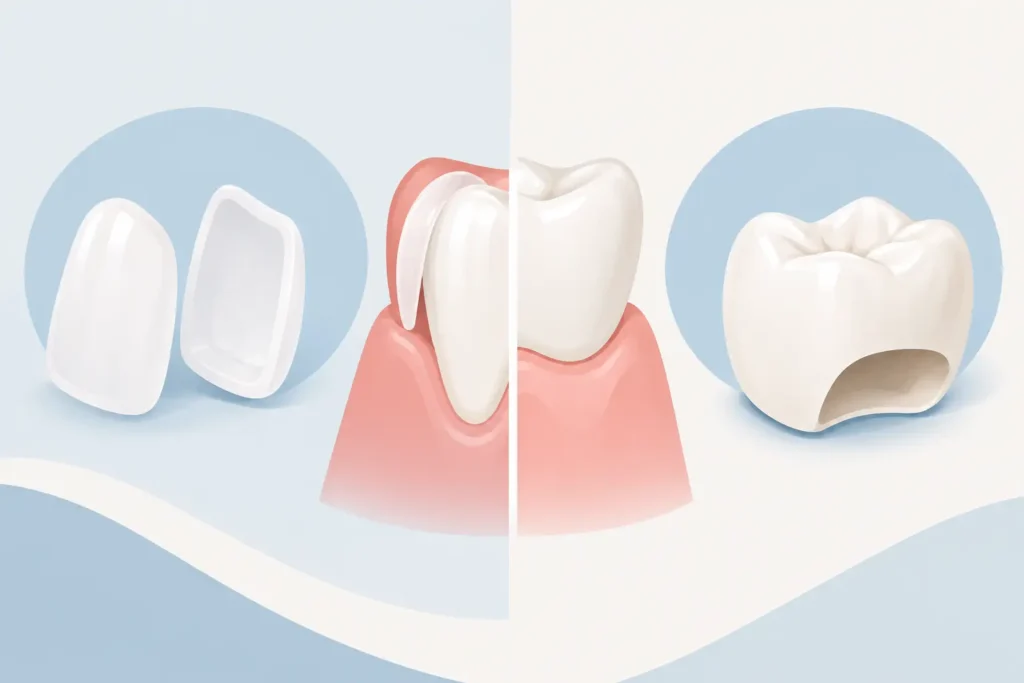
A porcelain veneer is a thin, custom-made shell bonded to the front surface of a tooth. It is primarily a cosmetic treatment, designed to improve the visible appearance of teeth that are otherwise healthy and stable. Veneers are often chosen to enhance color, shape, size, or minor alignment concerns, especially in the front of the smile.
A dental crown, sometimes called a cap, covers the entire visible portion of a tooth above the gumline. Its purpose is more restorative. A crown rebuilds and protects a tooth that has been weakened by extensive decay, a large old filling, a fracture, significant wear, or root canal treatment. It can also improve appearance, but strength and protection are usually the first priorities.
Think of a veneer as a carefully crafted new front surface. A crown is a full protective covering. Both are custom designed to blend with your smile, yet the amount of tooth they cover and the reasons for placing them are very different.
When a Veneer May Be the Better Choice
Veneers are often an excellent option when the tooth is healthy but its appearance is holding your smile back. Porcelain reflects light in a way that can closely resemble natural enamel, allowing a skilled dentist to create a refined, lifelike result.
A veneer may be appropriate for a front tooth with stubborn discoloration that does not respond well to whitening, small chips, uneven edges, minor gaps, or an irregular shape. They may also be considered when several front teeth need a coordinated cosmetic improvement.
Because veneers are thin, they generally require less preparation than a crown. A small amount of enamel is usually shaped to create space for the porcelain and help it sit naturally against neighboring teeth. This is a meaningful advantage when preserving tooth structure is possible.
However, less preparation does not mean no preparation. Traditional porcelain veneers are usually irreversible because enamel must be removed before placement. They also need a sound foundation. If a tooth has deep decay, a large crack, or insufficient healthy enamel, a veneer may not provide the protection it needs.
What veneers can and cannot correct
Veneers can make mild cosmetic concerns far less noticeable, but they are not a substitute for treating disease or structural damage. Active gum disease, untreated cavities, and habits such as tooth grinding should be addressed before cosmetic treatment begins.
They are also not always the best answer for major crowding or bite problems. In some cases, aligners, bonding, whitening, or a combination of treatments may offer a more conservative path. A personalized assessment helps determine whether veneers would enhance your smile without compromising its health.
When a Crown Is the Safer Choice
A crown is recommended when a tooth needs reinforcement. If too much natural structure has been lost, placing a veneer over the front would not stabilize the tooth or protect the remaining walls from further fracture.
Crowns are commonly used after root canal therapy, when a tooth has a very large filling, or when a crack threatens the tooth’s strength. They can also restore teeth that are severely worn, broken, misshapen, or deeply discolored. While porcelain crowns are popular for visible teeth, the material selected may vary based on the tooth’s location, your bite, and the strength required.
For example, a back tooth absorbs considerable chewing force. Your dentist may recommend a highly durable crown material there, while a front tooth may benefit from a material chosen for both strength and natural translucency. The best crown is not necessarily the same for every tooth.
A crown usually requires more tooth shaping than a veneer because it must fit around the entire tooth. That added preparation is worthwhile when the tooth is compromised, but it would be unnecessary for a healthy tooth with a purely cosmetic concern. This is why a careful diagnosis matters more than choosing based on appearance alone.
Appearance, Durability, and Everyday Feel
Both veneers and crowns can be color matched to neighboring teeth. For front teeth, porcelain can deliver a bright yet natural result when the shade, shape, and surface texture are thoughtfully planned. If you are considering whitening, it is often best to whiten natural teeth before selecting the final shade for a veneer or crown. Porcelain does not whiten after it is placed.
With proper care, both restorations can serve you well for many years. Their lifespan depends on oral hygiene, bite pressure, the condition of the supporting tooth, dietary habits, and regular dental visits. No restoration is indestructible. Biting ice, opening packages with your teeth, chewing hard objects, or ignoring nighttime grinding can chip or loosen porcelain.
Many patients are concerned that a restoration will feel bulky or artificial. A properly designed veneer or crown should feel comfortable after you adjust and should work naturally within your bite. If a restoration feels high, catches when you bite, or causes discomfort, contact your dentist rather than trying to wait it out.
The Treatment Process and What to Expect
The process begins with a dental examination. Your dentist will evaluate the tooth, gums, bite, and surrounding structures, often using digital x-rays and intraoral images to see concerns that may not be visible from the outside. This allows treatment to be based on the condition of the tooth, not guesswork.
For either treatment, the tooth is prepared conservatively according to the clinical need. An impression or digital record is then used to create a custom restoration. A temporary may be placed while the final veneer or crown is being made, particularly when the tooth needs protection after preparation.
At the fitting appointment, your dentist checks the shape, shade, bite, and overall appearance before securely bonding or cementing the final restoration. Small adjustments may be made to ensure you can speak, smile, and chew comfortably.
Care Is Similar, but Prevention Matters Most
Veneers and crowns do not decay, but the natural tooth edges and gum tissue around them still need daily care. Brush twice a day with a soft toothbrush and fluoride toothpaste, clean between your teeth every day, and keep regular hygiene and examination appointments. Good gum health is essential to maintaining a natural-looking result at the margin of any restoration.
If you clench or grind your teeth, a custom night guard may help protect both your natural teeth and your dental work. Let your dentist know if you notice sensitivity, a chip, bleeding gums, bad breath, or a change in how your teeth meet. Early attention can often prevent a small issue from becoming a more complex repair.
How to Choose With Confidence
The best choice comes down to the condition of the tooth. A healthy front tooth with a cosmetic concern may be an ideal candidate for a porcelain veneer. A tooth weakened by decay, fracture, or major treatment often needs the full support of a crown. Sometimes a different option, such as whitening, bonding, a filling, or orthodontic treatment, may preserve even more of your natural tooth.
Do not feel pressured to choose a treatment based on a single photograph or a trend. A comfortable, confident smile begins with teeth that are healthy enough to support it. A personal consultation gives you the space to ask questions, understand the trade-offs, and choose care that feels right for your smile and your future.
Leave a reply







Leave a reply