
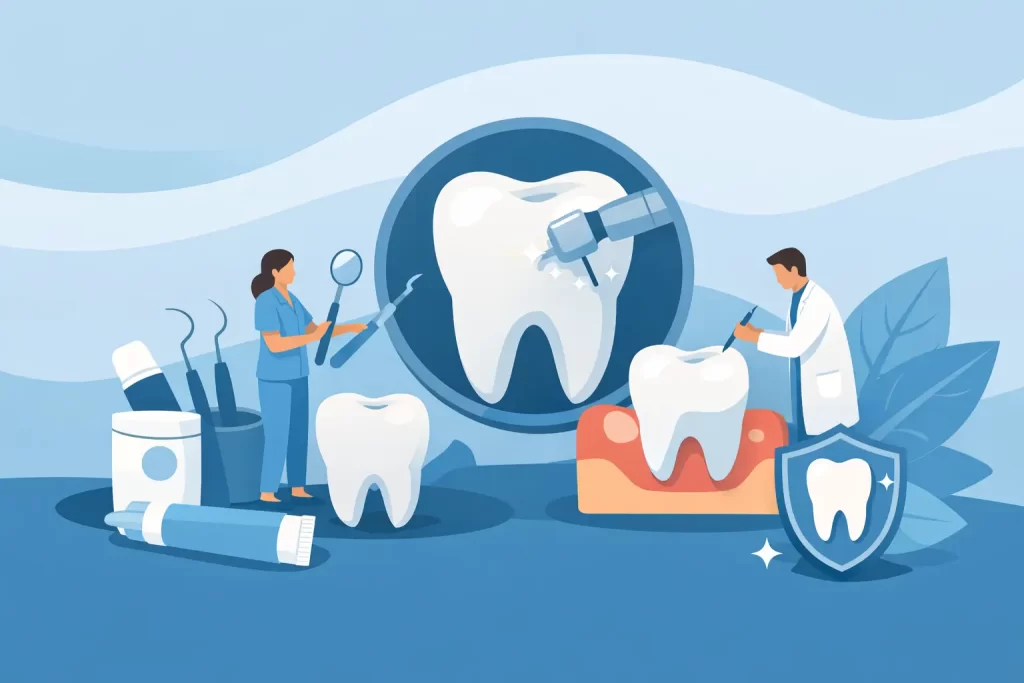
What Is Minor Restorative Dental Care?
A small chip, a new cavity, or a filling that has started to wear down may not feel like a major dental problem at first. But these are often the moments when early treatment makes the biggest difference. If you have been asking what is minor restorative dental care, the simple answer is this: it is dental treatment used to repair small to moderate damage and help keep your natural teeth strong, comfortable, and functional.
Minor restorative care focuses on saving teeth before a problem becomes more complex, more painful, or more expensive to treat. It sits in the space between preventive care, like cleanings and exams, and more advanced procedures, like crowns, root canals, or dentures. For many patients, this type of treatment is one of the most practical ways to protect their smile.
What is minor restorative dental care, exactly?
Minor restorative dental care refers to treatments that repair teeth affected by early decay, small fractures, worn dental work, or minor structural damage. The goal is not cosmetic alone, although appearance often improves. The main goal is to restore the tooth so you can bite, chew, and speak comfortably while preventing further damage.
In everyday terms, this usually means fixing a problem while there is still enough healthy tooth structure to preserve. That matters because preserving natural teeth is almost always the best starting point for long-term oral health.
A tooth does not need to be severely broken to need restorative treatment. In fact, many minor dental issues are easier to treat precisely because they are caught early. A small cavity can often be treated with a filling. A chipped front tooth may be repaired with bonding. An older filling that is leaking may be replaced before decay spreads deeper into the tooth.
Common treatments included in minor restorative dental care
The exact treatment depends on the condition of the tooth, but minor restorative care often includes white fillings, dental bonding, and replacement of small worn or damaged restorations.
White fillings
White fillings are one of the most common minor restorative treatments. They are used to repair teeth affected by cavities or small areas of damage. Because they are tooth-colored, they blend in naturally with your smile, which makes them especially popular for visible teeth.
Beyond appearance, white fillings help restore strength and function. The dentist removes the decayed area, cleans the tooth, and places the filling material to rebuild the shape of the tooth. When treated early, this can be a straightforward appointment that prevents the need for larger treatment later.
Dental bonding
Bonding is often used for small chips, minor cracks, uneven edges, or gaps in certain cases. It can also help restore a tooth that has lost a small amount of structure.
This treatment uses a tooth-colored resin that is shaped and polished to match the natural tooth. It is conservative, meaning less of the natural tooth may need to be altered. That makes it a useful option when the damage is limited and the tooth remains healthy overall.
Replacing old fillings
Not all restorative work is for new damage. Sometimes an older filling becomes loose, worn, cracked, or stained around the edges. When that happens, bacteria can get underneath and start causing decay again.
Replacing a failing filling is still considered minor restorative care if the tooth has not suffered major structural loss. This type of treatment can help you avoid bigger procedures by addressing the problem early.
How minor restorative care is different from preventive care
Preventive care is designed to stop problems before they start. This includes routine exams, digital x-rays, cleanings, fluoride, and sealants. Minor restorative care begins when a problem is already present and needs repair.
The line between the two can be close. A routine dental exam may reveal a small cavity before you feel any pain. The exam itself is preventive, but the filling that follows is restorative. That is why regular visits matter so much. They create the chance to catch small issues at the most manageable stage.
How it differs from major restorative treatment
This is where some confusion happens. Minor restorative dental care usually involves less tooth damage, simpler procedures, and shorter treatment timelines. Major restorative care is needed when there is more extensive decay, deeper infection, significant breakage, or missing teeth.
For example, a small cavity may need only a filling. If decay goes deeper and affects the nerve, the same tooth may later need root canal treatment and a crown. A chipped tooth may be repaired with bonding if caught early, but if a large portion breaks away, a crown may be the better option.
So the difference is not just the name of the procedure. It is the amount of damage, the strength of the remaining tooth, and the level of support needed to restore it properly.
Signs you may need minor restorative dental care
Not every dental problem causes dramatic pain right away. In many cases, the early signs are easy to ignore. You may notice sensitivity when eating something cold or sweet, a rough edge on a tooth, food trapping in one area, or a filling that no longer feels smooth.
Sometimes there is visible discoloration, a tiny hole, or a small chip that was not there before. Other times, the only clue is that something feels different when you bite down.
It also depends on the location of the problem. Damage on a front tooth may be easy to spot, while decay between back teeth may only be seen during an exam or on an x-ray. That is one reason modern diagnostics, including digital imaging and intraoral cameras, can be so helpful. They allow patients to see what the dentist sees and make treatment decisions with more confidence.
Why early repair matters
A minor issue tends to stay minor only for so long. Teeth do not heal themselves the way a small cut on your skin might. Once decay begins or a filling starts to fail, the problem typically worsens over time.
Early restorative treatment can protect more natural tooth structure, reduce discomfort, and often keep treatment simpler and more affordable. It can also lower the chance of infection or tooth loss later on.
There is a practical side to this as well. Busy adults and families often put off dental care because the tooth is not hurting much yet. But waiting for pain can mean waiting until the problem has become more serious. In many cases, the easiest appointment is the one scheduled sooner.
What to expect during treatment
Minor restorative procedures are usually comfortable and efficient, especially when the damage is limited. The visit often begins with an exam and, if needed, digital x-rays to confirm the extent of the issue. The dentist will then explain the findings and recommend the most suitable treatment.
If you need a filling or bonding, the area may be numbed first so you remain comfortable. The damaged portion of the tooth is cleaned away, the tooth is rebuilt with the chosen material, and the shape is adjusted so your bite feels natural.
Most patients return to normal activity the same day. You may have mild sensitivity afterward, depending on the treatment and the tooth involved, but this usually settles quickly.
Is minor restorative dental care ever cosmetic too?
Sometimes yes, but the purpose matters. If a treatment primarily repairs function and structure, it is restorative even if it also improves appearance. Bonding is a good example. It may fix a chip that bothers you when you smile, but it also restores the shape of the tooth and helps protect it.
This overlap is one reason patients often feel encouraged after treatment. You are not only addressing a dental issue. You are also improving how your smile looks and feels in everyday life.
Choosing care that feels comfortable and clear
Many people delay restorative treatment because they worry the process will be stressful or uncomfortable. A calm environment, clear explanations, and a patient-first approach can make a real difference. When care feels personal and unrushed, it is easier to ask questions and move forward with confidence.
At a practice like Restorative Dental Jamaica, that approach matters because dental treatment is not only about fixing a tooth. It is also about helping patients feel informed, comfortable, and supported at every stage.
If you have noticed a small dental problem or you are due for an exam, this is often the right time to address it. Minor restorative care is one of the smartest ways to protect your natural teeth, avoid bigger treatment later, and keep your smile working the way it should.
Leave a reply








Leave a reply