
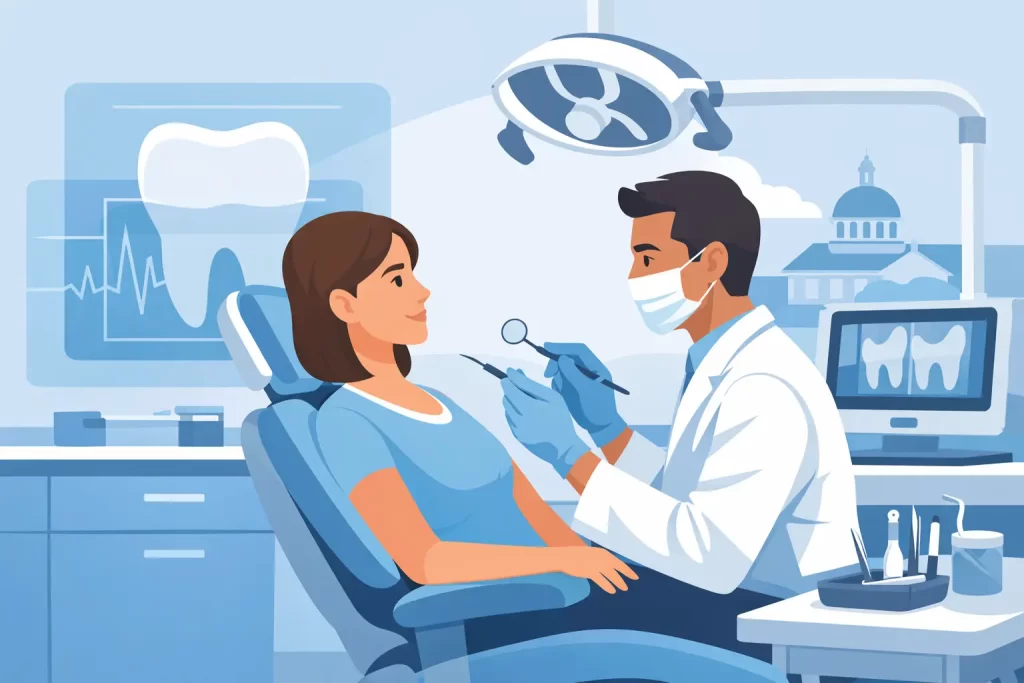
What Happens at a Kingston Dental Assessment?
A tooth that twinges when you drink something cold, gums that bleed while brushing, or a crown that suddenly feels different can be easy to put off. A Kingston dental assessment gives you a calm, clear starting point: an opportunity to understand what is happening in your mouth and what care, if any, will help protect your smile.
At Restorative Dental Jamaica, an assessment is not about rushing you into treatment. It is about listening to your concerns, examining your oral health carefully, and explaining your options in language that makes sense. Whether you are coming in for a routine checkup, managing discomfort, or considering a cosmetic change, you deserve to feel informed and comfortable at every stage.
Why a Kingston Dental Assessment Matters
Many dental problems begin quietly. A small cavity may not hurt until it reaches deeper into the tooth. Early gum disease can cause mild bleeding or bad breath long before teeth begin to feel loose. A crack in a tooth may only be noticeable when you bite down in a particular way.
An assessment helps identify these concerns while treatment can often be more conservative. Preserving as much healthy natural tooth structure as possible is usually the goal. In practical terms, that may mean a small white filling instead of a larger restoration, gum care before disease progresses, or protecting a weakened tooth with a crown before it fractures.
Just as importantly, an assessment can confirm when everything looks healthy. Regular visits offer reassurance, establish a record of your dental health, and make it easier to notice changes over time. For parents, this also helps children build a familiar, positive relationship with dental care rather than only visiting when they are in pain.
What to Expect During Your Kingston Dental Assessment
Your visit should feel personal, not one-size-fits-all. The exact process depends on your dental history, your symptoms, and how long it has been since your last exam, but most assessments include several key parts.
A conversation about your needs
Your dentist will begin by asking about your concerns, medical history, medications, allergies, and past dental treatment. Be open about anything you have noticed, even if it seems minor. Sensitivity, jaw soreness, dry mouth, bleeding gums, broken fillings, and changes in how your teeth meet can all provide useful clues.
This is also the right time to discuss goals that are not related to pain. You may be interested in whitening, closing a small gap with bonding, replacing missing teeth, straightening your smile with aligners, or improving older dental work. Sharing what you would like to change helps shape a plan that considers both health and confidence.
A careful examination of teeth and gums
The clinical exam looks at more than whether you have a cavity. Your dentist checks the condition of your teeth, fillings, crowns, bridges, and any dentures. Your gums are evaluated for signs of inflammation or periodontal disease, while your bite and jaw function may also be reviewed.
The purpose is to understand how all parts of your mouth are working together. For example, a chipped tooth may be caused by an accidental bite, but it can also result from clenching, grinding, or pressure from an uneven bite. Treating the visible chip without addressing the cause may lead to the same problem again.
Digital images when they are needed
Some concerns cannot be seen clearly during a visual examination. Digital x-rays can reveal decay between teeth, changes around roots, bone levels, infection, impacted teeth, and issues beneath existing restorations. Intraoral cameras may also allow you to see close-up images of areas being discussed.
Not every patient needs the same imaging at every appointment. The appropriate approach depends on your age, risk of decay, symptoms, previous dental work, and recent records. When images are recommended, they help your dentist make decisions based on a fuller view of your oral health.
A discussion you can understand
Once the assessment is complete, your dentist should explain what was found, what needs attention now, and what can be monitored. You should leave knowing why a treatment is recommended, what the expected benefits are, and what may happen if you choose to wait.
There is often more than one reasonable option. A damaged tooth may be suitable for a filling, crown, or, in more complex situations, root canal treatment followed by a crown. The best choice depends on the amount of remaining tooth structure, the location of the tooth, your bite, your comfort, and your long-term goals. Clear guidance helps you make a decision with confidence.
Modern Technology, Clearer Decisions
Dental technology should make your care more precise and easier to understand, not more complicated. Digital x-rays provide detailed images with efficient processing, while intraoral cameras can help turn an abstract explanation into something you can see for yourself.
That visual clarity matters when discussing restorative care. If an older filling has worn at the edges or a tooth has a fracture line, seeing the area can make the recommendation feel more transparent. You are not expected to make choices based on unfamiliar dental terms alone.
Technology is valuable, but the human side of care matters just as much. A thorough assessment includes time for questions, a comfortable environment, and a dentist who takes your concerns seriously. Feeling relaxed can make it much easier to keep up with the care your smile needs.
How to Prepare for Your Appointment
You do not need to do anything complicated before a dental assessment. Brushing and flossing as usual is helpful, but there is no need to feel embarrassed if you have not been to a dentist in some time. The most useful preparation is to think about your questions and bring any relevant information you have.
If you have dental insurance, bring the details available to you. If you take prescription or over-the-counter medications, know their names or bring a current list. Let the dental team know if you are pregnant, have a health condition that affects treatment, experience dental anxiety, or have had difficult reactions to anesthesia in the past.
It can also help to keep a short note of symptoms before your visit. Consider when discomfort occurs, whether it is triggered by hot, cold, sweet, or pressure, and whether it is getting worse. A toothache that comes and goes can still require prompt attention, especially if there is swelling, fever, a bad taste, or pain that interrupts sleep.
What Happens After the Assessment?
Some patients only need preventive care, such as a scale and polish, improved home-care guidance, or monitoring at their next visit. Others may need treatment for active decay, gum concerns, a broken tooth, or an infection. If treatment is recommended, you should receive a plan that reflects your priorities and explains the next steps clearly.
For a busy professional, the schedule and number of visits may be a major consideration. For someone with a painful tooth, relief and stabilization may come first. For a patient rebuilding a smile after years of wear or missing teeth, treatment may be planned in stages. Dentistry is most effective when the plan is clinically sound and realistic for your life.
Cost is also a valid part of the conversation. Ask about the treatment sequence, payment options, and which care is urgent versus elective. Delaying a cosmetic enhancement may be perfectly reasonable; delaying an active infection or progressing decay may create more discomfort and more extensive treatment later.
When Should You Book an Assessment?
Routine assessments are valuable even when nothing hurts, but certain signs should not wait. Book promptly if you have persistent tooth pain, facial swelling, a broken tooth, a loose restoration, bleeding gums that do not improve, mouth sores that persist, or pain when chewing. If swelling affects breathing or swallowing, seek emergency medical attention immediately.
You should also consider an assessment before major cosmetic treatment. Whitening, veneers, bonding, and aligners work best when underlying decay, gum disease, bite issues, and existing restorations have been evaluated first. A healthy foundation supports results that look better and last longer.
Your smile does a great deal every day, from helping you enjoy meals to helping you speak and feel at ease around others. Giving it focused attention now can replace uncertainty with a practical plan and a renewed sense of confidence.
Leave a reply







Leave a reply