
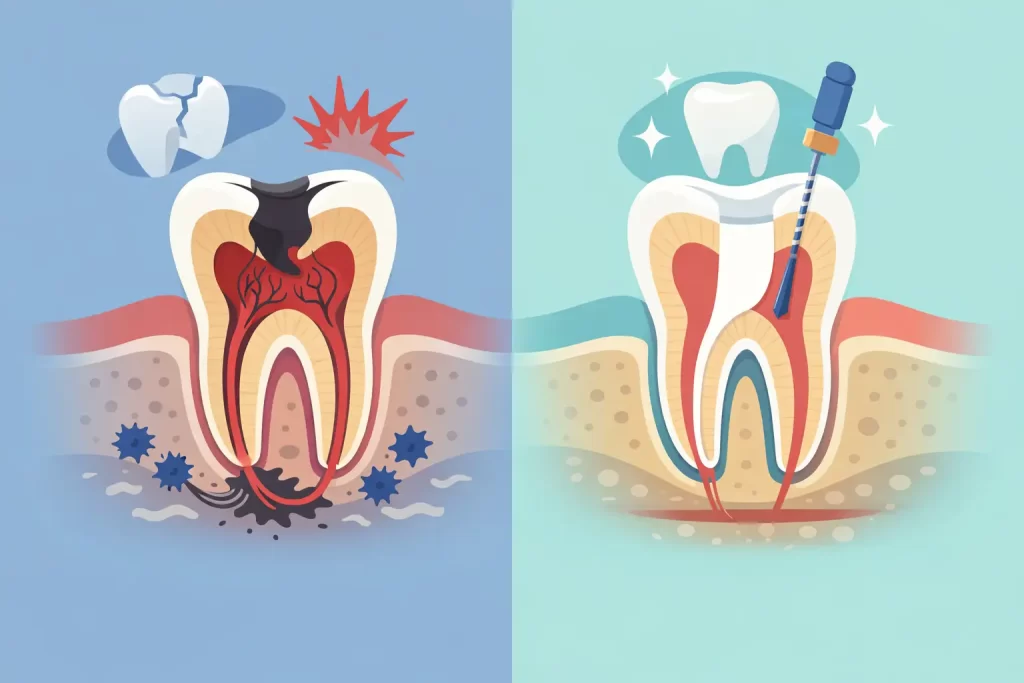
Root Canal Before and After: What Changes?
A tooth that throbs when you drink something cold, hurts when you bite, or keeps you awake at night can make everyday life feel much smaller. The good news is that a root canal before and after treatment often looks very different: pain and uncertainty are replaced by a comfortable, functional tooth that can continue serving your smile for years.
Root canal therapy is designed to preserve a natural tooth when the soft tissue inside it, called the pulp, has become inflamed or infected. Rather than removing the entire tooth, your dentist carefully removes the damaged pulp, cleans and seals the inside of the tooth, and restores its strength and appearance.
Before a Root Canal: What Patients Often Notice
A root canal is not always prompted by severe pain. Some teeth become infected quietly, and the concern is discovered during a routine dental exam or digital x-ray. Still, many patients seek care because something has changed and it is hard to ignore.
You may notice lingering sensitivity to hot or cold foods, pain when chewing, a deep ache that comes and goes, swelling around the gum, or a small pimple-like bump near the tooth. The tooth may also become darker than the surrounding teeth. These signs can happen when deep decay, a crack, repeated dental work, or an injury allows bacteria to reach the pulp.
Not every toothache means you need a root canal. A cavity, gum irritation, a cracked filling, or teeth grinding can create similar symptoms. That is why a careful assessment matters. At Restorative Dental Jamaica, the examination may include digital x-rays and close visual evaluation to identify the source of the problem and recommend the most appropriate way to protect your oral health.
What Happens at Your Appointment
Many people arrive expecting a root canal to be difficult or painful, often because of stories they have heard years ago. Modern root canal treatment is focused on relieving pain, not creating it. Local anesthetic is used to numb the area, and your comfort is checked throughout the visit.
Once the tooth is numb, the dentist creates a small opening to access the infected or inflamed pulp. The inside of the tooth is cleaned, shaped, and disinfected with precise instruments. The canals are then sealed to help prevent bacteria from returning. Depending on the tooth and the complexity of treatment, the restoration may be completed in the same visit or scheduled in stages.
You may feel pressure during treatment, but you should not feel sharp pain. If you are anxious about dental care, let your dental team know before the appointment. A calm explanation of each step, a comfortable setting, and time to ask questions can make a meaningful difference.
Root Canal Before and After: The Changes You Can Expect
The most immediate change after a root canal is often relief. Once the source of infection or inflammation has been treated, the intense throbbing, sensitivity, and pain on biting usually improve. It is normal for the area to feel tender for a few days, especially if the tooth was very painful or infected before treatment. Over-the-counter pain medication may be recommended when appropriate, along with any specific instructions from your dentist.
The tooth itself does not disappear or become “dead” in the way people sometimes imagine. It no longer has living pulp tissue inside, but it remains anchored in the jaw by healthy surrounding tissues. With the right restoration and ongoing care, it can continue to help you chew, speak, and smile naturally.
The appearance after treatment depends on the tooth and the restoration needed. A front tooth may be restored with a white filling or bonding when enough healthy structure remains. Back teeth, which absorb greater chewing forces, often need a crown. A well-made crown covers and protects the tooth while blending naturally with your smile.
Why a Crown May Be Recommended
A root canal treats the inside of a tooth, but it does not automatically restore the outside. Teeth that have had large cavities, old fillings, or extensive decay may be weaker and more likely to crack under pressure. This is particularly true for molars and premolars.
A crown acts like a protective shell around the remaining tooth structure. It is custom designed to support your bite, reduce the risk of fracture, and improve the tooth’s appearance. Not every root canal-treated tooth requires a crown, so the decision depends on the tooth’s location, how much structure remains, and the condition of your bite.
If a temporary filling or temporary crown is placed, avoid chewing hard or sticky foods on that side until your final restoration is complete. This short period of care helps protect the tooth while it is most vulnerable.
The Healing Period: What Is Normal and What Is Not
Most patients return to normal routines quickly. Mild tenderness when chewing can last a few days and occasionally a little longer. This should gradually improve, not become more severe. Keeping the area clean, brushing gently, and following your dentist’s instructions support a smooth recovery.
Call your dental office promptly if you have increasing swelling, severe pain that does not improve, a reaction to medication, or if your temporary restoration comes loose. These concerns do not always mean treatment has failed, but they deserve timely attention.
It is also wise to avoid testing the tooth by biting down forcefully or chewing ice, hard candy, and other hard foods. The goal after a root canal is not merely to feel better for a week. It is to protect the tooth for the long term.
How Your Smile and Daily Life May Feel Afterward
Patients are often surprised by how ordinary the treated tooth feels once healing is complete. You should be able to eat comfortably, speak normally, and brush and floss as usual. A properly restored tooth should fit into your bite without feeling high, bulky, or uncomfortable.
Aesthetically, treatment can be very discreet. Tooth-colored fillings and crowns are selected to complement nearby teeth, helping the restoration look like part of your natural smile rather than an obvious repair. If a tooth had darkened because of prior trauma or infection, your dentist can discuss the best cosmetic options for improving its appearance.
The real before-and-after difference is often confidence. Before treatment, you may be avoiding one side of your mouth, worrying about an unexpected flare-up, or hiding a damaged tooth when you smile. After healing and restoration, the focus can return to enjoying meals, conversations, and daily life without dental pain taking center stage.
Protecting a Tooth After Root Canal Therapy
A root canal-treated tooth needs the same daily care as your other teeth. Brush twice a day with fluoride toothpaste, clean between teeth daily, and attend regular dental exams and cleanings. These habits help prevent new decay around the edge of a filling or crown and allow your dentist to monitor the tooth and surrounding gums.
If you clench or grind your teeth, a custom nightguard may be worth discussing. Grinding places heavy pressure on teeth and restorations, especially during sleep. Likewise, wearing a mouthguard for contact sports can help protect treated and untreated teeth from injury.
No dental treatment can promise that a tooth will never need attention again. A crown can wear, a filling can leak over time, and a new crack can develop. However, prompt treatment, a durable final restoration, and consistent preventive care give a natural tooth its best chance to last.
When to Seek Care Soon
Do not wait for a toothache to become unbearable. Persistent sensitivity, pain when biting, swelling, a broken tooth, or a darkened tooth are all good reasons to arrange a dental assessment. Early care may make treatment simpler and can help preserve more of your natural tooth structure.
A root canal is not a punishment for a damaged tooth. It is often a second chance for that tooth to remain part of your healthy smile. If something does not feel right, a timely, personalized evaluation can replace worry with a clear plan and help you move forward comfortably.
Leave a reply







Leave a reply