
A Guide to Dental Crown Types
You may hear the word crown and assume there is one standard option for every damaged tooth. In reality, this guide to dental crown types can help you understand why your dentist may recommend one material over another, and why the best choice often depends on where the tooth sits, how you bite, and what matters most to you – strength, appearance, cost, or longevity.
A dental crown is a custom-made cap that covers a tooth to restore its shape, strength, and function. Crowns are commonly used after a root canal, to protect a cracked or heavily filled tooth, or to improve the look of a worn or misshapen tooth. They are also placed on top of dental implants in some cases. While the idea is simple, the material selected can make a meaningful difference in how the crown performs over time.
Guide to dental crown types and what sets them apart
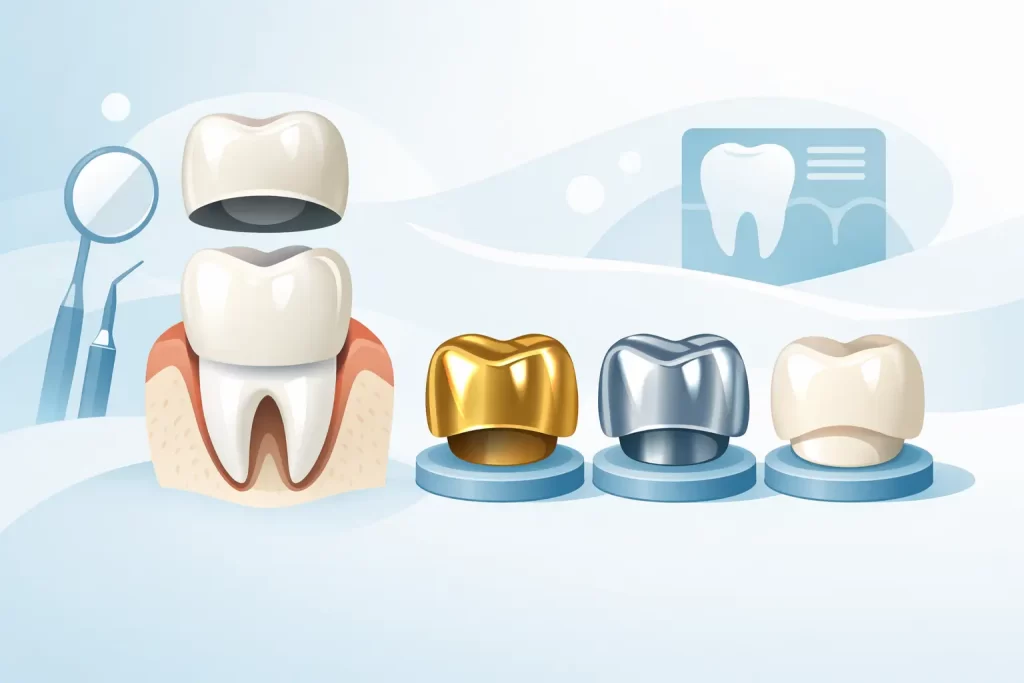
The main crown types most patients will hear about are porcelain, ceramic, porcelain-fused-to-metal, gold or metal alloy, and zirconia. Each has advantages, and none is automatically best for every situation.
Porcelain crowns are chosen largely for appearance. They can be made to blend beautifully with natural teeth, which makes them a popular option for front teeth and visible areas of the smile. If your main concern is a natural look, porcelain is often part of the conversation. The trade-off is that some porcelain crowns may be more prone to chipping than stronger alternatives, especially in patients who grind or clench.
Ceramic crowns are similar in that they offer excellent esthetics and a lifelike finish. Many patients prefer ceramic for front teeth because the material reflects light in a way that can look very natural. Ceramic can also be a good option for people with metal sensitivities. As with porcelain, though, appearance and strength have to be balanced carefully, especially on back teeth that handle heavy chewing forces.
Porcelain-fused-to-metal crowns, often called PFM crowns, combine a metal base with a tooth-colored porcelain outer layer. For many years, this was a very common solution because it offered a middle ground between strength and appearance. These crowns can work well in many parts of the mouth, but they do have some limitations. Over time, the porcelain layer can chip, and in some cases a dark line near the gum may become visible if the metal beneath starts to show.
Metal crowns, including gold alloys and other durable metals, are known for strength and longevity. They tend to hold up very well under pressure and usually require less removal of natural tooth structure than some other crown types. Dentists often appreciate how kind they are to opposing teeth during chewing. The obvious drawback is appearance. Because they do not blend in with natural enamel, they are usually considered more suitable for molars that are not easily seen.
Zirconia crowns have become increasingly popular because they offer impressive strength with a more natural tooth-colored appearance than metal. For patients who want durability without a metallic look, zirconia can be a strong option. Some zirconia crowns are especially useful for back teeth or patients with strong bites. Depending on the exact type used, zirconia may be slightly less lifelike than layered porcelain in very visible front teeth, but it often performs extremely well where strength matters most.
Which dental crown type is best for front teeth?
When a front tooth needs a crown, appearance usually becomes the top priority. Most patients want the crown to match the color, shape, and translucency of nearby teeth as closely as possible. In these cases, porcelain or ceramic crowns are often recommended because they can provide the most natural cosmetic result.
That said, appearance is not the only factor. If you have a history of grinding your teeth, bite your nails, or have already chipped dental work before, your dentist may discuss whether a stronger material would be a safer long-term choice. Sometimes the best-looking crown is not the best-performing crown for your bite.
A careful shade match, digital imaging, and close attention to the contour of the tooth all matter here. A front crown should not just look white. It should look like it belongs in your smile.
Best crown options for back teeth
Back teeth do the hardest work. Molars absorb significant chewing force every day, so strength and durability usually matter more than fine cosmetic detail. Zirconia, metal, and some porcelain-fused-to-metal crowns are common options for these areas.
For patients who want the strongest practical option and do not mind that the tooth is less visible, a metal crown may still be an excellent choice. For patients who want a tooth-colored restoration in the back, zirconia is often appealing because it blends function with a cleaner esthetic. PFM crowns may also still be suitable in certain cases, though they are discussed more selectively today depending on the patient and the location of the tooth.
This is where your dentist’s assessment matters most. A crown that looks good in the short term but struggles under heavy chewing is not a good investment.
How dentists choose the right crown material
A good guide to dental crown types should also explain that crown selection is not just about preference. It is a clinical decision shaped by several factors.
The position of the tooth is important. Front teeth typically need stronger cosmetic results, while back teeth need more bite resistance. The condition of the remaining tooth also matters. A tooth with limited natural structure may need a material that offers more support. If you have had a root canal, your dentist may consider how much reinforcement is needed and whether a buildup or post is part of the treatment plan.
Your bite plays a major role too. Patients who clench or grind can place extraordinary stress on crowns, especially at night. In those cases, a material that performs well under pressure may be preferred, and a night guard may also be recommended to protect the restoration.
Budget matters as well, and that is perfectly reasonable. Different crown materials can vary in cost, and it helps to have an open conversation about what is clinically appropriate and financially comfortable. A caring dental office should help you understand your options clearly, without making the process feel overwhelming.
What about same-day crowns and modern technology?
Some dental offices now use advanced imaging and digital systems to improve crown planning and fit. Digital x-rays and intraoral cameras can help patients see the condition of the tooth and understand why a crown is being recommended. That kind of visibility often makes treatment decisions easier and more reassuring.
Technology does not replace good judgment, but it does support more precise care. A well-fitted crown should feel comfortable, protect the tooth properly, and sit naturally within your bite. If a practice combines modern tools with a patient-centered approach, the experience tends to feel more straightforward and less stressful.
How long do dental crowns last?
There is no single timeline that applies to every crown. Some last well over a decade, and some need replacement sooner. Material choice plays a role, but so do oral hygiene, bite habits, diet, and the health of the tooth underneath.
A crown does not make a tooth indestructible. You still need to brush carefully, floss around the crown, and attend regular dental visits. Decay can still develop at the margin where the crown meets the tooth, and grinding can shorten the life of even a strong restoration.
What patients often find reassuring is this: when a crown is selected thoughtfully and maintained properly, it can restore comfort and confidence in a very dependable way.
Questions worth asking before getting a crown
If you are deciding between crown options, ask what material is being recommended and why. Ask how it will look, how it will wear, and whether there are trade-offs you should know about. It is also reasonable to ask how the crown will fit into your long-term dental health, especially if the tooth has already had significant treatment.
At Restorative Dental Jamaica, these conversations are part of making care feel personal rather than rushed. Patients deserve to understand not only what is being done, but why that option suits their smile, comfort, and daily life.
The right crown should do more than cover a tooth. It should help you chew comfortably, protect what can still be preserved, and let you smile without second-guessing the result.
Leave a reply








Leave a reply