
Restorative Dentistry Services That Last
A chipped tooth after lunch, a filling that suddenly gives way, a dull ache that keeps getting your attention – these are the moments when dental care stops feeling optional. Restorative dentistry services are designed for exactly this point: when a tooth is damaged, weakened, infected, or missing, and you want a solution that feels dependable, comfortable, and built to last.
For many patients, the real concern is not just fixing one tooth. It is whether treatment will be painful, whether the result will look natural, and whether the problem can be handled before it turns into something bigger. That is why restorative care matters. It protects oral health, restores function, and helps you keep your natural teeth whenever possible.
What restorative dentistry services actually include
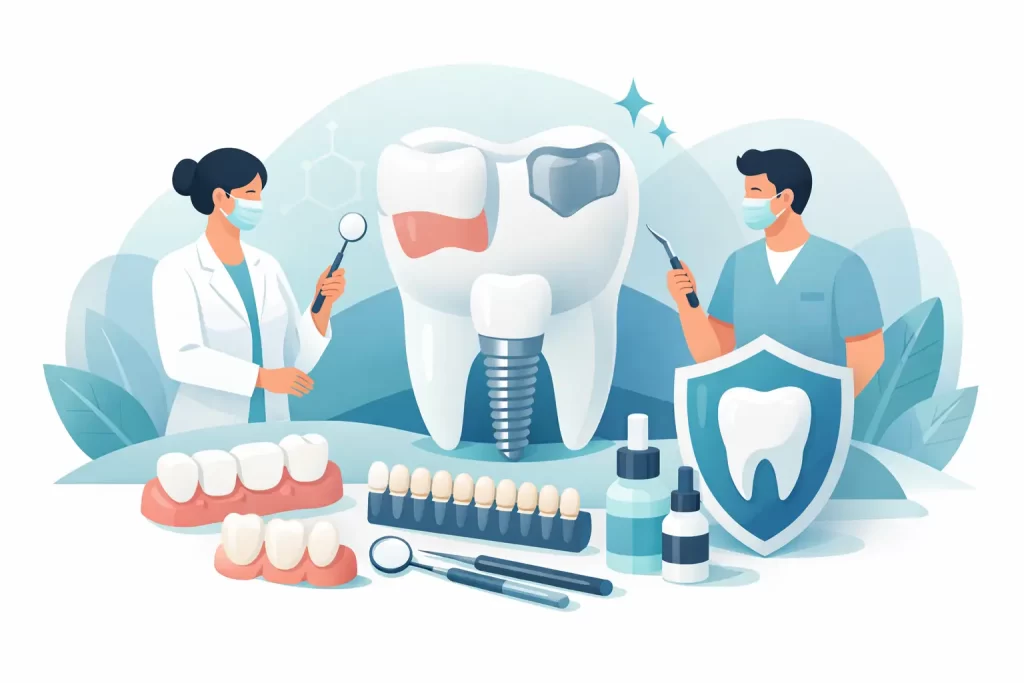
Restorative dentistry services focus on repairing teeth and replacing missing ones so you can chew comfortably, speak clearly, and smile with confidence. Some treatments are small and straightforward, like white fillings for cavities or minor fractures. Others are more involved, such as crowns, dentures, extractions, or root canal therapy when infection reaches deeper inside the tooth.
The common thread is preservation. Good restorative care is not simply about covering a problem. It is about understanding what is happening in the tooth, choosing the right treatment, and preventing further damage. In a family dental office, that often starts with a careful dental assessment, digital x-rays, and clear guidance on what needs attention now versus what can be monitored.
This matters because not every damaged tooth needs the same answer. A small crack may do well with bonding. A heavily weakened tooth may need a crown. A severely infected tooth may be saved with root canal treatment, while a tooth that cannot be restored may need extraction. The right plan depends on the condition of the tooth, your comfort, your long-term goals, and your budget.
When to consider restorative dentistry services
Some people seek care because they are in pain. Others come in because something looks off, feels rough, or has changed gradually over time. Both are valid reasons to book an appointment.
You may benefit from restorative dentistry services if you have tooth sensitivity that is getting worse, pain when chewing, visible cavities, broken or worn teeth, old fillings that are failing, or spaces from missing teeth. If you have been putting off treatment because the problem seems manageable, that is often when a simple fix turns into a more complex one.
There is also a cosmetic side to restorative care. A tooth-colored filling or a well-made crown does more than strengthen a tooth. It can restore the look of your smile in a way that feels natural. For patients who want both function and appearance, restorative and cosmetic goals often overlap.
Why early treatment usually gives you better options
One of the biggest advantages of acting early is choice. When decay is caught early, a white filling may be enough. When damage spreads or a crack deepens, the tooth may need a crown. If infection reaches the nerve, root canal therapy may be the best way to save it. If too much structure is lost, keeping the tooth may no longer be possible.
That does not mean every delay leads to the worst-case scenario. Sometimes a problem remains stable for a while. But in many cases, teeth do not repair themselves, and symptoms can stay quiet even while damage progresses. Early care often means less invasive treatment, lower overall cost, and a better chance of preserving natural tooth structure.
For families and busy professionals, this is often the practical reason to stay current with dental visits. A short appointment today can prevent a much more disruptive one later.
Common treatments and what they help solve
White fillings are often used to repair cavities or small areas of damage. They blend in well with natural teeth and can be a strong choice when enough healthy tooth structure remains. For minor chips or shape corrections, bonding can also offer a conservative solution.
Crowns are used when a tooth is too weak for a filling alone. They cover and protect the tooth, restoring strength and appearance. A crown may be recommended after a large cavity, a fracture, or root canal treatment. It is often the next step when the goal is to save a tooth that still has a healthy foundation.
Root canal therapy is one of the most misunderstood restorative treatments. Patients often worry about discomfort, but the treatment itself is designed to remove infection and relieve pain. If the inside of the tooth becomes inflamed or infected, a root canal can make it possible to keep the tooth rather than lose it.
Dentures help replace missing teeth and restore chewing ability, facial support, and confidence. Depending on the situation, they may replace several teeth or a full arch. The best denture is not just one that fits – it is one that feels stable, functions well, and is made with your day-to-day comfort in mind.
Extractions are sometimes necessary when a tooth cannot be saved. While preserving natural teeth is usually the first priority, removal may be the healthiest choice in cases of severe decay, advanced infection, or certain types of damage. Good restorative care does not stop at the extraction itself. It includes guidance on how to replace the missing tooth or protect the surrounding teeth afterward.
Comfort matters more than people think
For many adults, the biggest barrier to treatment is not cost or time. It is anxiety. A past bad experience, fear of pain, or worry about being judged can keep people away longer than they planned.
That is why the environment and approach of the dental office matter. Modern technology such as digital x-rays and intraoral cameras can make diagnosis more precise and help patients actually see what the dentist is seeing. Clear explanations also build trust. When you understand why a treatment is recommended, what it will involve, and what alternatives exist, it becomes easier to move forward with confidence.
Comfort is not an extra. It is part of quality care. A welcoming office, a calm chairside manner, and a team that respects your concerns can change the entire experience of restorative treatment.
Restoring a tooth versus replacing it
Whenever possible, preserving your natural tooth is usually the preferred route. A healthy natural tooth supports normal chewing, helps maintain bite alignment, and often feels most familiar in daily life. That is why treatments like fillings, crowns, and root canals play such a central role in restorative dentistry.
Still, there are times when saving the tooth is not the best option. If a tooth is severely broken below the gumline, has extensive structural loss, or presents ongoing problems despite treatment, extraction may be more predictable. This is where experience and honest guidance matter. The right recommendation is not always the most aggressive or the most conservative one. It is the one that fits your long-term health.
Patients appreciate knowing the trade-offs. Saving a tooth can be worthwhile, but it may involve more treatment and follow-up. Replacing a missing tooth may restore appearance and function, but it also requires planning. A good dental team will walk you through both sides clearly.
The value of a personalized treatment plan
No two smiles need the same roadmap. One patient may need a simple filling and cleaning. Another may need a crown, periodontal maintenance, and cosmetic improvements over time. Someone else may come in for pain relief and need a phased plan that starts with the urgent issue and spreads the rest of treatment over several visits.
That flexibility is important. Patients want excellent care, but they also need care that fits real life. Scheduling, comfort level, and financial planning all matter. In a patient-centered practice, treatment recommendations should be clear and clinically sound, while still respecting what is realistic for the person in the chair.
At Restorative Dental Jamaica, that balance is part of what makes restorative care feel more manageable. Patients are not just told what is wrong. They are guided through practical options in a setting designed to feel professional, modern, and reassuring.
How to protect your results after treatment
Restorative work lasts longer when it is supported by good daily habits and regular maintenance. Brushing, flossing, and routine professional cleanings help protect fillings, crowns, and surrounding teeth from new decay or gum problems. If you grind your teeth, a protective night guard may also be worth discussing.
It is also smart to pay attention to small changes. A bite that suddenly feels uneven, sensitivity around a restored tooth, or a denture that no longer fits comfortably should not be ignored. These issues are often easier to correct when addressed early.
The best restorative dentistry services do not end when the procedure is finished. They are part of a longer relationship built on prevention, follow-up, and keeping your smile healthy over time.
If something in your mouth has been bothering you, even if it seems minor, getting it checked is a strong first step. A restored tooth can do more than solve a dental problem – it can help you eat, speak, and smile without second-guessing it.
Leave a reply







Leave a reply