
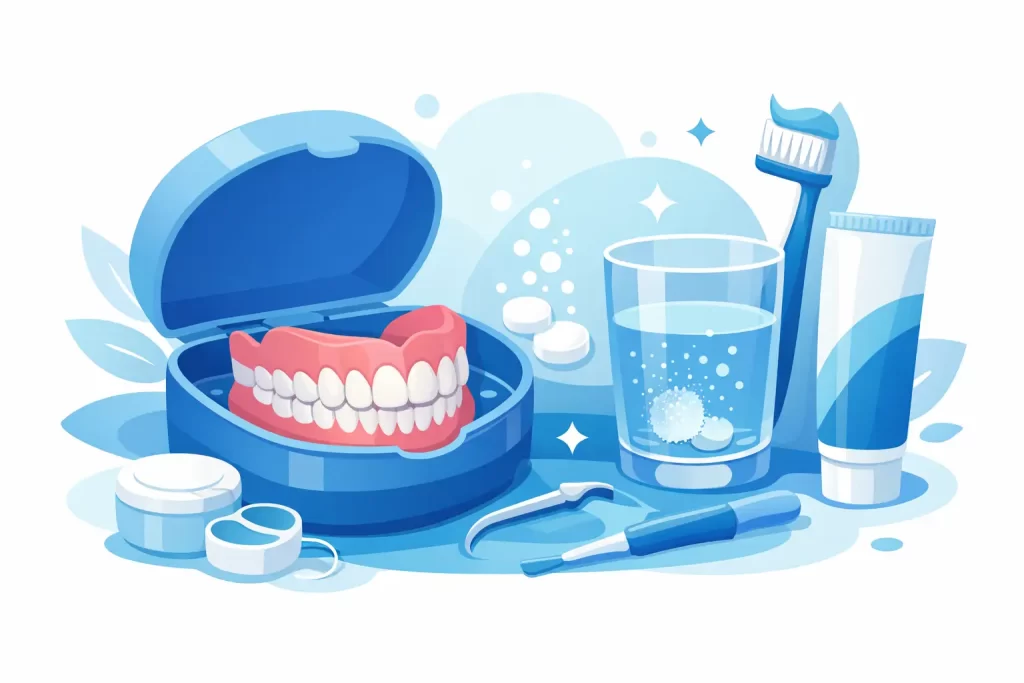
How to Care for New Dentures Properly
The first few days with dentures can feel a little strange. Eating feels different, speaking may take practice, and you may be wondering how to care for new dentures without damaging them or making your mouth sore. The good news is that most of the adjustment comes down to a few steady habits and knowing what is normal in the early stage.
New dentures are an investment in your comfort, appearance, and everyday confidence. Like any dental appliance, they perform best when they are kept clean, handled gently, and reviewed when the fit changes. A careful routine helps protect both the dentures and the tissues underneath them.
How to care for new dentures day to day
Dentures should be cleaned every day, even if they still look clean. Food particles and plaque can collect on the surface, along the edges, and around any metal clasps if you wear a partial denture. If they are not removed properly, this buildup can lead to odor, staining, gum irritation, and a higher risk of infection.
Start by rinsing your dentures after meals when possible. This helps wash away trapped food before it dries onto the surface. When it is time for a full clean, remove them carefully over a folded towel or a sink partly filled with water. Dentures can crack if they slip from your hands onto a hard surface.
Use a soft denture brush or a soft toothbrush with a non-abrasive denture cleanser. Avoid regular whitening toothpaste or harsh scrubbing products, since they can scratch the material. Small scratches may not seem serious, but they can make it easier for plaque and stains to cling to the denture over time.
Clean every surface gently, including the part that sits against your gums. If you have partial dentures, pay close attention to the areas around the clasps and where the denture meets your natural teeth. Those spots tend to trap more debris.
Soaking matters more than many people realize
Most dentures should not be allowed to dry out. When they dry, they can lose their proper shape, and that can affect comfort and fit. Unless your dentist gives different instructions, soak them in water or a denture-soaking solution when they are out of your mouth.
It depends on the type of denture you have, though. Some materials and some metal components need specific care. That is why it is always best to follow the instructions given for your appliance rather than assuming all dentures are treated the same way.
Before putting your dentures back in, rinse them well, especially if you have used a soaking solution. You do not want cleaning residue sitting against the soft tissues of your mouth.
Caring for your mouth is part of denture care
A lot of people focus only on cleaning the denture and forget that the mouth underneath also needs attention. Even if you now wear full dentures, your gums, tongue, cheeks, and palate should still be cleaned daily.
Use a soft toothbrush or clean gauze to gently massage your gums and clean your tongue and the roof of your mouth. This helps reduce bacteria, improves circulation, and can make your mouth feel fresher. If you wear partial dentures, it is even more important to clean your natural teeth thoroughly and floss as recommended. A partial denture sits beside real teeth, so decay and gum disease can still develop if home care slips.
If your dentures were placed after extractions, your dentist may give more specific instructions for those first healing days. In that period, be gentle and do not disturb the tissues more than necessary.
What to expect during the adjustment period
New dentures rarely feel perfect on day one. Mild soreness, extra saliva, a feeling of fullness in the mouth, and slight speech changes are common at first. This does not always mean something is wrong. Your cheeks, tongue, and gums need time to adapt.
Eating usually improves with practice. Begin with softer foods cut into small pieces, and chew slowly on both sides at the same time when possible. That helps keep the denture more stable. Sticky, hard, or very chewy foods can be difficult early on, so it is sensible to reintroduce them gradually.
Speaking can also feel awkward for a short time. Reading out loud at home often helps you get used to the shape of the dentures and train your mouth to form words more naturally.
That said, there is a difference between normal adjustment and a poor fit. If you have sharp sore spots, persistent rubbing, difficulty keeping the dentures in place, or pain that does not improve, it is time for a review.
How to care for new dentures without causing damage
One of the biggest mistakes patients make is trying to fix denture issues themselves. If a denture feels rough, loose, or uncomfortable, do not file it, bend it, or glue it. Household adhesives and do-it-yourself repairs can damage the appliance and irritate your mouth.
Heat is another common problem. Do not soak dentures in hot or boiling water. High heat can warp the material and affect the fit. Once the shape changes, even slightly, comfort and function can suffer.
Be cautious with denture adhesive too. Adhesive can be helpful in some situations, especially during adaptation, but more is not always better. If you feel you need a large amount every day just to keep your dentures stable, that often signals that the fit should be checked rather than covered up.
Eating, drinking, and daily habits
Your routine matters. Dentures last longer and feel better when everyday habits support them.
Limit foods and drinks that stain heavily if appearance is a concern. Coffee, tea, red wine, and tobacco can discolor dentures over time, just as they can stain natural teeth. Good cleaning helps, but prevention still makes a difference.
Stay hydrated, especially if you experience dry mouth. Saliva helps with comfort and denture retention. When the mouth is dry, dentures may feel less secure and tissues may become more irritated.
If you clench or grind your teeth, mention it at your visit. That pressure can affect both natural teeth and dentures, and it may shorten the life of the appliance.
When to remove dentures
Many patients ask whether dentures should be worn all the time. In most cases, your mouth benefits from having a break. Removing dentures at night gives the tissues time to rest and reduces the risk of irritation and fungal infection.
There are exceptions in the very early period after certain extractions or immediate denture placement, when your dentist may advise you to keep them in for a set period. After that, nighttime removal is usually part of healthy denture care.
If you are unsure what applies to your case, ask. A personalized answer is always better than general advice from a friend or the internet.
Regular dental visits still matter
Even if you wear full dentures and no longer have natural teeth, regular dental checkups are still important. Your mouth changes over time. Bone and gum tissues can shrink, which may cause dentures that once fit well to become loose.
A denture that shifts too much can create sore areas, affect chewing, and make speaking less comfortable. Sometimes a simple adjustment or reline is all that is needed. Waiting too long can make small problems more frustrating than they need to be.
Routine visits also give your dentist a chance to examine the soft tissues of your mouth and check for signs of irritation, infection, or other concerns. Good denture care is not only about the appliance. It is also about protecting your long-term oral health.
At a patient-focused practice like Restorative Dental Jamaica, that follow-up care is part of helping you feel comfortable, informed, and confident as you adjust.
Signs you should book an appointment
If your dentures click when you talk, slip when you eat, cause repeated sore spots, or suddenly feel different, do not ignore it. The same applies if you notice cracks, chips, a persistent bad odor despite cleaning, or changes in your gums.
A professional adjustment is usually quick and far safer than trying to manage the issue on your own. Small corrections can make a major difference in comfort.
Learning how to care for new dentures is really about consistency. Clean them gently, clean your mouth just as carefully, protect the fit, and speak up when something does not feel right. The adjustment takes a little patience, but with the right care, dentures can become a comfortable and reliable part of daily life.
Leave a reply







Leave a reply