
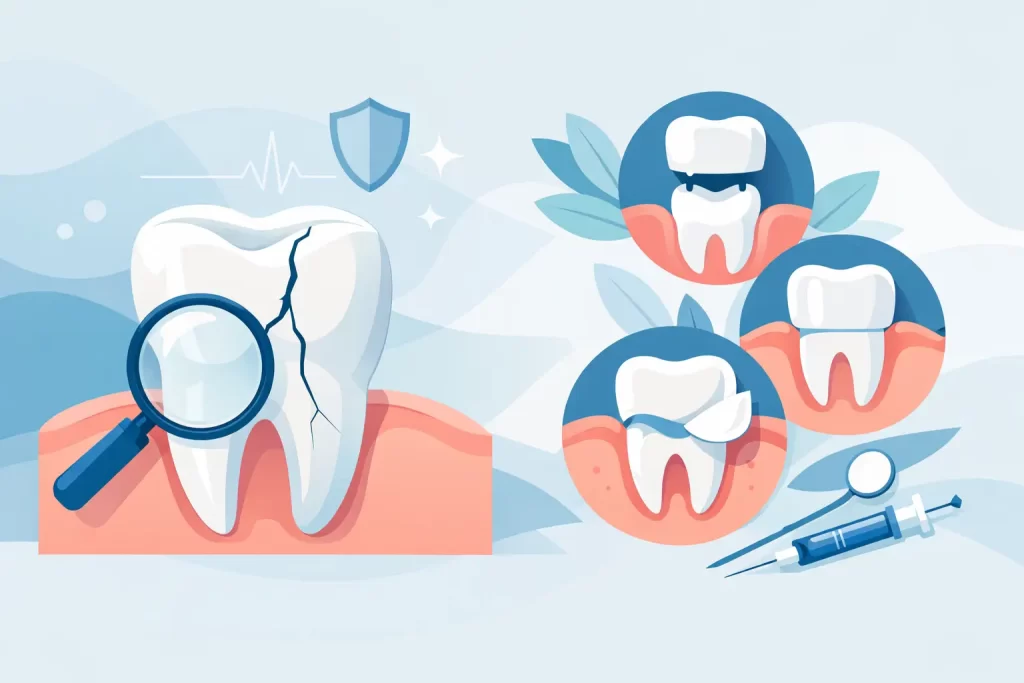
Cracked Tooth Treatment Options Explained
That sharp bite of pain when you chew on one side, then nothing a moment later, is often how a cracked tooth announces itself. Cracked tooth treatment options vary quite a bit because not every crack behaves the same way, and the right solution depends on how deep the damage goes, where the tooth is affected, and whether the nerve inside has been irritated.
A lot of patients hope the discomfort will settle on its own. Sometimes the pain does come and go, which can make the problem easy to ignore. The trouble is that a crack can worsen with everyday chewing, and early treatment is usually the best chance to save the tooth with a simpler repair.
What a cracked tooth can feel like
Cracked teeth do not always cause constant pain. In many cases, the symptoms are intermittent. You might feel a quick zing when biting down, sensitivity to cold drinks, discomfort with sweets, or tenderness that seems difficult to pinpoint.
Some patients notice that the tooth feels fine most of the day but hurts when they release pressure after chewing. Others only realize something is wrong when a piece breaks off. If you have swelling, lingering pain, or sensitivity that is getting worse, it may mean the crack has reached deeper layers of the tooth.
Why cracked tooth treatment options are not one-size-fits-all
When people hear the word crack, they often expect one standard fix. In reality, dentists first need to determine the type and extent of the damage. A tiny craze line on the enamel is very different from a crack that extends into the pulp, the soft tissue where the tooth nerve lives.
This is why an exam matters so much. Your dentist may use magnification, an intraoral camera, bite tests, and digital x-rays to look for signs that are not obvious to the naked eye. Some cracks do not show clearly on an x-ray, so the diagnosis often comes from a combination of your symptoms and what the tooth does under pressure.
The main cracked tooth treatment options
Monitoring small surface lines
Not every visible line needs active treatment. Very small enamel craze lines are common, especially in adult teeth, and they may be more of a cosmetic issue than a structural one. If the tooth is not painful and the line is shallow, your dentist may simply keep an eye on it during routine visits.
That said, monitoring is only appropriate when the tooth is stable. If symptoms are present, or if the line is affecting function, a more protective treatment is usually the safer choice.
Dental bonding for minor damage
For smaller chips or limited cracks, bonding may be a practical option. Tooth-colored resin can restore shape, improve appearance, and add some protection to the weakened area. This approach is conservative and often appealing when the damage is minor and the tooth still has good overall strength.
The trade-off is durability. Bonding works well in the right case, but it may not offer enough reinforcement for a back tooth that absorbs heavy chewing forces every day.
A dental crown for protection and strength
A crown is one of the most common treatments for a cracked tooth, especially when the goal is to keep the natural tooth in place and prevent the crack from spreading. The crown covers the tooth like a protective shell, helping hold it together and reducing stress during biting.
For many patients, this is the most reliable option when the crack is significant but the tooth can still be saved. Crowns are often recommended for molars and premolars because those teeth take the most pressure. If pain is limited and the nerve is healthy, a crown alone may solve the problem.
Root canal treatment if the nerve is involved
If the crack extends deep enough to inflame or infect the pulp, a crown by itself may not be enough. In that situation, root canal treatment may be needed to remove the damaged nerve tissue, relieve pain, and preserve the tooth. Afterward, the tooth is usually restored with a crown for strength.
This is where timing matters. A tooth that is treated before the crack progresses too far often has a much better outlook than one left untreated for months. Root canal therapy can sound intimidating, but for many patients it is the step that allows the tooth to remain in place rather than be removed.
Tooth extraction when the crack is too deep
Sometimes the crack extends below the gumline or splits the tooth in a way that cannot be predictably repaired. When the structure is no longer restorable, extraction may be the most appropriate option. That is never the first choice in a preservation-focused practice, but there are times when removing the tooth prevents ongoing pain and infection.
If extraction becomes necessary, the next conversation should be about replacement. Leaving a gap can affect chewing, shifting, and even the balance of your bite over time. The best plan depends on the location of the tooth and your long-term goals.
How dentists decide which treatment is best
The decision comes down to several factors. Depth is a major one. A shallow crack in enamel has a very different prognosis from a vertical crack running into the root. Location also matters. Front teeth and back teeth handle force differently, so they are restored differently as well.
Symptoms guide treatment too. Brief sensitivity is one thing. Lingering pain, swelling, or pain that wakes you at night can suggest deeper involvement. Your dentist also considers whether a piece of the tooth has broken away, whether the crack reaches under the gum, and how much healthy tooth remains to support a restoration.
In a patient-centered office, this discussion should be clear and practical. You should understand not only what is recommended, but why that recommendation gives your tooth the best chance.
What happens if you wait too long
A cracked tooth rarely repairs itself. Teeth are strong, but once a structural defect is there, chewing can make it worse. What starts as mild discomfort may turn into severe pain, infection, or a split tooth that cannot be saved.
Delaying care can also make treatment more involved and more expensive. A tooth that might have been protected early with a crown could later need root canal treatment, or become non-restorable altogether. If a tooth feels different when you chew, that is reason enough to have it checked.
Can you manage it at home for now?
Home care can help you stay comfortable until your appointment, but it is not a substitute for treatment. Try chewing on the opposite side, avoid very hard or sticky foods, and steer clear of extreme temperatures if the tooth is sensitive. Keeping the area clean is important, but avoid poking at the tooth or testing it repeatedly with your tongue.
Pain relievers may reduce discomfort for a short time, but they do not stop a crack from spreading. If you have swelling, severe pain, or a broken piece, it is best to be seen promptly.
Cracked tooth treatment options and long-term tooth preservation
The encouraging part is that many cracked teeth can be saved when addressed early. Modern restorative dentistry gives patients several ways to preserve function, appearance, and comfort. The key is matching the right treatment to the right tooth at the right time.
At a practice such as Restorative Dental Jamaica, that process should feel calm and supportive, not rushed. Patients do better when they understand their options, know what to expect, and feel confident that the goal is to preserve as much healthy tooth structure as possible.
When to schedule an evaluation
If you suspect a cracked tooth, the best next step is a professional assessment. Even if the pain is mild or inconsistent, cracks can be deceptive. A tooth that seems manageable today can become much more complicated after one hard bite.
Getting answers early usually means more treatment choices, better comfort, and a stronger chance of keeping your natural tooth. If something feels off when you bite, sip something cold, or chew on one side, trust that signal and have it evaluated before the crack has a chance to decide for you.
Leave a reply







Leave a reply