
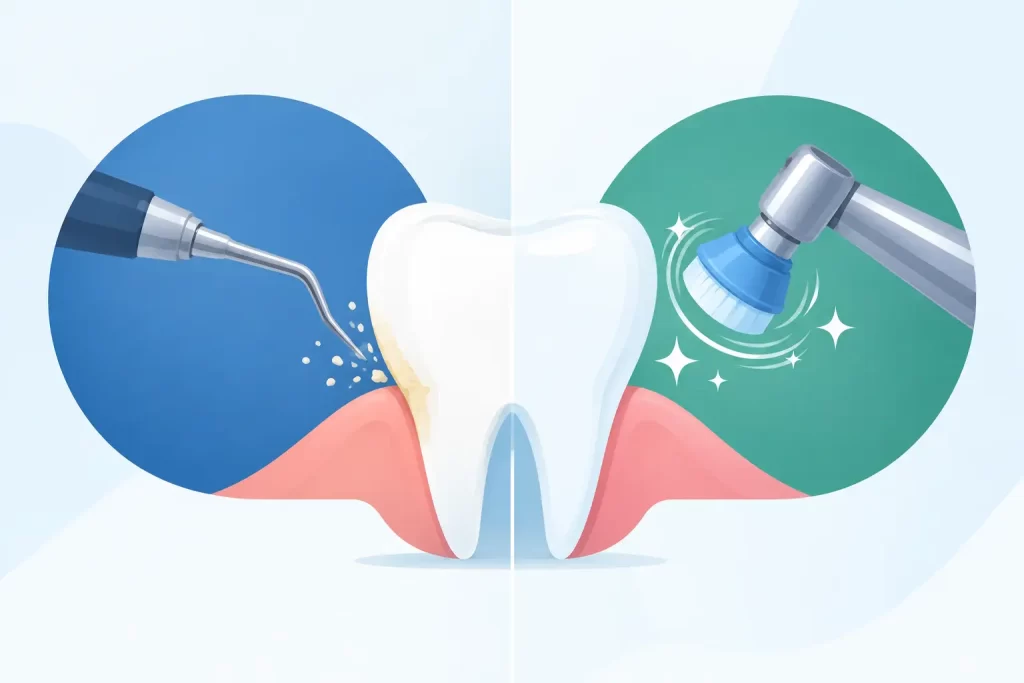
Scale Polishing vs Deep Cleaning: Which Do You Need?
A cleaning appointment should leave you feeling fresher and more confident, not confused about what treatment you need. When patients ask about scale polishing vs deep cleaning, they are usually asking a practical question: Is this routine care for buildup above the gums, or do my gums need more focused treatment below the gumline?
The answer depends on the health of your gums, not simply on how much tartar you can see. A dental examination helps us recommend care that is appropriate, comfortable, and focused on protecting your natural teeth for the long term.
What Is Scale and Polishing?
Scale and polishing is a preventive dental cleaning designed to remove plaque, tartar, and surface stains from your teeth. Plaque is a soft, sticky film of bacteria that develops throughout the day. When it is not fully removed with brushing and flossing, it can harden into tartar, also called calculus. Tartar cannot be removed safely with a toothbrush at home.
During a scale and polish, your dental professional carefully removes buildup from the tooth surfaces, particularly around the gumline and between teeth. The teeth are then polished to remove light surface staining and leave them feeling smooth and clean.
This is often the right choice for patients with generally healthy gums who need routine maintenance. It can help reduce the bacteria that contribute to cavities, bad breath, and early gum inflammation. For many adults, regular scale and polishing appointments are part of maintaining a healthy smile between dental exams.
A scale and polish may be especially helpful if you notice mild bleeding when brushing, staining from coffee, tea, or smoking, or a rough feeling near the gumline. However, bleeding gums should never be ignored. It can be a sign that your gums need more than a standard cleaning.
Scale Polishing vs Deep Cleaning: The Main Difference
The key difference in scale polishing vs deep cleaning is where the treatment is performed and why it is needed. Scale and polishing generally focuses on visible tooth surfaces and the area near the gumline. Deep cleaning is intended for patients with signs of gum disease, particularly when bacteria and tartar have collected below the gums.
Deep cleaning is also known as scaling and root planing. It involves removing hardened deposits from beneath the gumline, where a routine cleaning cannot adequately reach. The tooth root surfaces are then smoothed to make it more difficult for bacteria to attach and to support gum healing.
Gum disease can cause the gums to pull away from the teeth, creating small spaces called periodontal pockets. These pockets can trap bacteria and tartar. Without professional treatment, the infection may progress, leading to worsening inflammation, gum recession, loose teeth, and eventually tooth loss.
A deep cleaning is not simply a more intensive version of a regular cleaning. It is a targeted periodontal treatment recommended when an examination shows that the gums and supporting structures need additional care.
How Does Your Dentist Decide Which Treatment You Need?
Your dentist will not make this decision based on appearance alone. Healthy-looking teeth can still have gum concerns below the surface, while visible tartar does not always mean someone needs deep cleaning.
A thorough assessment may include an examination of your gums, measurements around the teeth, a review of bleeding or inflammation, and digital x-rays when appropriate. These details help reveal whether there is bone loss, deeper gum pockets, or tartar beneath the gumline.
You may be more likely to need deep cleaning if you have persistent bleeding gums, swollen or tender gums, bad breath that does not improve, gum recession, loose teeth, or a history of gum disease. Smoking, diabetes, certain medications, pregnancy-related hormonal changes, and inconsistent dental visits can also affect gum health.
At the same time, some patients only need routine scale and polishing, along with improved home care. Personalized recommendations matter because overtreatment is not the goal. The goal is to provide the level of care that gives your gums the best chance to stay healthy.
What to Expect During Each Appointment
A scale and polish is usually straightforward and comfortable. Your dental professional will remove deposits using hand instruments or ultrasonic technology, rinse away debris, and polish your teeth. If your gums are sensitive or there is heavier buildup, you may feel mild pressure or brief sensitivity, but most patients tolerate the visit well.
Deep cleaning may take longer and is often completed in sections of the mouth. Local anesthetic may be used to keep you comfortable while treatment is performed below the gumline. Depending on the condition of your gums, your dentist may recommend treating one side of the mouth at a time or completing the procedure across multiple visits.
After a deep cleaning, mild tenderness, sensitivity to hot or cold foods, or slight gum bleeding can occur for a short period. These symptoms are usually manageable and should improve as the gums begin to heal. Your dental team will explain how to care for your mouth afterward and when to return for follow-up care.
Why Deep Cleaning May Require Ongoing Maintenance
For patients diagnosed with gum disease, treatment does not necessarily end after one deep cleaning. Gum disease is a condition that needs monitoring, much like other chronic health concerns. Once the gums have been treated, regular periodontal maintenance appointments may be recommended to keep bacteria under control and check for signs of recurrence.
These visits may be scheduled more frequently than routine cleanings. The exact timing depends on your gum health, home-care habits, medical history, and how well your gums respond to treatment. Staying consistent is one of the best ways to preserve your teeth and avoid more complex restorative care later.
This does not mean a patient has failed if they need maintenance. It means their care plan is being adjusted to protect the foundation of their smile.
Can a Scale and Polish Treat Gum Disease?
A routine scale and polish can help with mild plaque buildup and early gum inflammation, often called gingivitis. In many cases, gingivitis can improve when professional cleaning is combined with careful brushing twice daily and cleaning between the teeth every day.
But if gum disease has progressed below the gumline, scale and polishing alone may not remove the bacteria and tartar responsible for the problem. Delaying recommended deep cleaning can allow the condition to worsen quietly, even if there is little or no pain.
That is why a proper examination matters. Dental care should not be based on guesswork, online comparisons, or the assumption that every cleaning is the same.
Keeping Your Gums Healthy Between Visits
Professional cleanings work best when they are supported by daily care at home. Use a soft-bristled toothbrush and fluoride toothpaste twice a day, taking time to clean along the gumline. Floss or use another dentist-recommended interdental cleaner daily, because a toothbrush cannot clean effectively between teeth.
If you wear braces, aligners, dentures, crowns, bridges, or other dental restorations, ask your dental team about the best cleaning method for your smile. These areas may need extra attention, but they can be kept healthy with the right routine.
If you notice bleeding, swelling, persistent bad breath, or a change in how your teeth fit together, arrange an appointment rather than waiting for your next routine visit. Early attention is often simpler, more comfortable, and more affordable than waiting until symptoms become severe.
At Restorative Dental Jamaica, we take time to explain what we see and why a particular treatment is recommended. Whether you need a routine scale and polish or more focused gum care, you deserve a calm, clear conversation and treatment designed around your comfort.
Your gums support every smile you make. A dental assessment can give you the reassurance of knowing exactly what they need next.
Leave a reply








Leave a reply