
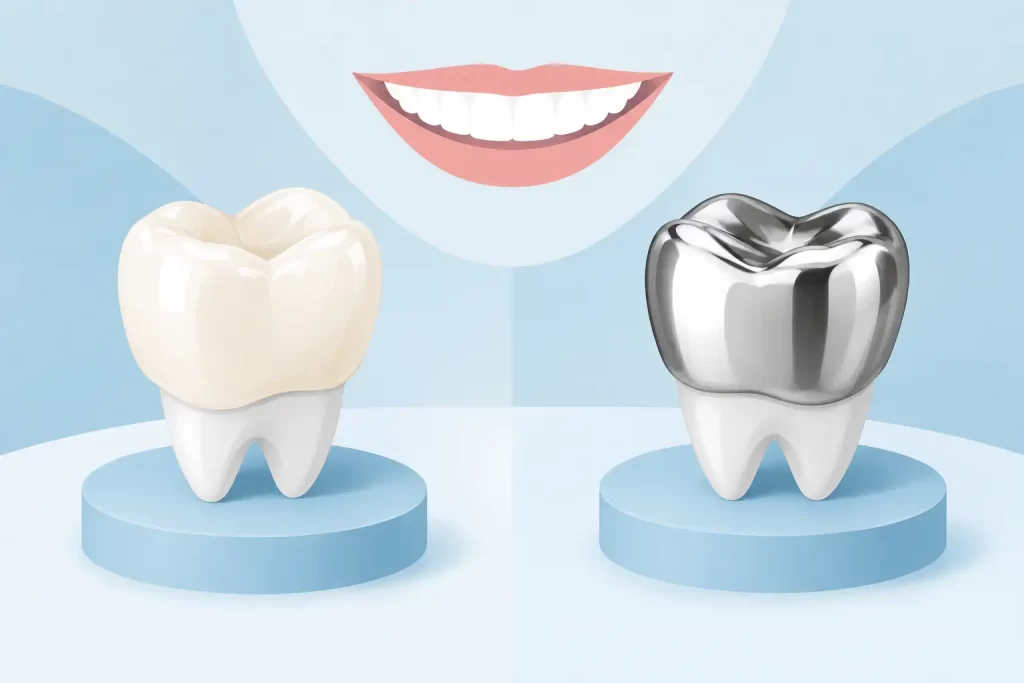
Ceramic Versus Metal Crowns for Your Smile
A crown should do more than cover a damaged tooth. It should help you chew comfortably, protect the tooth that remains, and feel right when you smile. When comparing ceramic versus metal crowns, patients are often weighing two very personal concerns: how natural the restoration will look and how well it will stand up to daily use.
There is no single best crown material for every tooth or every patient. The right choice depends on where the tooth sits in your mouth, how much natural tooth structure is left, your bite, cosmetic goals, and budget. A careful examination gives your dentist the information needed to recommend a crown that protects your long-term oral health rather than simply offering a quick fix.
Why a tooth may need a crown
Dental crowns are custom-made caps that cover and support a tooth. They are commonly recommended after significant decay, a fracture, large or failing fillings, or root canal treatment. A crown may also improve the shape, color, or strength of a tooth that has become worn or weakened.
The goal is always to preserve as much healthy natural tooth as possible. Once a tooth has lost substantial structure, however, a filling may no longer provide enough support. A well-designed crown helps distribute biting pressure across the tooth and can reduce the risk of further breakage.
Ceramic versus metal crowns: the practical differences
Ceramic crowns are made from tooth-colored materials, including porcelain and modern high-strength ceramics such as zirconia or lithium disilicate. Metal crowns can be made from gold alloys or other dental metals. There are also porcelain-fused-to-metal crowns, which combine a metal foundation with a tooth-colored porcelain outer layer.
Each material has advantages. The choice is less about declaring one material better and more about choosing the material that suits the tooth and the person behind the smile.
Appearance and confidence
Ceramic crowns are usually the first choice when appearance is a major priority, especially for front teeth and teeth that show when you laugh or speak. They can be color-matched and shaped to blend with nearby teeth. High-quality ceramics can reflect light in a way that closely resembles natural enamel, creating a result that looks polished without appearing artificial.
Full metal crowns are visible when you smile, which makes them less appealing for many patients in prominent areas. That said, appearance is not the only measure of quality. A metal crown may be an excellent restoration on a back molar where it is rarely seen.
Porcelain-fused-to-metal crowns offer a middle ground, but they have limitations. Over time, the porcelain can chip, and a dark line may become noticeable near the gumline if the gums recede. Modern all-ceramic options often provide a more natural result for visible teeth.
Strength and everyday function
Metal has a long record of durability in dentistry. Full metal crowns resist fracture well and are particularly useful for molars that absorb heavy chewing forces. They can also be made relatively thin, which may allow the dentist to preserve more of the natural tooth during preparation.
Today’s ceramic crowns are also strong. Zirconia, in particular, is a highly durable ceramic frequently used for back teeth as well as bridges in appropriate cases. Not every ceramic is intended for the same job, though. Some materials prioritize lifelike translucency, while others prioritize maximum strength.
If you grind or clench your teeth, material selection becomes even more important. A strong crown alone may not solve the problem if the bite is not properly managed. Your dentist may recommend a night guard to help protect both the crown and your remaining natural teeth from excessive force.
Effect on neighboring teeth
A crown should not only be strong, but also kind to the teeth it bites against. Metal surfaces are generally gentle on opposing enamel. Ceramic can also perform well, particularly when the surface is carefully polished and the bite is adjusted correctly. However, a rough or poorly finished ceramic restoration may contribute to wear on the opposing tooth.
This is one reason precision matters. Digital imaging, accurate impressions, thoughtful material selection, and careful bite adjustment all influence how a crown feels and functions after it is placed.
Allergies and sensitivity considerations
Metal crowns are safe and successful for many people, but a small number of patients have sensitivities or allergies to specific metal components. If you have a known metal allergy or have reacted to dental jewelry or other metals in the past, share that information before treatment.
All-ceramic crowns are metal-free, which can make them an appealing option for patients with those concerns. They are also often chosen by patients who prefer a tooth-colored restoration throughout. Your dentist can discuss the specific materials available and whether they are appropriate for your tooth.
Cost and long-term value
Costs vary based on the material selected, the complexity of the tooth, whether additional treatment is needed, and the laboratory work involved. Ceramic crowns may cost more than some metal options because of their appearance and the technology used to create them. However, cost should be considered alongside longevity, comfort, and confidence in your smile.
A crown that fits accurately and is cared for consistently can offer many years of service. Choosing solely on the lowest upfront cost can be frustrating if the material does not meet your functional or cosmetic needs. During your consultation, ask about the recommended material, why it is being suggested, and what to expect financially before treatment begins.
Which crown works best for front teeth?
For front teeth, ceramic is often the preferred option because it offers the most natural color and light reflection. These teeth are highly visible, and even a strong restoration may feel disappointing if it does not blend with your smile.
Still, the final decision depends on the individual case. A patient with a powerful bite, limited space, or a heavily damaged tooth may need a more specific solution. Your dentist will look at tooth position, gum health, tooth color, and how your upper and lower teeth come together before recommending a material.
What about back teeth?
Back teeth do the hardest work, so durability is often the leading concern. Full metal crowns remain a reliable option for molars, particularly for patients who are comfortable with a less visible restoration. Zirconia crowns are also a popular choice because they provide significant strength with a tooth-colored appearance.
For a back tooth, the best answer may come down to visibility, bite forces, the amount of space available, and personal preference. A crown near the front of the mouth may need greater attention to color. A far-back molar may benefit most from a material selected for long-term chewing strength.
Caring for a ceramic or metal crown
Neither ceramic nor metal crowns can develop cavities themselves, but the natural tooth beneath and around the crown still can. Plaque can collect at the crown margin near the gums, increasing the risk of decay or gum inflammation if daily cleaning is neglected.
Brush twice daily with fluoride toothpaste and clean between your teeth every day using floss, interdental brushes, or another method recommended by your dental team. Regular examinations and professional cleanings allow your dentist to check the crown’s edges, your gums, and your bite before small concerns become larger problems.
Avoid using crowned teeth to open packages, bite hard objects, or crack ice. If a crown ever feels loose, painful, rough, or unusually high when you bite, arrange an appointment promptly. Early attention can often prevent further damage to the tooth underneath.
Make the decision with a complete picture
The best crown is one chosen after a full assessment, not a quick glance at a shade chart. At Restorative Dental Jamaica, we take time to discuss how you want your smile to look, how your teeth function, and what will help protect your natural tooth for the future. Digital x-rays and intraoral imaging can help make the conversation clearer, so you can understand the condition of the tooth and feel confident about your options.
If you are deciding between ceramic and metal, bring your questions to your dental visit. A thoughtful recommendation should leave you knowing not only which crown is being proposed, but why it fits your smile, your bite, and the life you expect it to handle.
Leave a reply







Leave a reply