
Best Cosmetic Fixes for Gaps in Your Smile
A small gap between front teeth can be part of what makes a smile distinctive. But when it draws your eye in every photo, catches food, or makes you feel hesitant to smile freely, it is reasonable to want a change. The best cosmetic fixes for gaps depend on more than the space itself: the size and location of the gap, the condition of your teeth and gums, your bite, and how long you want the result to last all matter.
At Restorative Dental Jamaica, we believe cosmetic treatment should look natural and feel comfortable. A thoughtful assessment helps us recommend an option that enhances your smile while protecting your long-term oral health.
First, Find Out Why the Gap Is There
Not every gap should be treated in the same way. Some spaces are simply a natural feature caused by tooth shape, jaw size, or family traits. Others develop because teeth have shifted over time, a tooth is smaller than its neighbors, or a childhood habit affected tooth position.
A new or widening gap deserves particular attention. Gum disease can reduce the support around teeth and allow them to move. Tongue pressure, missing teeth, and bite changes may also create spaces. Before choosing a cosmetic solution, your dentist should check for decay, gum inflammation, loose teeth, and bite concerns. Closing a gap without addressing the cause can lead to an attractive result that does not last.
Best Cosmetic Fixes for Gaps: Your Main Options
The right treatment can be very conservative, or it can involve a broader plan to improve tooth alignment and proportion. Here is how the most common choices compare.
Dental bonding for small to moderate spaces
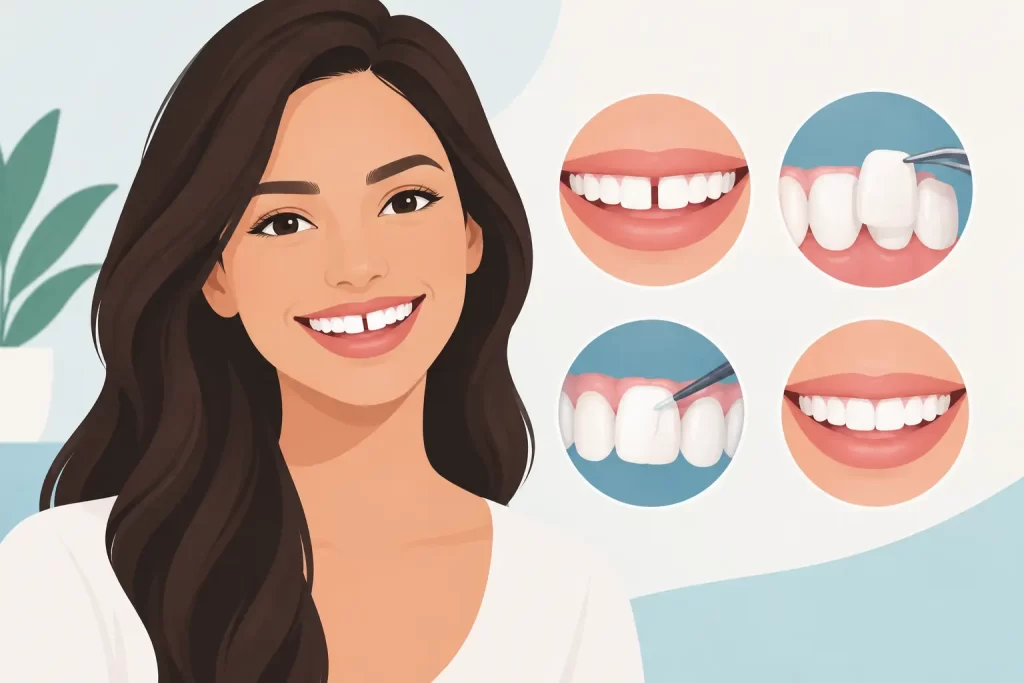
Dental bonding is often one of the quickest ways to close a small gap, particularly between the front teeth. Your dentist applies tooth-colored composite resin to one or both teeth, carefully shapes it, and hardens it with a curing light. The result can usually be completed in one visit.
Bonding is a popular choice because it typically requires little to no removal of natural tooth structure. It can also correct uneven edges, small chips, and slightly undersized teeth at the same time. For patients looking for an immediate, budget-conscious improvement, it may be an excellent starting point.
There are trade-offs. Composite resin can stain or chip over time, especially if you regularly drink coffee, tea, red wine, or smoke. It may need polishing, repair, or replacement after several years. Bonding also requires careful design. Adding too much material to close a larger space can make teeth appear wide or bulky.
Porcelain veneers for a more complete smile change
Veneers are thin custom porcelain shells placed over the front surface of teeth. They can close spaces while changing color, shape, length, and symmetry. This makes veneers especially useful when a gap is only one of several concerns, such as worn edges, deep discoloration, or teeth that look too narrow.
Porcelain resists staining better than composite and can create a very lifelike finish. Because each veneer is designed around your facial features, smile line, and neighboring teeth, the goal is not a uniform or artificial look. The goal is a balanced smile that still feels like yours.
Veneers are a greater investment than bonding and often involve removing a small amount of enamel to create room for the restoration. That means treatment is generally irreversible. They also are not the best answer when teeth are significantly misaligned or when untreated clenching and grinding could damage them. A custom night guard may be recommended for patients who grind their teeth.
Clear aligners when the teeth need to move
If the gap is caused by tooth position, clear aligners may offer the most natural solution. Rather than making teeth wider to cover a space, aligners gradually move them into a more ideal position. They can close gaps throughout the mouth and may also improve crowding, rotations, and bite alignment.
Clear aligners are removable and discreet, which makes them appealing to busy adults and professionals. They must be worn as instructed, usually for most of the day, to work predictably. You will also need to remove them for meals and keep both your teeth and trays clean.
Treatment time varies. A very minor gap may close relatively quickly, while more involved movement takes longer. Retainers are essential after treatment. Teeth naturally have a tendency to shift, and skipping retainers can allow spaces to return.
Crowns when a tooth also needs restoration
A dental crown is not usually chosen solely to close a cosmetic gap. However, it can be the right option when a tooth already needs substantial restoration due to a large filling, fracture, severe wear, or root canal treatment. A well-designed crown can restore strength and improve the tooth’s shape so the space is reduced or closed as part of a larger treatment plan.
Because crowns cover the entire tooth, they are more involved than bonding or veneers. They should be recommended because the tooth needs protection, not simply because a gap is present. Preserving healthy natural tooth structure remains a priority whenever possible.
A combined approach for the most balanced result
Sometimes the best answer is not one treatment alone. Aligners may first place teeth in a better position, followed by a small amount of bonding to refine shape or symmetry. A patient with one narrow lateral incisor, for example, may benefit from moving the teeth into proper alignment and then adding conservative bonding to create ideal proportions.
This approach can take more time, but it often avoids overbuilding the teeth. During your consultation, digital x-rays and intraoral images can help your dentist explain what is happening beneath the surface and show why a particular sequence of treatment is recommended.
How to Choose the Right Gap Treatment
Start with the result you want, then consider the health of your smile and the commitment each option requires. If you want a same-day improvement for a small front gap, bonding may be a practical choice. If you want a broader cosmetic transformation with long-lasting stain resistance, veneers may be worth considering. If your teeth are unevenly positioned, clear aligners can address the underlying alignment rather than just masking the space.
Your budget matters as well, but the least expensive treatment is not always the best value. A cosmetic solution that does not suit your bite, oral habits, or tooth proportions may require frequent repairs. Ask your dentist about expected longevity, maintenance, alternatives, and what happens if you delay treatment.
It is also helpful to be honest about daily habits. Biting pens, opening packages with your teeth, chewing ice, and nail biting can damage bonding and porcelain. Excellent home care, regular professional cleanings, and wearing a recommended night guard all help protect your investment.
What to Expect From a Cosmetic Consultation
A comfortable consultation should feel like a conversation, not a sales pitch. Your dentist will listen to what you notice about your smile, examine your teeth and gums, evaluate your bite, and discuss the choices that fit your goals. Photos or intraoral camera images may be used so you can see the details clearly.
You should leave with a realistic understanding of timing, cost, maintenance, and the look each option can achieve. A good cosmetic plan respects your preferences while being clear about limitations. For example, very large gaps may need orthodontic movement for the most natural proportions, while gaps linked to active gum disease need health-focused care first.
A gap does not have to define your smile, and it does not always require extensive treatment to improve. The right plan is one that protects your teeth, suits your lifestyle, and gives you a smile you feel happy to share.
Leave a reply








Leave a reply