
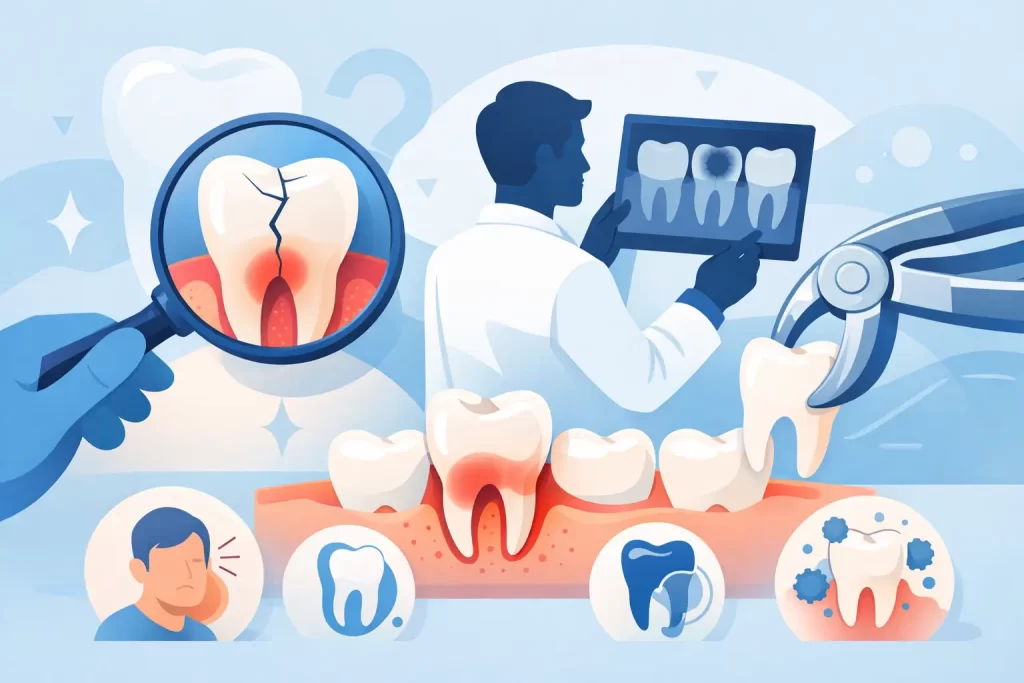
When Is Tooth Extraction Necessary? Key Signs
A severe toothache that keeps you awake, a broken tooth that cannot support a crown, or swelling around an infected tooth can make one question feel urgent: when is tooth extraction necessary? While removing a tooth is sometimes the healthiest choice, it is not usually the first one. A careful dentist will first assess whether the tooth can be treated, restored, and kept comfortably for the long term.
At Restorative Dental Jamaica, preserving healthy natural teeth is always a priority. When an extraction is recommended, the goal is not simply to remove a problem. It is to protect your overall oral health, relieve pain, and create a clear plan for your smile moving forward.
When is tooth extraction necessary for decay or damage?
A tooth may need to be removed when decay or physical damage has destroyed too much of its structure to repair reliably. Small or moderate cavities can often be treated with white fillings. A larger area of decay may still be saved with root canal therapy and a dental crown. But if decay extends deep below the gumline, leaves very little healthy tooth behind, or compromises the root, a restoration may not hold securely.
The same is true for cracked or fractured teeth. A chipped tooth can often be bonded, while a fracture that reaches the nerve may be treated with a root canal and crown. However, a crack that travels down the root can make the tooth impossible to save. Continuing to bite on it may cause recurring pain, infection, or further breakage.
Extraction can be the more predictable option when a repair would have a poor chance of lasting. This is never a decision based on appearance alone. Your dentist will consider the amount of remaining healthy tooth structure, the condition of the roots and gums, your bite, and whether a restored tooth can function well over time.
Serious infection can make extraction the safest option
An infection inside a tooth often causes throbbing pain, sensitivity to pressure, swelling, or a small pimple-like bump on the gum. In many cases, root canal therapy can remove the infection from inside the tooth and allow the tooth to remain in place. This is one of the most valuable ways to preserve a natural tooth.
Still, extraction may be necessary if infection has severely damaged the tooth or surrounding bone, if the tooth cannot be accessed or restored, or if previous treatment has failed and retreatment is not a suitable option. A badly compromised tooth can allow infection to persist and may affect nearby tissues.
Facial swelling, fever, difficulty swallowing, difficulty breathing, or swelling spreading toward the eye or neck requires urgent medical or dental attention. Do not wait for a routine appointment if these symptoms develop. Dental infections need prompt professional care, and antibiotics alone do not always resolve the source of the problem.
Advanced gum disease may lead to tooth loss
Healthy gums and bone are what hold teeth firmly in place. Advanced periodontal disease can gradually destroy this support, causing teeth to feel loose, shift position, or become painful when chewing. In some situations, periodontal treatment can stabilize the condition and help maintain the tooth. In others, the supporting bone loss is too severe for the tooth to remain functional.
A very loose tooth may be difficult to clean and can create ongoing discomfort or infection. Removing it may protect surrounding tissues and make it easier to plan a replacement, such as a partial denture, bridge, or dental implant where appropriate.
This is one reason regular dental assessments and professional cleanings matter. Gum disease can progress quietly, sometimes without significant pain. Early treatment gives you more options and can help prevent avoidable tooth loss.
Impacted or overcrowded teeth sometimes need removal
Not every extraction is caused by decay. Wisdom teeth, also called third molars, may need to be removed when they are impacted, only partly erupted, repeatedly infected, or damaging the tooth in front of them. A partially erupted wisdom tooth can trap food and bacteria beneath the gum tissue, making it difficult to keep clean.
Extraction may also be considered when a tooth is severely overcrowded or positioned in a way that prevents proper function or orthodontic movement. This decision should be individualized. Removing a tooth solely because it looks crowded is not always necessary, especially when orthodontic treatment or other approaches may create sufficient space.
Children may occasionally need a baby tooth removed if it is not loosening naturally, is blocking an adult tooth, or has decay that cannot be restored. Because baby teeth help guide permanent teeth into position, timing is important. A dentist can determine whether removal is helpful and whether space maintenance is needed afterward.
Can the tooth be saved instead?
Before recommending an extraction, your dentist may use a clinical examination, digital X-rays, and photographs from an intraoral camera to understand what is happening below the surface. These tools help reveal decay between teeth, root infections, bone loss, cracks, and the condition of existing fillings or crowns.
Depending on the diagnosis, alternatives may include a filling, crown, root canal therapy, periodontal treatment, or repair of an existing restoration. Saving a tooth is often beneficial because natural teeth preserve chewing efficiency and help maintain the surrounding bone and bite relationship.
That said, saving a tooth is not automatically the best value if it requires repeated treatment with an uncertain outcome. A clear conversation should include the likely prognosis, costs, expected longevity, comfort, and replacement options. The right choice is the one that supports your health and fits your needs, not simply the fastest option.
What happens during a tooth extraction?
Many patients feel understandably nervous when they hear the word “extraction.” Modern dental care is designed to make the experience as calm and comfortable as possible. Before treatment, your dentist will review your medical history, examine the tooth, discuss the procedure, and explain what to expect.
Local anesthetic is used to numb the area thoroughly. You may feel pressure as the tooth is gently loosened, but you should not feel sharp pain. The complexity varies. Some teeth can be removed simply, while broken, impacted, or deeply rooted teeth may require a surgical extraction.
Afterward, a gauze pad is placed over the area to help a blood clot form. That clot protects the healing socket, so the first few days matter. Follow your dentist’s instructions carefully, including how to manage discomfort, what foods to choose, and when to resume normal brushing around the area.
Avoid smoking, using a straw, vigorous rinsing, and heavy exercise immediately after an extraction, as these actions can dislodge the clot and increase the risk of dry socket. Soft foods, plenty of fluids, and gentle oral hygiene are usually recommended while the area heals.
Planning for the space after an extraction
Removing a tooth may relieve the immediate problem, but it should also start a conversation about the future of the space. Not every extracted tooth needs to be replaced. For example, replacement may be less necessary for certain wisdom teeth or in situations where neighboring teeth are stable and function is unaffected.
However, a missing visible tooth or a tooth involved in chewing can affect confidence, speech, bite balance, and the way neighboring teeth move over time. Replacement options may include a dental bridge, partial denture, full denture, or implant-supported solution. The best choice depends on your oral health, bone support, budget, timeline, and personal goals.
If an extraction has been recommended, ask why the tooth cannot be restored, what alternatives have been considered, and what replacement options make sense for you. A caring dental team will answer those questions clearly and give you time to make an informed decision.
Tooth extraction is sometimes necessary, but it should never feel like a rushed decision. With an early assessment and a personalized treatment plan, you can address the problem comfortably and take the next step toward a healthier, more confident smile.
Leave a reply







Leave a reply