
Same Day Dental Crowns: Are They Right for You?
A cracked tooth can make every meal feel uncertain. You may find yourself chewing on one side, avoiding cold drinks, or worrying that a small problem will suddenly become a dental emergency. Same day dental crowns may offer a practical solution for eligible patients who need to protect and restore a damaged tooth without making multiple visits.
For busy professionals, parents, and anyone who wants to get back to smiling comfortably, the appeal is clear: one planned appointment, one custom restoration, and fewer interruptions to your routine. Still, the best crown is not simply the fastest one. It is the one that properly supports your tooth, fits your bite, and is selected with your long-term oral health in mind.
What Are Same Day Dental Crowns?
A dental crown is a custom cap that covers a tooth that has been weakened by decay, a large filling, a crack, fracture, wear, or root canal treatment. Its role is to restore the tooth’s shape, strength, and function while helping preserve as much of the natural tooth as possible.
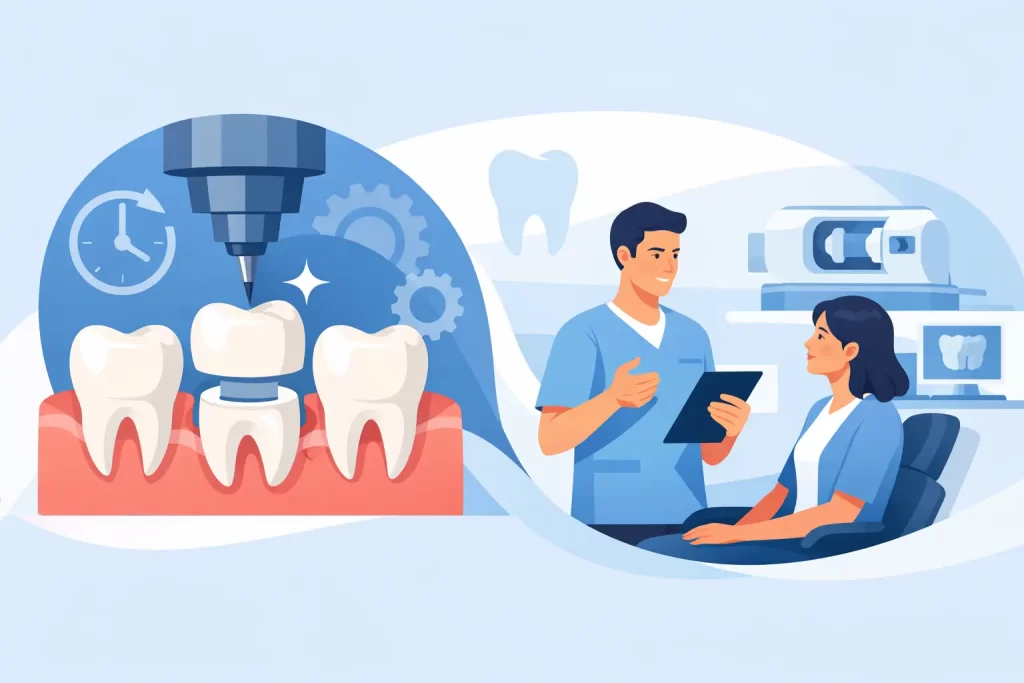
Traditional crowns are typically completed over two or more appointments. After the tooth is prepared, an impression is taken and a temporary crown is placed while a dental laboratory creates the final restoration. Same day dental crowns use digital scanning and in-office design and milling technology to create a ceramic crown during a single visit in suitable cases.
Instead of using impression material, your dentist takes a precise digital image of the prepared tooth. The crown is designed to match your bite and surrounding teeth, then created from a ceramic block and fitted before you leave the office. The process can save time, but it still requires careful planning, skilled preparation, and attention to every detail of the fit.
Why a One-Visit Crown Can Be a Good Choice
The most obvious benefit is convenience. A same-day approach can reduce the need for a second appointment and may eliminate the temporary crown phase. Temporary crowns can occasionally loosen, feel different when you bite, or require extra care around sticky foods. Receiving your final crown on the same day means you can leave with the restoration intended to protect your tooth.
For patients with demanding schedules, this can be especially helpful. Taking less time away from work, school, family responsibilities, or travel plans can make it easier to move forward with treatment rather than delaying it.
A digital workflow can also support a precise, comfortable experience. Digital scans provide detailed images of your teeth and bite, allowing your dentist to assess how the crown will sit alongside neighboring teeth. The goal is not just a crown that looks natural, but one that feels comfortable when you chew and speak.
Ceramic crowns are a popular choice for visible teeth because they can be color-matched to blend with your smile. Depending on the tooth’s location, your bite, and the amount of tooth structure remaining, your dentist may recommend a particular material or treatment approach that best balances appearance and durability.
When Same Day Dental Crowns May Not Be the Best Option
One-visit dentistry is not automatically the right answer for every tooth. A thorough assessment matters because a crown must be built on a stable foundation.
If there is active infection, significant gum disease, extensive decay below the gumline, or uncertainty about whether a root canal is needed, the first priority is treating the underlying issue. Placing a crown before the tooth is healthy enough could compromise the result. In some cases, a tooth may need a buildup, root canal therapy, or additional healing time before it can be restored.
Complex cosmetic cases may also call for a more traditional process. For example, if several front teeth require restorations and exact color, shape, and symmetry are major concerns, a laboratory-created crown may offer more layering and customization. Patients who clench or grind their teeth heavily may need a specific material choice and a protective night guard, whether their crown is completed in one visit or more.
Your dentist will also consider the tooth’s position. Back teeth handle strong chewing forces, while front teeth are more visible in the smile. The ideal material and design can differ from one area of the mouth to another. A caring recommendation should be based on your individual bite, goals, and tooth condition, not a one-size-fits-all promise.
What to Expect During Your Appointment
Your visit begins with an examination of the tooth and surrounding gums. Digital X-rays may be used to check for decay, infection, bone support, and the health of the tooth’s root. Your dentist will discuss what is causing the problem and whether a crown is the most conservative way to restore it.
Once you are comfortable and the area is numbed, the tooth is gently shaped to create room for the crown. If a large portion of the tooth is missing, a filling material may be used to rebuild and support it before the crown is placed. A digital scan captures the prepared tooth and the surrounding bite.
The crown is then designed and created in the office. During this time, you can relax while the restoration is prepared. Before it is bonded into place, your dentist checks the fit, color, shape, and bite. Small adjustments are normal and help ensure that the crown feels natural when you close your teeth together.
After the crown is secured, you may notice mild sensitivity around the tooth or gums for a short time, especially once the anesthetic wears off. This usually settles as the area adjusts. Your dental team will provide personalized aftercare instructions and let you know what symptoms should prompt a call.
Caring for a Crown That Looks and Feels Natural
A crown is strong, but it still depends on the natural tooth and gums underneath it. Good home care and regular dental visits are essential to help it last.
Brush twice daily with fluoride toothpaste and clean between your teeth every day. Pay special attention to the gumline around the crown, where plaque can collect. Avoid using your teeth to open packages or bite hard objects such as ice, pens, or bottle caps. If you grind your teeth at night, wearing a custom night guard can help protect both your crown and your natural teeth.
A crown does not make a tooth immune to future problems. Decay can still develop at the edge where the crown meets the tooth, and gum inflammation can affect the tissues supporting it. Routine exams and professional cleanings allow your dentist to spot small concerns early, before they become painful or costly to treat.
Questions to Ask Before Choosing a Same-Day Crown
Before treatment, it is reasonable to ask whether your tooth is a suitable candidate for a one-visit crown, what material is being recommended, and why. You may also want to ask whether you need a root canal, buildup, or night guard as part of your overall treatment plan.
Discuss how the crown will be matched to your smile, especially if it is on a front tooth. It is also helpful to understand the expected appointment length, payment options, and how to care for your restoration afterward. Clear answers help you make a confident decision without feeling rushed.
At Restorative Dental Jamaica, treatment recommendations are centered on preserving natural teeth whenever possible while making your experience feel comfortable and well supported. Modern technology is valuable, but the real value is a careful diagnosis and a restoration designed around your needs.
If a damaged tooth has been changing the way you eat, smile, or speak, do not wait for the discomfort to become more serious. A professional assessment can clarify whether a same-day crown is appropriate and help you choose a path that protects your smile for years to come.
Leave a reply







Leave a reply