
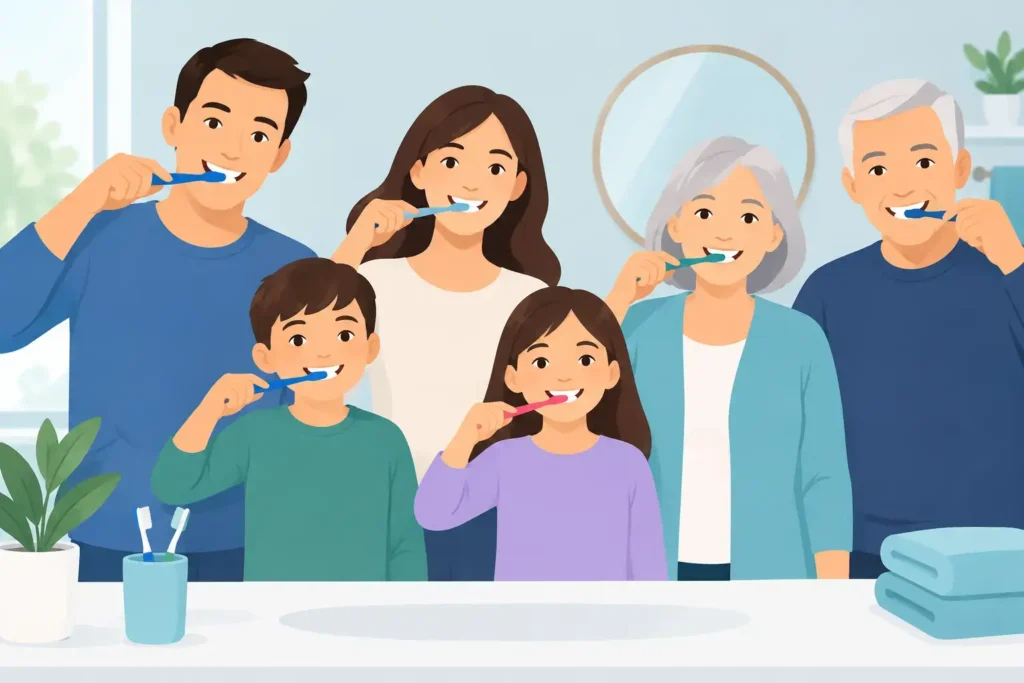
A Family Oral Health Guide for Every Age
A healthy smile is built in small moments: helping a toddler brush before bed, replacing a worn toothbrush, choosing water after a sweet drink, or booking a visit before a small concern becomes painful. This family oral health guide offers practical ways to protect teeth and gums at every age, while making dental care feel manageable, comfortable, and worthwhile.
Good oral health is not only about avoiding cavities. It supports comfortable eating, clear speech, confidence in your smile, and the ability to preserve natural teeth for as long as possible. Every family member has different needs, but a few consistent habits can make a meaningful difference.
Build a Daily Routine the Whole Family Can Keep
Brushing twice a day with fluoride toothpaste is the foundation of home care. The most valuable brushing session is often the one before bed, when food particles and plaque would otherwise remain on teeth overnight. Use a soft-bristled toothbrush and gentle, circular motions along the gumline and all tooth surfaces. Brushing too hard does not clean better and may irritate gums or wear down enamel over time.
Flossing or cleaning between teeth once daily matters because a toothbrush cannot reach every surface. For children with teeth that touch, parents may need to help. Adults who find traditional floss difficult can ask their dentist about alternatives such as interdental brushes or water flossers. The best option is the one that is safe for your mouth and realistic enough to use consistently.
Replace toothbrushes every three to four months, or sooner if bristles are frayed. After an illness, replacing a toothbrush may also provide peace of mind. Store brushes upright, allow them to air-dry, and avoid covering them while damp.
Oral Care for Babies and Young Children
Dental care begins before the first tooth appears. Gently wipe a baby’s gums with a clean, soft cloth after feedings. Once teeth erupt, brush twice daily with a small, soft toothbrush and a tiny smear of fluoride toothpaste, about the size of a grain of rice, for children under age 3.
For children ages 3 to 6, use a pea-sized amount of fluoride toothpaste and encourage them to spit it out rather than swallow it. Young children do not yet have the coordination to brush thoroughly, so an adult should brush or closely supervise. Many children need help until around ages 7 or 8, and some need it longer.
Avoid putting a child to bed with a bottle containing milk, juice, sweetened drinks, or anything other than water. Frequent exposure to sugars can raise the risk of early childhood cavities. Juice may feel like a healthier choice than soda, but it can still expose teeth to natural sugars and acids. Keep sweet drinks occasional and serve them with meals when possible.
A child’s first dental visit should take place by their first birthday or when the first tooth appears. Early visits are often simple and reassuring. They help children become familiar with the dental office and give parents guidance before problems develop.
School-Age Smiles Need Prevention, Not Just Treatment
As children become more independent, brushing can become rushed or inconsistent. A two-minute timer, a favorite song, or a simple morning-and-night checklist can help keep the routine on track. Check in periodically, especially around the back molars, where cavities often begin.
This is also a good time to discuss preventive services. Fissure sealants can protect the deep grooves on chewing surfaces of permanent molars, where food and bacteria can collect. Professional cleanings and dental assessments allow concerns such as early decay, gum inflammation, crowding, or bite changes to be identified sooner.
Sports are another consideration. Children and teens who play contact sports should ask about a custom mouthguard. A properly fitted mouthguard can help reduce the risk of chipped, displaced, or knocked-out teeth. It is a small step that can prevent a stressful and expensive dental emergency.
Teens: Protect Teeth During Busy, Changing Years
Teenagers may be managing braces or aligners, sports, school schedules, and more freedom around snacks and drinks. This is a stage when convenience can work against oral health. Frequent sipping of soda, energy drinks, sweetened coffee, or sports drinks exposes teeth to acid and sugar throughout the day.
Water is the best everyday choice. If acidic or sweet drinks are consumed, having them with a meal rather than sipping for hours is generally kinder to teeth. Rinsing with water afterward can also help. Wait about 30 minutes before brushing after an acidic drink, since enamel may be temporarily softened.
For teens in orthodontic treatment, careful brushing and cleaning between teeth are especially important. Aligners should be removed for meals and sugary drinks, then teeth should be brushed before the trays go back in whenever possible. With braces, extra attention around brackets and wires helps prevent visible white spots or decay when treatment ends.
Adult Oral Health Is About Protecting What You Have
Adults often postpone dental care because work, family responsibilities, cost concerns, or anxiety take priority. Yet a small cavity, worn filling, or early gum problem is usually easier to manage than a toothache or infection. Regular preventive visits allow your dental team to monitor changes and recommend care at the right time.
Gum health deserves particular attention. Bleeding when brushing or flossing is not something to ignore, even if it seems minor. Persistent bad breath, swollen gums, gum recession, or loose teeth also deserve an assessment. Gum disease can progress quietly, so professional cleaning and early care are key to protecting the structures that support your teeth.
Adults may also notice cracks, sensitivity, discoloration, or old restorations that no longer feel right. Depending on the tooth and the amount of damage, treatment may range from a white filling or bonding to a crown, root canal therapy, or another restorative option. The goal is not to recommend more treatment than necessary. It is to preserve healthy tooth structure whenever possible and restore comfort, function, and confidence.
Caring for Older Adults and Dentures
Older adults can face dry mouth, root cavities, gum recession, medication effects, and difficulty cleaning due to limited hand mobility. Dry mouth is especially important to mention because saliva helps protect teeth. If the mouth feels dry regularly, a dentist can recommend strategies based on the cause and overall health history.
Dentures also need daily care. Remove and clean them as directed, brush the gums and tongue, and store dentures safely when they are not being worn. A denture that rubs, clicks, feels loose, or causes sores should be checked rather than adjusted at home. Oral tissues change over time, so even well-fitting dentures may eventually need professional adjustment or replacement.
Know When a Dental Visit Should Not Wait
Routine visits are preventive, but certain symptoms call for prompt attention. Contact a dentist if anyone in the family has severe tooth pain, facial swelling, a broken tooth, a tooth that has been knocked out, uncontrolled bleeding, or signs of infection such as swelling with fever.
For a knocked-out permanent tooth, handle it by the crown, not the root. If it is dirty, rinse it gently with milk or clean water without scrubbing. If possible, place it back into the socket and have the person bite gently on clean gauze. If that is not possible, keep the tooth moist in milk or saliva and seek urgent dental care. Baby teeth should not be placed back into the socket.
Make Dental Care Feel Easier for Your Family
A calm, consistent approach can shape how children and adults feel about dental visits. Avoid using the dentist as a threat, and speak about appointments in simple, positive terms. For anyone who feels anxious, sharing concerns before treatment begins can make a real difference. Modern dental care can include digital X-rays, intraoral imaging, clear explanations, and a treatment plan designed around comfort and individual needs.
At Restorative Dental Jamaica, families can expect a welcoming environment and thoughtful care focused on prevention, preservation, and practical solutions. Whether the need is a routine cleaning, a child’s first visit, relief from dental pain, or a plan to restore a damaged tooth, the right conversation can replace uncertainty with confidence.
The most helpful next step is often the simplest one: choose one habit to strengthen this week, then schedule care before a small concern has the chance to interrupt your family’s comfort.
Leave a reply







Leave a reply