
Can Digital X-Rays Detect Cavities Early?
A cavity can begin in a place you cannot see or feel – especially where two teeth touch. That is why patients often ask, can digital x-rays detect cavities before they become painful or require more extensive treatment? In many cases, yes. Digital x-rays are one of the most valuable tools dentists use to find hidden decay early, protect more of your natural tooth, and help you make informed decisions about your care.
A clear digital image is only part of the picture. Your dentist also considers your exam, symptoms, past dental work, home-care habits, and risk for decay. Together, these details make it possible to recommend treatment that is timely, conservative, and tailored to your smile.
How Digital X-Rays Help Detect Cavities
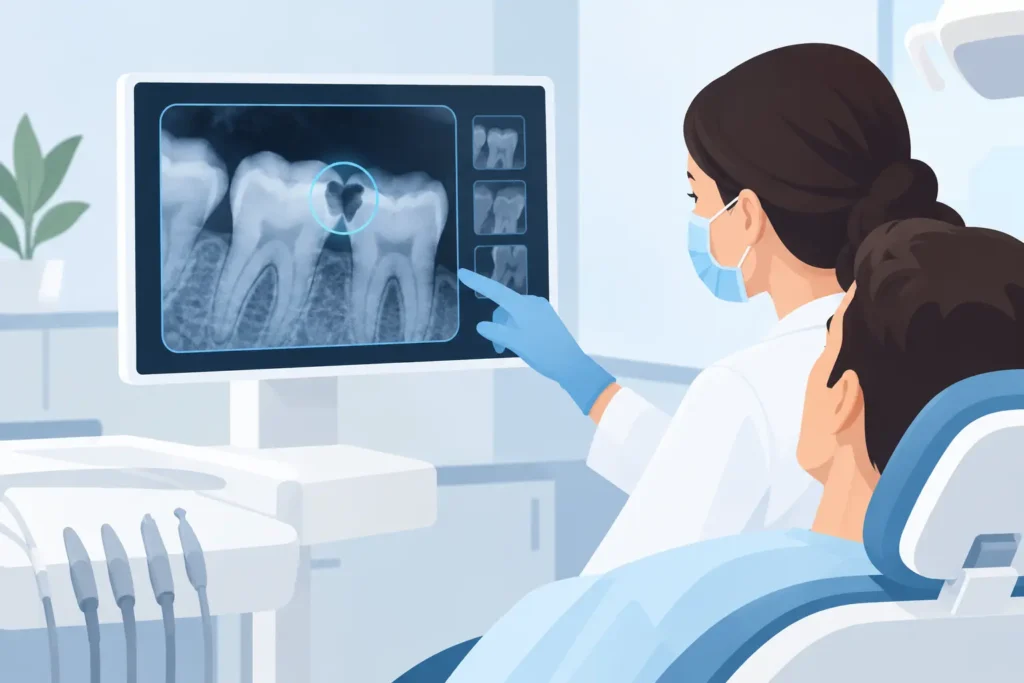
Digital dental x-rays use a small electronic sensor to create detailed images of your teeth and the supporting bone. Unlike a visual examination alone, x-rays allow your dentist to assess areas that are hidden below the gumline, inside a tooth, or between teeth.
Cavities appear on an x-ray as darker areas because the decay has weakened or removed some of the tooth’s mineral structure. This difference can help identify decay before it creates a visible hole in the tooth or causes a toothache.
The images are available on a screen almost immediately. Your dentist can enlarge an area, adjust the contrast when appropriate, and show you what they are seeing. For many patients, this makes a treatment conversation feel less uncertain. You can see why monitoring, preventive care, or a filling may be recommended rather than feeling asked to decide based on a description alone.
Bitewing X-Rays Are Especially Useful
Bitewing x-rays are commonly used during routine dental checkups because they show the upper and lower back teeth in the same image. They are particularly helpful for finding cavities between teeth, an area where toothbrush bristles and a mirror cannot provide a clear view.
These images can also help your dentist check around existing fillings, crowns, and other restorations. Decay can sometimes develop at the edge of an older restoration, where it may not be visible during a quick look in the mouth. Finding a concern early may allow for a smaller, more straightforward repair.
Can Digital X-Rays Detect Cavities at Every Stage?
Digital x-rays are highly useful, but they do have limits. They do not identify every cavity at its very earliest stage, and they are not meant to replace a careful clinical examination.
Very early enamel changes may be too small to show clearly on an x-ray. Some cavities on the chewing surfaces of molars can also be difficult to see in an image, particularly if the decay has not progressed very far. In those cases, your dentist may identify a concern through a visual exam, an intraoral camera, or by monitoring a suspicious area over time.
The opposite can happen as well: an x-ray may suggest a shadow or change that needs closer evaluation but does not automatically mean immediate drilling is necessary. A skilled dentist interprets the image in context. The depth of the area, whether the tooth surface has broken down, your cavity risk, and whether the change is progressing all matter.
This personalized approach helps avoid two common problems: waiting too long to treat active decay and treating a tooth more aggressively than the situation requires.
What Digital X-Rays Can Show Beyond Decay
Cavity detection is a major reason for taking x-rays, but these images can provide valuable information about your overall oral health. Depending on the type of x-ray, they may help assess bone levels around teeth, infection near a tooth root, the condition of a tooth before a crown or root canal, impacted teeth, and changes beneath existing dental work.
For patients who have had fillings, crowns, or root canal treatment, periodic x-rays help your dentist monitor restorations that may look perfectly normal from the outside. This supports the restorative goal of preserving healthy tooth structure whenever possible.
At Restorative Dental Jamaica, digital imaging can be paired with a thorough examination and patient-centered discussion, so you understand both the findings and the options available to you.
Are Digital Dental X-Rays Safe?
Digital x-rays generally use less radiation than older film-based dental x-rays. Modern equipment, protective measures, and carefully selected imaging all help keep exposure low. Your dentist should recommend x-rays based on your individual needs rather than taking the same images for every patient at every visit.
How often you need x-rays depends on several factors. Someone with a history of frequent cavities, many restorations, dry mouth, gum concerns, or a new dental problem may benefit from images more often than someone with excellent oral health and a low risk of decay. Children and teenagers may also need imaging on a different schedule because their teeth and jaws are still developing.
If you are pregnant, think you may be pregnant, or have concerns about radiation exposure, let your dental team know. Dental care can often still be provided safely when needed, and your dentist can explain the most appropriate approach for your situation.
Why Early Cavity Detection Matters
Decay does not always cause pain right away. In fact, a cavity can spread through enamel and reach the softer inner layer of the tooth before you notice sensitivity to sweets, cold drinks, or pressure. Once bacteria reach the tooth’s pulp, treatment can become more involved and may include root canal therapy and a dental crown.
Early detection gives you more choices. A small cavity may only need a conservative white filling. In some very early cases where the enamel surface is still intact, your dentist may recommend fluoride, improved cleaning between teeth, dietary changes, or closer monitoring instead of a filling right away.
That does not mean every dark spot should be watched. Active decay that is progressing needs treatment. The advantage of regular examinations and appropriate x-rays is that your dentist can act at the right time – before a minor issue becomes a painful emergency or threatens the long-term health of the tooth.
Keeping Cavities From Hiding Between Visits
X-rays are excellent at revealing what cannot be seen, but prevention remains your first line of defense. Brush twice daily with fluoride toothpaste, clean between your teeth every day, and keep regular professional checkups. If you tend to sip sweetened drinks, snack frequently, experience dry mouth, or have had several cavities in the past, tell your dentist. These details can affect both your risk level and your prevention plan.
It also helps to pay attention to small changes. Sensitivity when you bite, food repeatedly catching in one area, a rough edge around a filling, or a new reaction to cold are all worth mentioning. They may not always indicate a cavity, but they deserve a professional assessment.
A dental x-ray is not something to fear or postpone when it is recommended. It is a practical, low-exposure tool that helps protect the teeth you want to keep. If it has been a while since your last exam, a comfortable visit and a clear look at your smile can bring reassurance – and may help you address a small concern while it is still simple to treat.
Leave a reply







Leave a reply