
Understanding the Dental Crown Procedure
A tooth that has cracked, broken down, or become painful can make even a simple meal feel stressful. Understanding dental crown procedure details before treatment can replace that uncertainty with a clear plan. A crown is designed to protect a weakened tooth while restoring its shape, strength, and appearance, helping you smile and chew with greater confidence.
At Restorative Dental Jamaica, crown treatment is approached with your long-term oral health and comfort in mind. Every tooth is different, so your dentist will first determine whether a crown is the right way to preserve it or whether another treatment may be more appropriate.
What Is a Dental Crown?
A dental crown is a custom-made cover that fits over the entire visible portion of a tooth. It is often called a cap, but a modern crown is carefully shaped and shaded to blend naturally with your surrounding teeth. Once it is cemented in place, it becomes a protective outer layer for the tooth underneath.
Crowns are commonly recommended when a tooth has a large filling, extensive decay, a fracture, severe wear, or damage after root canal therapy. They can also improve the look of a tooth that is misshapen or noticeably discolored when simpler cosmetic options are not suitable.
The goal is not simply to make a tooth look better. A properly planned crown helps distribute biting pressure more evenly and can reduce the chance of a weakened tooth breaking further. Whenever possible, preserving your natural tooth is usually preferable to removing it.
When a Crown May Be the Right Choice
Your dentist may suggest a crown when a filling would not leave enough healthy tooth structure to support normal chewing. For example, a back tooth with a large old filling may be vulnerable to cracking, even if it is not causing constant pain. A crown can reinforce that tooth before a more serious break occurs.
A crown may also be part of a larger treatment plan. After root canal therapy, a tooth can become more brittle over time, especially a molar that handles heavy chewing forces. Covering it with a crown can help protect the tooth from fracture. Crowns may also support a dental bridge or restore a dental implant, although those treatments involve their own planning process.
Not every damaged tooth needs a crown. Small areas of decay may be treated with a white filling, while minor chips may respond well to bonding. The best option depends on the amount of healthy tooth remaining, where the tooth is located, your bite, and your goals for appearance and durability.
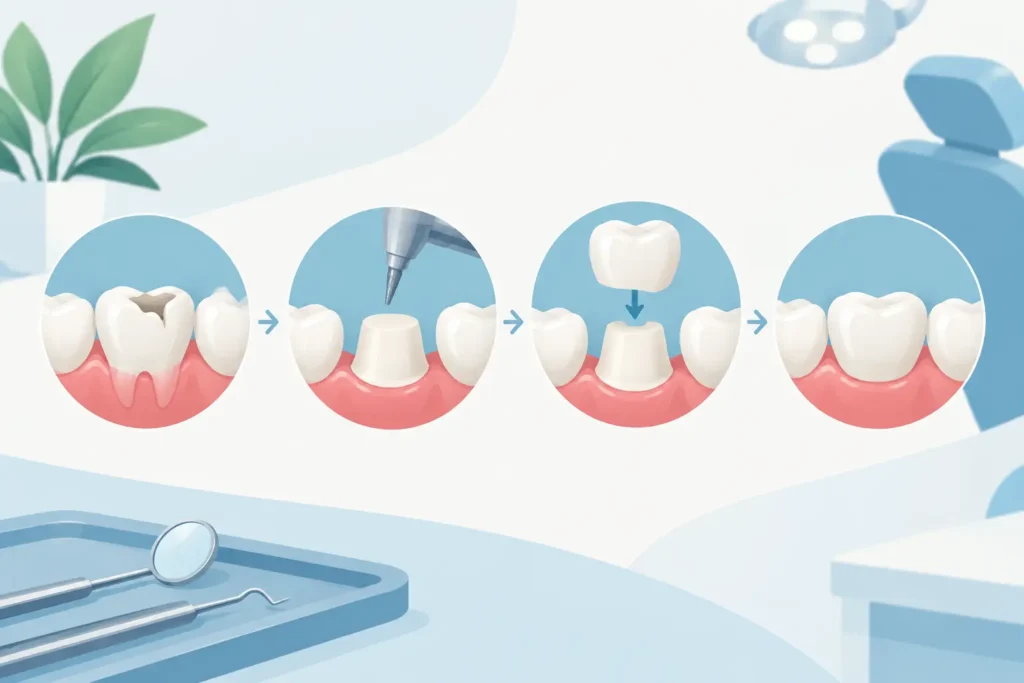
Understanding the Dental Crown Procedure Step by Step
Most traditional crown treatments are completed over two visits, with a temporary crown worn between appointments. In some cases, the timeline may vary depending on the condition of the tooth, gum health, and whether additional treatment is needed first.
Your examination and treatment plan
The process begins with a dental assessment. Your dentist examines the tooth, nearby teeth, and gums, often using digital X-rays and intraoral images to see what cannot be viewed from the surface alone. This helps identify decay beneath old fillings, cracks, infection, or bone changes around the tooth.
You will also have an opportunity to discuss concerns such as sensitivity, appearance, timing, and budget. A crown should feel like an informed decision, not a rushed one. If the tooth has an active infection or severe inflammation, treatment such as root canal therapy may be needed before the crown can be placed.
Preparing the tooth
At the preparation visit, the area is numbed so you can remain comfortable. Your dentist gently reshapes the tooth by removing a small amount of enamel and any damaged or decayed material. This creates the space needed for the crown to fit securely without looking bulky or interfering with your bite.
If a large portion of the tooth is missing, the dentist may first rebuild the core with restorative material. This provides a stable foundation for the crown. In some situations, more advanced support may be considered, but this is only recommended when it is clinically necessary.
Taking the impression
Once the tooth is prepared, your dentist records its shape and the way your upper and lower teeth meet. Depending on the case, this may involve digital scanning or a traditional impression material. The record is sent to a dental laboratory, where your custom crown is made to fit your tooth and bite.
Shade selection is also important, particularly for front teeth. The aim is a result that complements your smile rather than draws attention to itself.
Wearing a temporary crown
Because your permanent crown takes time to fabricate, a temporary crown is usually placed over the prepared tooth. It protects the tooth and helps you function normally while the final restoration is being made.
Temporary crowns are durable enough for short-term use, but they are not intended to handle the same force as a permanent crown. Avoid chewing sticky foods such as gum or hard foods such as ice on that side when possible. If the temporary crown comes loose, contact your dental office promptly so the tooth remains protected.
Fitting and cementing the permanent crown
At the final visit, the temporary crown is removed and the permanent one is tried in. Your dentist checks the fit around the gumline, the color, and how the crown meets your opposing teeth. Small adjustments may be made to ensure your bite feels natural.
Once everything is satisfactory, the crown is cemented in place. You may notice that it feels slightly different at first because your tongue is sensitive to any new surface. That awareness usually fades quickly. If your bite feels high, uneven, or painful after the numbness wears off, let your dentist know. A simple adjustment can prevent unnecessary pressure on the tooth.
Choosing a Crown Material
Crowns can be made from several materials, and there is no single best choice for every patient. All-ceramic or porcelain crowns are popular because they can closely match natural tooth color, making them an excellent option for visible teeth. Zirconia crowns offer notable strength and are often considered for teeth that take heavier biting forces.
Porcelain fused to metal crowns may be appropriate in certain situations, while gold-based crowns remain a durable option for some back teeth. Your dentist will recommend a material based on the tooth’s location, how strongly you bite, the space available, your cosmetic preferences, and your treatment budget.
What to Expect After Crown Placement
Mild sensitivity to temperature or pressure can occur for a short time after the tooth is prepared or the crown is cemented. Tender gums around the treated tooth may also settle within a few days. However, persistent pain, swelling, a loose crown, or pain when biting should be checked rather than ignored.
A crown itself cannot develop a cavity, but the natural tooth at its edge can. Daily care remains essential. Brush twice daily with fluoride toothpaste, clean between your teeth every day, and keep up with routine dental examinations and cleanings. If you clench or grind your teeth, a custom night guard may help protect both your crown and your natural teeth.
With attentive care, many crowns can serve patients well for years. Their lifespan depends on oral hygiene, diet, bite forces, the health of the underlying tooth, and regular professional care. Avoid using your teeth to open packages or bite hard objects, as these habits can damage even strong restorations.
Questions Patients Often Ask
Does getting a crown hurt?
The tooth and surrounding area are numbed during preparation, so most patients feel pressure rather than pain. It is normal to feel some sensitivity afterward, but your dental team can advise you on what is expected and how to stay comfortable.
How long does the dental crown procedure take?
The preparation appointment commonly takes about one to two hours, while the final fitting is usually shorter. The time between visits depends on the laboratory process and your individual treatment needs.
Can a crown be replaced?
Yes. If a crown becomes worn, cracked, loose, or no longer fits properly because of changes in the tooth or gums, it can often be replaced. Early evaluation gives your dentist the best chance of protecting the tooth beneath it.
If a damaged tooth is making you hesitate before meals or hide your smile, a thoughtful dental assessment can give you clear answers. The right crown treatment should leave you feeling cared for, comfortable, and more confident each time you smile.
Leave a reply








Leave a reply