
Root Canal Versus Implant Options Explained
A tooth that throbs when you sip coffee, hurts when you bite, or has broken below an old filling can make one question feel urgent: should you save it or replace it? The root canal versus implant decision is not simply about choosing the newest option or the fastest fix. It is about understanding what is happening beneath the surface and choosing the treatment that gives your smile the best long-term chance.
For many patients, preserving a natural tooth is the preferred outcome when it can be done predictably. In other cases, an extraction and dental implant may offer a healthier, more stable solution. A careful examination, digital x-rays, and an honest conversation about your goals can make the path forward much clearer.
Root Canal Versus Implant: The Main Difference
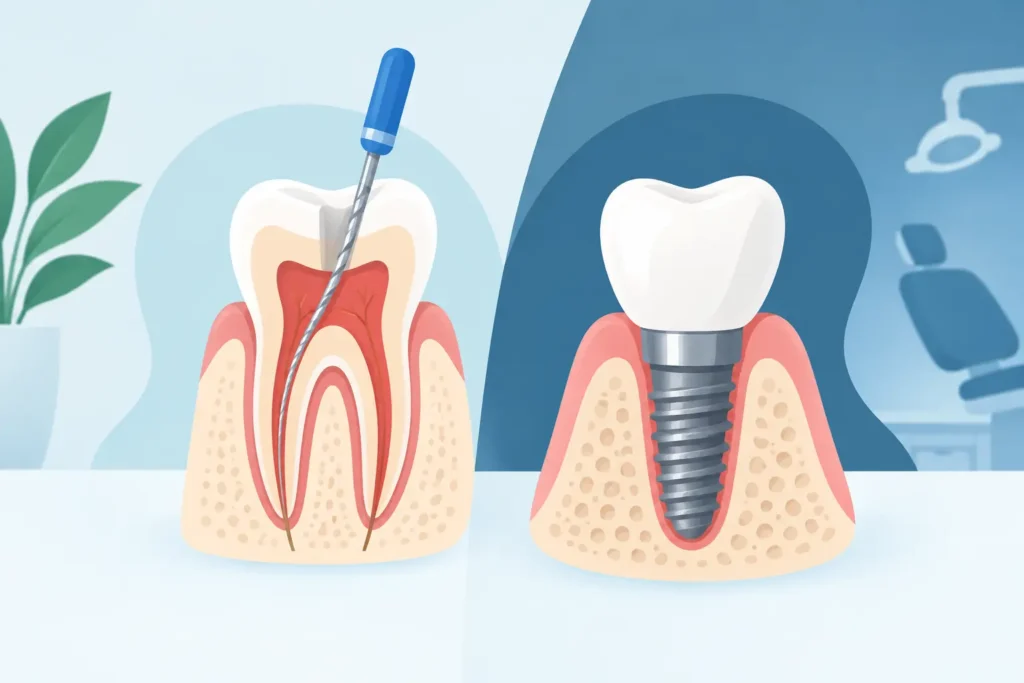
A root canal treats infection or inflammation inside a tooth while keeping the tooth in place. During treatment, the dentist removes damaged pulp, cleans and disinfects the canals inside the root, and seals the tooth. Because a tooth that has needed root canal therapy can become more brittle, it is often protected afterward with a custom crown.
A dental implant replaces a tooth that has already been removed or cannot be saved. The implant is a small post placed in the jawbone to act like a tooth root. After it heals and bonds with the bone, it supports a crown that restores the appearance and function of the missing tooth.
Both treatments can be excellent. The deciding question is usually not, “Which is better?” It is, “Is this tooth still a good candidate to save?”
When a Root Canal May Be the Better Choice
If the tooth has enough healthy structure and the surrounding bone and gums are stable, root canal treatment can allow you to keep your natural tooth for many years. Your own tooth has a natural connection to the jaw and neighboring teeth, and saving it avoids the need for an extraction and a replacement.
Root canal therapy is often recommended for deep decay, a cracked tooth that has affected the nerve but can still be restored, or an infection at the root tip. It may also be appropriate when an old, large filling has failed and bacteria have reached the inner pulp.
Saving the tooth can also be more straightforward in the short term. Treatment is usually completed over one or more appointments, followed by the final restoration when appropriate. The exact timeline depends on the level of infection, the tooth involved, and whether a crown is needed.
That said, a root canal is only worthwhile when the tooth has a sound foundation. A tooth with a severe vertical root fracture, very limited healthy tooth structure above the gumline, or advanced gum disease may not have a predictable future even after treatment.
When an Implant May Be the Better Choice
An implant may be recommended when a tooth cannot be restored reliably. This can happen if decay extends too far below the gumline, a fracture runs through the root, or repeated dental work has left too little strong tooth structure to support a crown.
Implants can also be a valuable option after a tooth has already been lost. Unlike a removable denture, an implant-supported crown stays in place and is designed to feel and function much like a natural tooth. Replacing a missing tooth can help maintain chewing comfort, support clear speech, and reduce the chance of nearby teeth shifting into the space.
However, implant treatment requires enough healthy bone for support and healthy gums for long-term success. Some patients need bone grafting before implant placement, which can extend the treatment timeline. Smoking, uncontrolled diabetes, active gum disease, and inconsistent home care can also affect healing and success rates.
An implant is a highly effective tooth replacement, but it is not a casual substitute for a tooth that can still be saved well. It requires surgery, healing time, and ongoing care, just like a natural tooth.
Comparing Comfort, Treatment Time, and Cost
Both root canals and implants are performed with patient comfort in mind. Modern local anesthesia and thoughtful care can make either treatment far more comfortable than patients expect. Often, the pain that brings someone to the office is caused by the infection or damaged tooth, not by the treatment designed to resolve it.
A root canal and crown may involve fewer stages than an implant, particularly when the tooth is already stable enough for restoration. Implant treatment usually includes extraction if necessary, a healing period, implant placement, another period for healing, and placement of the final crown. Immediate options are available in selected cases, but they are not right for every patient.
Costs vary based on the tooth, the extent of damage, the need for a crown, and whether additional procedures are required. A root canal may appear less expensive at the outset, while an implant may involve a larger investment over several appointments. The most meaningful comparison considers the expected lifespan of each treatment and the likelihood of needing more work later.
Your dentist should explain the recommended treatment, realistic alternatives, anticipated costs, and what could happen if treatment is delayed. Clear information helps you make a decision with confidence rather than pressure.
The Role of a Crown After Treatment
Whether you choose a root canal or an implant, the final crown matters. A crown restores the visible part of the tooth, allowing it to blend naturally with your smile and handle everyday biting forces.
After root canal therapy, a crown is particularly important for back teeth because they absorb significant pressure during chewing. It helps protect the remaining tooth from fracture. For an implant, the crown is carefully designed to fit your bite and sit comfortably beside the neighboring teeth.
A well-made crown does more than improve appearance. It is part of the restoration’s function, comfort, and long-term protection.
What Happens If You Wait Too Long?
Dental pain can fade temporarily, but that does not always mean the problem has resolved. When a tooth nerve dies, discomfort may decrease while infection continues around the root. Swelling, an abscess, bone loss, and damage to a tooth that might otherwise have been saved can follow.
Delaying treatment can also make replacement more complex. After an extraction, the jawbone naturally begins to change in the area where the tooth once sat. Prompt evaluation gives you more options, whether the right answer is root canal therapy, a crown, extraction, or an implant plan.
If you have facial swelling, fever, difficulty swallowing, or trouble breathing, seek urgent medical or dental care right away.
How Your Dentist Helps You Decide
The best recommendation begins with a complete assessment, not a guess based on a single x-ray or a painful day. Your dentist will examine the amount of remaining tooth structure, check for cracks, assess the gums and bone, evaluate your bite, and review your overall health history. Digital x-rays and intraoral images can help you see what the dentist sees and understand the reason behind the recommendation.
Your priorities matter, too. Some patients want the most conservative option possible. Others are concerned about the long-term reliability of a heavily damaged tooth or want to replace a tooth that has already been missing for years. There is no one-size-fits-all answer, and a caring dental team should make space for your questions.
At Restorative Dental Jamaica, treatment planning is centered on preserving healthy natural teeth whenever possible while offering dependable restorative options when replacement is the better path. The goal is not to sell a procedure. It is to help you feel comfortable, informed, and confident about your smile.
A Thoughtful Next Step for Your Smile
If a tooth is painful, cracked, deeply decayed, or already missing, schedule an assessment before the problem becomes more complicated. Bring your questions, share your concerns about comfort and cost, and ask what each option would mean for your specific tooth. A timely, personalized evaluation can turn a stressful decision into a clear plan for protecting your health and smiling comfortably again.
Leave a reply







Leave a reply