
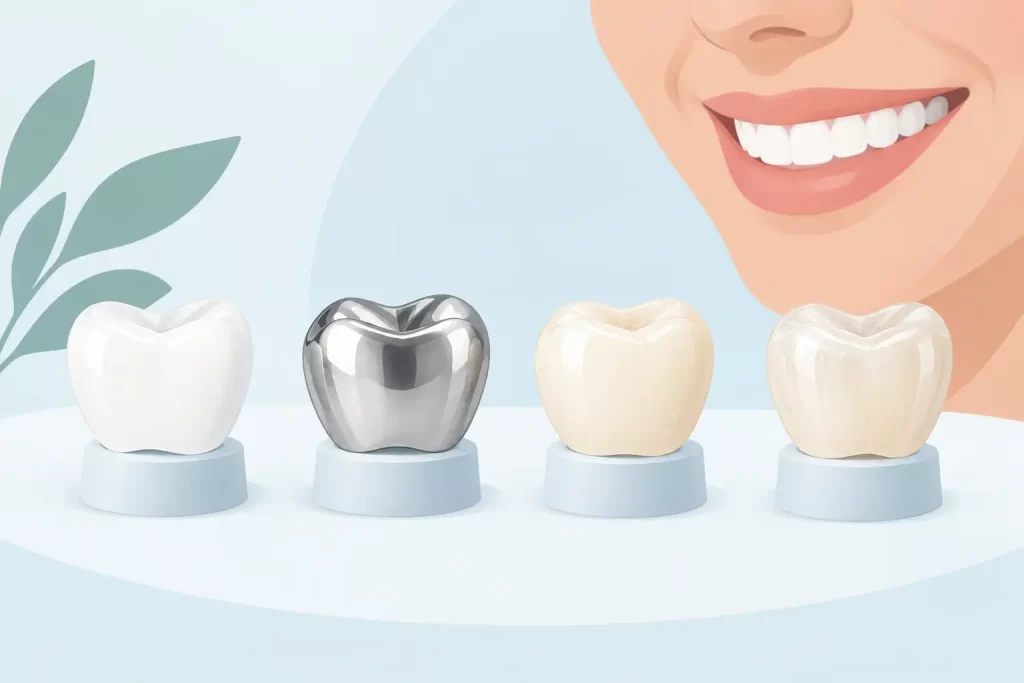
Crown Material Comparison for Your Smile
A dental crown should do more than cover a damaged tooth. It should feel comfortable when you bite, blend naturally into your smile, and protect the tooth for years to come. That is why a thoughtful crown material comparison matters. The best choice is not always the strongest material or the most cosmetic-looking one. It is the material that suits the tooth being treated, your bite, your smile goals, and your daily habits.
At Restorative Dental Jamaica, we help patients make this decision with clear information and personalized care. Whether your crown is needed after a root canal, to repair a cracked tooth, or to replace an old restoration, the goal is to preserve as much of your natural tooth as possible while restoring your confidence.
Why Crown Material Matters
A crown is a custom-made restoration that fits over the visible portion of a tooth. It can strengthen a tooth that has been weakened by deep decay, a large filling, fracture, wear, or root canal treatment. Because crowns must handle the pressure of chewing while remaining comfortable and attractive, the material makes a real difference.
Some materials are especially durable for back teeth, where biting forces are greatest. Others are designed to reflect light more like natural enamel and may be ideal for a front tooth. Your dentist will also consider how much healthy tooth structure remains, whether you grind or clench your teeth, the shade of surrounding teeth, and the condition of your gums.
A good crown is never a one-size-fits-all solution. The material should support both the health of the tooth and the way you want your smile to look.
Crown Material Comparison: The Main Options
Porcelain-Fused-to-Metal Crowns
Porcelain-fused-to-metal, often called PFM, crowns have a metal foundation covered by tooth-colored porcelain. They have been used successfully for many years because the metal provides dependable strength while the porcelain provides a more natural appearance than a full metal crown.
PFM crowns can work well for both front and back teeth. However, porcelain may chip over time, particularly for patients who clench or grind. In some cases, a dark line can become visible near the gumline as gums naturally recede with age. This is generally more noticeable on front teeth than on molars.
For patients who want a balance of strength and a tooth-colored finish, a PFM crown may still be a sensible choice. It is especially useful when the clinical situation calls for extra structural support.
All-Ceramic and Porcelain Crowns
All-ceramic crowns are made without metal. They are valued for their lifelike appearance, as high-quality ceramic can reflect and transmit light in a way that closely resembles natural enamel. For a visible front tooth, this can make a meaningful difference.
These crowns are an excellent option when appearance is a priority, such as restoring a chipped, discolored, or heavily filled front tooth. They can be carefully matched to the color and character of neighboring teeth, helping the restoration look like part of your natural smile rather than a separate dental repair.
The trade-off is that not every ceramic material is ideal for every high-pressure bite. Modern ceramics are strong, but someone with significant grinding habits may need a different material or a protective night guard. Your dentist will assess your bite before recommending an all-ceramic crown for a back tooth.
Zirconia Crowns
Zirconia is a modern ceramic material known for exceptional strength. It is often recommended for molars, bridges, and teeth that absorb heavy chewing forces. A zirconia crown is tooth-colored and does not have a metal edge, which gives it an aesthetic advantage over traditional metal-based options.
Earlier zirconia crowns could appear more opaque than natural enamel. Newer multilayer and high-translucency zirconia options offer a much more natural finish, making them suitable for many visible areas of the mouth as well. Still, the precise look depends on the type of zirconia selected and the tooth underneath it.
Zirconia can be an excellent choice for patients who need durability without sacrificing a natural-looking smile. It is also often considered for people who have metal sensitivities. Because it is so strong, careful planning and precise polishing are essential to ensure it is kind to the opposing teeth.
Full Metal Crowns
Full metal crowns may be made from gold alloy or other dental metal alloys. While they do not match natural tooth color, they remain one of the most durable restoration choices available. Metal crowns are highly resistant to fracture and can often be made with less removal of healthy tooth structure than some other crown types.
They are usually best suited to molars that are not readily visible when you smile. For a patient with powerful chewing forces or a history of broken restorations, a metal crown may offer practical long-term benefits. Metal also tends to wear gently against the opposing tooth.
The obvious consideration is appearance. Many patients prefer a tooth-colored option, especially in visible areas. Yet for the right back tooth, strength and longevity may matter more than color.
How We Choose the Right Crown for You
The best material starts with a careful examination, not a quick guess. Digital X-rays and close visual assessment allow your dentist to evaluate the root, surrounding bone, gum health, and remaining tooth structure. We also look at your bite and discuss what you need from the restoration.
If the crown will be on a front tooth, shade matching and translucency may lead the conversation. If it is on a molar with a large old filling or a history of cracking, strength may take priority. A patient who drinks coffee, plays contact sports, or clenches at night may have different needs from someone restoring a single visible tooth for cosmetic reasons.
Cost can also be part of the discussion. Different materials and laboratory processes vary in price, but value is more than the initial fee. A crown that fits accurately, supports a healthy bite, and is appropriate for the tooth can help prevent repeated treatment later.
A Crown Is Only as Good as Its Fit and Care
Material matters, but so do the preparation, fit, cementation, and follow-up care. Even an excellent crown can fail if decay develops around its edge or if excessive grinding places it under constant pressure. This is why regular checkups and professional cleanings remain essential after your crown is placed.
At home, brush twice daily with fluoride toothpaste and clean between your teeth every day. Pay particular attention to the gumline around the crown, where plaque can collect. Avoid using crowned teeth to open packages or bite hard objects. If you grind your teeth, wearing a custom night guard can protect both your crown and your natural enamel.
You should contact your dentist if a crown feels loose, painful, rough, or too high when you bite. Small adjustments made early can prevent discomfort and protect the tooth underneath.
Choosing With Confidence
There is no single winner in every crown material comparison. Porcelain and ceramic can offer beautiful results in the smile zone. Zirconia provides impressive strength with a tooth-colored appearance. Metal remains a reliable option when durability is the priority. PFM crowns can offer a proven middle ground in selected cases.
The most reassuring next step is a personalized consultation. With a careful examination and an honest conversation about your goals, your dentist can recommend a crown that protects your tooth, feels right in your bite, and lets you smile with confidence.
Leave a reply







Leave a reply