
Extraction Versus Root Canal: Which Saves Your Smile?
A severe toothache can make every option sound intimidating. When facing extraction versus root canal, the right choice is rarely about simply choosing the faster procedure. It is about understanding what is happening inside the tooth, whether it can be restored predictably, and what will best support your comfort, bite, and smile for years ahead.
At Restorative Dental Jamaica, we approach this decision with one priority in mind: preserving your natural tooth whenever it is a healthy, practical option. Still, there are times when removing a tooth is the better path. A thoughtful dental examination, supported by digital x-rays and a clear conversation about your goals, helps make the decision feel less overwhelming.
Extraction Versus Root Canal: The Key Difference
A root canal treats infection or inflammation within a tooth. Deep inside every tooth is soft tissue called the pulp, which contains nerves and blood vessels. Decay, a deep filling, a crack, repeated dental work, or trauma can allow bacteria to reach this area. That can lead to pain, sensitivity, swelling, or an abscess.
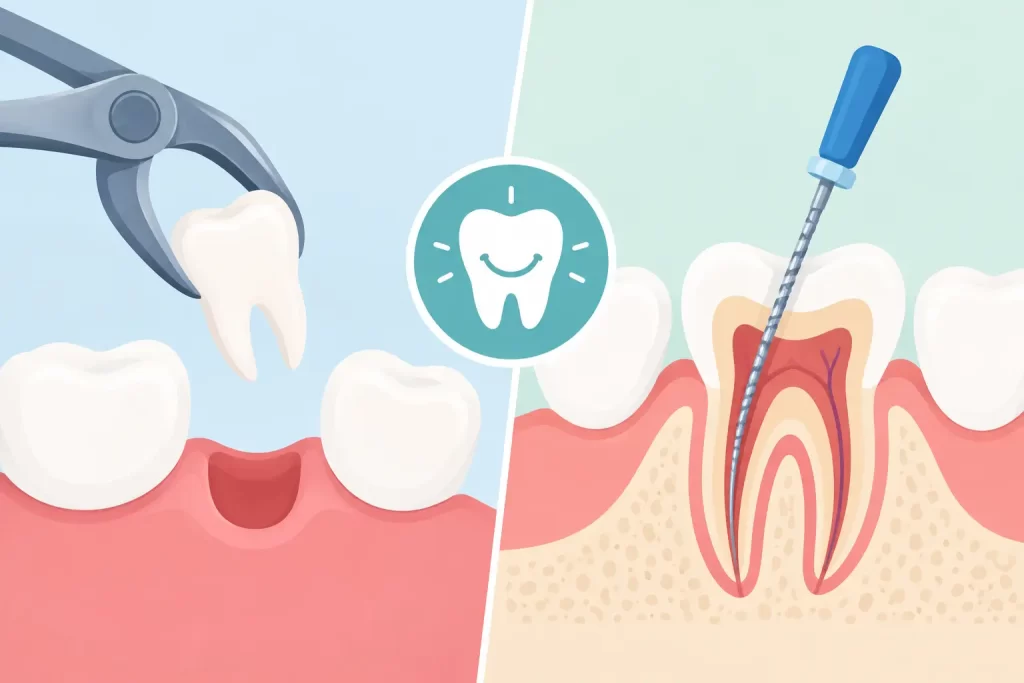
During root canal therapy, the dentist removes the damaged pulp, cleans and disinfects the inner canals, and seals the tooth. Because the outside structure of the tooth remains, it can usually continue functioning after it is restored. A crown is often recommended afterward, especially for a back tooth or a tooth that has lost a significant amount of structure.
An extraction removes the entire tooth, including its roots. It may be necessary when the tooth is too damaged to restore, severely loose from gum disease, fractured below the gum line, or affected by an infection that cannot be successfully treated. Extraction can stop the source of pain and infection, but it also leaves a space that may need to be addressed later.
Why Saving a Natural Tooth Is Often Preferred
Your natural teeth are designed to work together. When a tooth can be treated successfully, keeping it may help preserve normal chewing, maintain alignment, and protect the shape of your smile. A root canal does not remove the tooth’s roots, so the tooth continues to stimulate the surrounding jawbone when you bite and chew.
Leaving an extraction space untreated can allow neighboring teeth to shift gradually. The opposing tooth may also begin to move out of position. These changes can affect how your teeth meet, make cleaning more difficult, and sometimes create new restorative needs over time.
A root canal is not the right answer in every case, but it can be an excellent investment when the tooth has enough healthy structure to support a lasting restoration. With proper care, a treated and crowned tooth can serve you well for many years.
A root canal is not meant to be painful
Many patients associate root canal treatment with pain, but the procedure is designed to relieve pain caused by an inflamed or infected tooth. Modern local anesthesia helps keep treatment comfortable, and careful planning allows your dentist to work efficiently.
It is common to have mild tenderness afterward, particularly when biting, but this usually settles as the area heals. If anxiety has kept you from seeking care, let the dental team know. Feeling informed, comfortable, and supported is part of good treatment.
When Extraction May Be the Better Choice
There are situations where attempting to save a tooth would not offer a reliable result. For example, a tooth may be broken so far below the gum line that there is not enough healthy material for a crown to hold. A vertical root fracture can also make long-term restoration unlikely.
Advanced gum disease is another consideration. If bone loss has made a tooth very loose, root canal treatment alone will not correct the lack of support around it. In some cases, extensive decay has destroyed too much of the tooth for a stable restoration, even after the infection is removed.
Extraction may also be considered if a tooth has already had root canal therapy and has developed a problem that cannot be predictably retreated. This is not a failure on the patient’s part. Teeth, restorations, and gums all change over time, and the best plan should reflect what will be dependable now.
If extraction is recommended, the next question is usually how to replace the tooth. Depending on the location of the tooth, your oral health, budget, and treatment goals, replacement options may include a dental implant, bridge, or partial denture. For some wisdom teeth and certain back teeth, replacement may not be necessary, but that decision should be made carefully rather than assumed.
Comparing Comfort, Time, and Cost
Both options have immediate and long-term considerations. An extraction may seem simpler because the tooth is removed in one visit. However, if the missing tooth should be replaced, the full treatment process and cost can become more involved. Healing time also matters, particularly if an implant is being considered later.
Root canal treatment generally requires restoring the tooth afterward. A filling may be sufficient for a small access opening in a front tooth, while a crown is commonly needed for a weakened molar. This adds to the overall investment, but it may reduce the need for replacing a missing tooth.
Cost should be discussed openly, but it should not be the only deciding factor. The lower upfront cost is not always the lower long-term cost. A personalized treatment estimate allows you to compare the complete picture, including restoration or replacement, instead of comparing two procedure fees alone.
Your dentist will also consider timing. If you have significant swelling, severe pain, or an active infection, prompt care is essential. In some cases, treatment can begin right away. In others, a short period of medication or additional planning may be appropriate before completing the procedure.
How Your Dentist Decides What Is Best
A recommendation should be based on more than an x-ray alone. Your dentist will evaluate the extent of decay, the condition of the roots, the level of bone support, the presence of cracks, the health of nearby teeth, and how the tooth fits into your bite. An intraoral camera can also help you see what the dentist sees, making the conversation clearer.
Your priorities matter too. Perhaps you are focused on preserving your natural tooth, have an upcoming event, want the most predictable long-term option, or need a plan that fits your financial timeline. There is no benefit in rushing into a decision without understanding the likely outcome of each choice.
Ask direct questions during your appointment. Is the tooth restorable? What restoration will it need after treatment? What is the expected prognosis? If extraction is advised, should the tooth be replaced, and when? Clear answers help you choose with confidence.
Do Not Wait for Pain to Decide for You
Tooth infections do not always cause constant pain. A tooth may stop hurting after the nerve has died, while infection continues around the root. Signs that deserve prompt attention include facial swelling, a pimple-like bump on the gums, lingering sensitivity to hot or cold, pain when chewing, a darkened tooth, or a bad taste that keeps returning.
Early care can sometimes make the difference between a straightforward restoration and a more complex treatment. Even if you are unsure whether your tooth needs a root canal or extraction, an assessment gives you reliable answers and a path forward.
A damaged tooth can affect your comfort, confidence, and daily routine, but you do not have to make the decision alone. Schedule an examination, share your concerns openly, and give yourself the benefit of a plan designed to protect your health and your smile.
Leave a reply








Leave a reply