
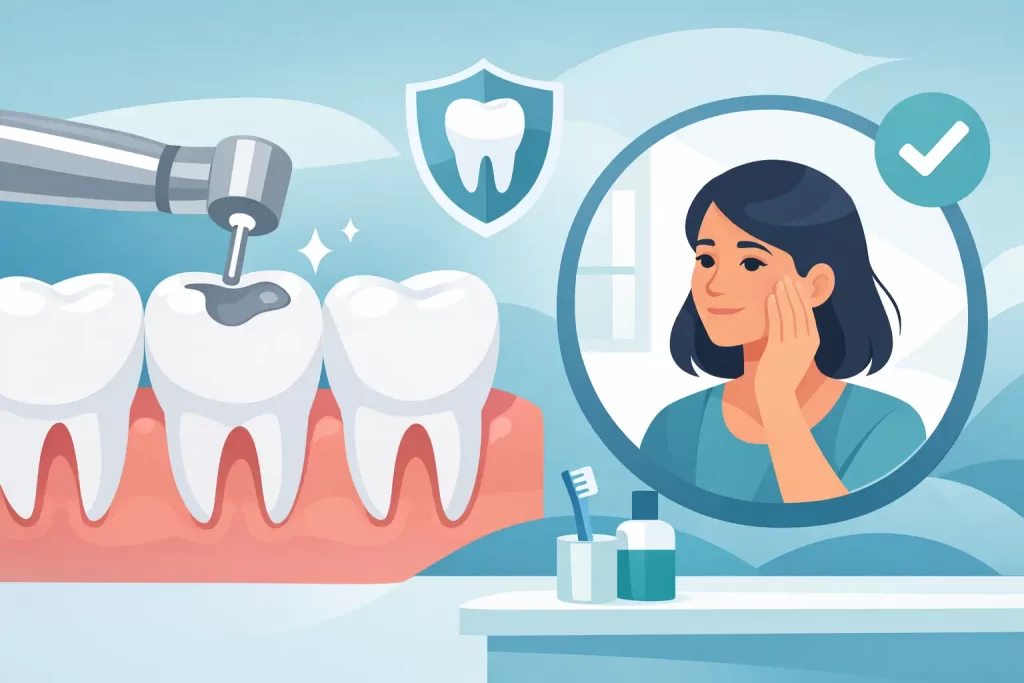
Cavity Filling Results: What to Expect Afterward
A small cavity can feel like a minor problem until it starts catching food, causing sensitivity, or turning into a sudden toothache. The good news is that favorable cavity filling results can stop decay from progressing, restore the tooth’s shape and function, and help you keep more of your natural smile. Knowing what is normal after treatment can make the experience feel far more comfortable and reassuring.
A filling is designed to repair the part of a tooth weakened by decay. It is not simply a cosmetic patch. By removing the damaged area and sealing the tooth with a durable restorative material, your dentist helps protect the healthy tooth structure that remains.
What Good Cavity Filling Results Should Feel Like
Once the anesthetic wears off, a well-fitted filling should allow you to bite, chew, and speak normally. The tooth should feel smooth, comfortable, and secure. With a tooth-colored filling, the restoration may blend so naturally with your enamel that it is difficult to notice when you smile.
It is common for the treated tooth to feel slightly different at first. Your tongue is remarkably sensitive and may notice even a very smooth new filling for a few days. That awareness usually fades quickly as your mouth adjusts.
The most meaningful result is often one you cannot see: decay has been removed before it could travel deeper into the tooth. Treating a cavity early may help you avoid more extensive care later, such as root canal therapy, a crown, or an extraction.
Appearance and Function Both Matter
For teeth that show when you smile, white fillings can provide a natural-looking repair without the dark appearance many people associate with older metal restorations. Your dentist will select and shape the material to complement the surrounding tooth as closely as possible.
Function matters just as much. A filling should rebuild the tooth so your bite meets evenly. If a filling feels high when you close your teeth together, or if you find yourself avoiding that side while chewing, a simple adjustment may be needed. Do not wait for discomfort to become your new normal.
Cavity Filling Results in the First Few Days
The numb feeling from local anesthetic typically resolves within a few hours. Until it does, be careful with hot drinks and chewing, especially if the filling was placed on a lower tooth. It is easy to accidentally bite your cheek, lip, or tongue while you are numb.
Mild sensitivity to cold, heat, pressure, or sweets can occur after a filling, particularly when the cavity was deep or close to the nerve. This sensitivity should gradually improve rather than intensify. A little tenderness when chewing can also happen as the tooth settles after treatment.
Choose softer foods if your mouth feels sore, and chew on the opposite side for a day if that feels more comfortable. You can brush and floss as usual, but use a gentle touch around the area if your gums are tender. Good home care is part of protecting your new restoration from further decay around its edges.
Not every patient has the same recovery. A very shallow cavity may feel completely normal immediately. A larger filling can take longer to settle because more of the tooth was affected. The location also matters: back teeth absorb stronger chewing forces than front teeth, while fillings between teeth can require extra attention to flossing technique.
When Sensitivity Needs a Closer Look
Some discomfort is expected, but persistent or worsening symptoms deserve a call to your dental office. Pain that lasts, throbs on its own, wakes you at night, or lingers long after a hot or cold drink may mean the nerve inside the tooth is irritated beyond what a filling alone can resolve.
Contact your dentist if you notice any of the following:
- A sharp pain every time you bite or release your bite
- A filling that feels too high or changes the way your teeth close
- Sensitivity that is getting worse after several days rather than better
- Swelling, fever, a bad taste, or a pimple-like bump on the gums
- A cracked, loose, or missing filling
These signs do not automatically mean something serious has happened. Often, the solution is a minor bite adjustment or a follow-up assessment. However, prompt attention protects your comfort and gives the tooth the best chance of being preserved.
How Long Do Cavity Filling Results Last?
A filling can last for many years, but no restoration lasts forever. Its lifespan depends on the size and location of the filling, the material used, your bite, daily oral hygiene, diet, and whether you grind or clench your teeth.
Small fillings in low-pressure areas may remain stable for a long time. Larger restorations on back teeth work harder every day and may eventually need replacement or additional protection. If decay has removed a significant portion of a tooth, a crown may be a better long-term option than repeatedly placing a very large filling. Your dentist can explain why one approach may better support your tooth than another.
The edges of a filling deserve special attention. New decay can form where the filling meets natural enamel if plaque remains there regularly. That does not mean the original treatment failed. It means the tooth needs ongoing care, just as every other tooth does.
Protecting Your Filling at Home
Brushing twice daily with fluoride toothpaste and cleaning between your teeth once a day help protect both the filling and the surrounding enamel. This is especially important for fillings between teeth, where a toothbrush cannot reach effectively.
Try to limit frequent sipping of sugary drinks and repeated snacking on sweet or acidic foods. The issue is not only how much sugar is consumed, but how often teeth are exposed to it. If you enjoy coffee, soda, juice, or sweetened beverages, drinking water afterward can help rinse your mouth between brushings.
Avoid using your teeth to open packages, crack nuts, or bite hard objects. If you wake with jaw tension, headaches, or notice chipped teeth, speak with your dentist about possible grinding. A custom nightguard may help reduce excessive pressure on teeth and restorations.
Why Early Treatment Creates Better Results
Cavities do not heal by themselves once a hole has formed in the enamel. Early decay may sometimes be managed with preventive care, fluoride, and close monitoring, but a true cavity needs professional treatment. Waiting can allow bacteria to move farther into the tooth, making treatment more complex and less predictable.
Early fillings are generally smaller, more conservative, and easier to blend into the tooth. Preserving healthy tooth structure is a central goal of restorative dentistry. Digital X-rays and intraoral images can help your dentist identify areas of concern and show you what is happening, so decisions feel clear rather than rushed.
For many patients, seeing the image of a cavity helps replace uncertainty with confidence. You can understand why a filling is recommended, ask questions about the material and expected outcome, and make an informed decision about your care.
A Comfortable Experience Makes Follow-Through Easier
Dental treatment should never leave you feeling overlooked or pressured. At Restorative Dental Jamaica, care begins with listening to your concerns, whether you are worried about pain, appearance, time away from work, or past dental experiences. A calm, welcoming setting and clear explanations can make a meaningful difference.
If you have been putting off a filling because the tooth is not hurting yet, consider this your encouragement to schedule an assessment. The best cavity filling results often come from treating decay while there is still plenty of healthy tooth to save – and giving yourself the confidence to eat, smile, and speak without second-guessing that tooth.
Leave a reply








Leave a reply