
Veneers or Bonding for Gaps: Which Is Best?
A small space between front teeth can feel much larger when you see it in photos, speak, or smile across a meeting table. If you are considering veneers or bonding for gaps, the right choice depends on more than the size of the space. Your tooth shape, bite, enamel, gum health, cosmetic goals, and preferred level of maintenance all matter.
Both treatments can create a more balanced, confident smile without orthodontic treatment in some cases. However, veneers and bonding work differently, require different amounts of preparation, and have different long-term expectations. A personalized dental assessment is the best way to decide which approach protects your natural teeth while giving you a result you will feel happy to share.
Veneers or Bonding for Gaps: The Key Difference
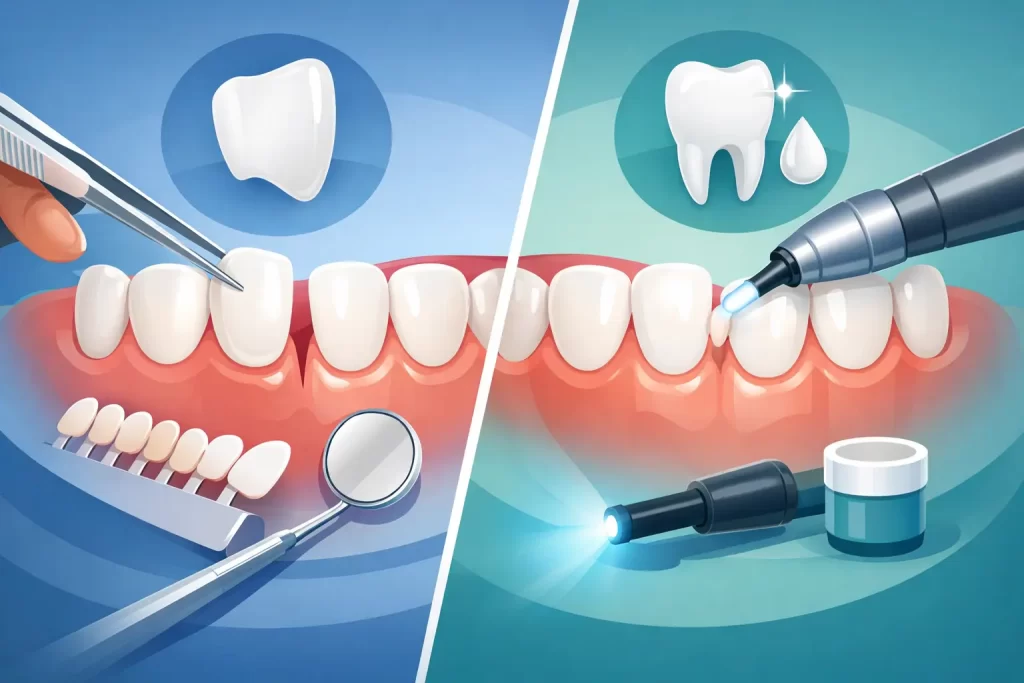
Dental bonding uses a tooth-colored composite resin that is applied directly to the tooth, shaped carefully to close or reduce the gap, and hardened with a special curing light. It is often a conservative option because little to no natural tooth structure needs to be removed. The dentist can add subtle width to one or both teeth so the space appears naturally closed.
Veneers are thin custom shells, commonly made from porcelain or composite material, that cover the visible front surface of teeth. They can close gaps while also changing tooth color, shape, length, and overall symmetry. Because veneers are custom-designed, they may be especially helpful when a gap is only one part of a larger smile concern.
Neither option is automatically better. Bonding may be ideal for a small, straightforward gap in an otherwise healthy smile. Veneers may be the stronger choice when you want a more comprehensive cosmetic change or a highly stain-resistant finish.
When Dental Bonding May Be the Right Choice
Bonding is often appealing to patients who want an attractive improvement with a more conservative approach. For a narrow gap between healthy front teeth, composite resin can create a remarkably natural result in a single appointment. Your dentist selects and blends shades to complement your surrounding teeth, then shapes the material to preserve a realistic contour rather than making teeth look overly wide or flat.
One of bonding’s greatest advantages is preservation. Since the material is added to the tooth, rather than relying on extensive tooth reduction, it can be a sensible choice for patients who value keeping as much natural enamel as possible. It is also generally easier to repair if a small chip occurs.
Bonding can be a good fit if you have a minor gap, small chips along the edges of front teeth, uneven tooth shape, or a desire to test a subtle cosmetic improvement before committing to a more extensive treatment. It is also worth discussing if you have recently finished aligner treatment and still have small spaces that need cosmetic refinement.
There are trade-offs. Composite resin is not as stain-resistant as porcelain. Coffee, tea, red wine, tobacco, and strongly colored foods can gradually affect its brightness. Bonding can also wear, chip, or lose its polish over time, particularly for people who bite pens, chew ice, or grind their teeth. Regular professional cleanings and good home care help maintain the result.
When Veneers Can Offer More
Veneers may be recommended when closing a gap is part of a broader smile makeover. For example, front teeth may have uneven edges, noticeable discoloration, old fillings, mild wear, or proportions that make the gap more visible. A carefully planned veneer treatment can address these concerns together, creating a harmonious result across several teeth.
Porcelain veneers are valued for their lifelike translucency and their ability to resist staining. They retain their color well and can provide a polished appearance for many years with appropriate care. Because each veneer is designed individually, your dentist can consider the balance between tooth width, facial features, gumline, and neighboring teeth.
Veneers are not simply a cosmetic shortcut. Proper planning is essential. Depending on the type of veneer and your tooth position, a small amount of enamel may need to be adjusted to create room for the restoration. This is a significant consideration because enamel does not grow back. Veneers are also a longer-term commitment and will eventually need replacement, even though well-cared-for veneers can last for many years.
For patients with several cosmetic concerns, that commitment may feel worthwhile. For someone with one small gap and healthy, well-shaped teeth, bonding may offer the improvement they want with less treatment.
The Size and Cause of the Gap Matter
Not every gap should be closed with bonding or veneers immediately. The reason the space exists matters just as much as its appearance. Some gaps are natural and stable. Others may be connected to tooth movement, gum disease, a tongue habit, missing teeth, or an uneven bite.
If a gap has recently appeared or is getting wider, your dentist should first check the health of your gums and supporting bone. Gum disease can allow teeth to shift, and cosmetic treatment alone would not solve the underlying problem. Similarly, if teeth are crowded, rotated, or positioned too far apart, aligners may create a more stable foundation before bonding or veneers are considered.
A gap can also look larger because adjacent teeth are narrow or triangular in shape. In these cases, gentle reshaping with bonding or veneers can improve proportions beautifully. Your dentist will consider whether adding material will make the teeth look naturally balanced rather than too broad.
Appearance, Durability, and Maintenance
Both treatments can look natural when planned with care. The difference is in how they perform over time. Bonding can be polished and color-matched well, but it is more likely to pick up stains and show wear than porcelain. It may need occasional touch-ups or replacement as years pass.
Porcelain veneers tend to maintain their shine and color more consistently. They are highly durable, but they are not indestructible. Veneers can chip or crack if exposed to excessive pressure, and repairs may be more complex than repairing composite bonding.
Your daily habits influence either option. Brushing twice a day with a non-abrasive toothpaste, flossing around the teeth and gumline, and attending regular dental visits are essential. If you clench or grind your teeth, a custom night guard can help protect your natural teeth, bonding, or veneers from unnecessary stress.
Whitening should also be discussed before treatment. Bonding and veneers do not whiten in the same way natural enamel does. If you plan to brighten your smile, whitening your natural teeth first allows the restoration shade to be selected more accurately.
What to Expect at Your Consultation
A comfortable consultation should feel like a conversation, not a sales pitch. At Restorative Dental Jamaica, the goal is to understand what you notice about your smile, what result feels natural to you, and what level of treatment suits your needs.
Your dentist may use digital X-rays and intraoral images to assess tooth health, existing fillings, gum condition, and bite function. You will also discuss the shade and shape you prefer, as well as whether treatment on one tooth, two teeth, or several teeth would create the most balanced result.
It can be helpful to bring photos of smiles you like, but your treatment should never be copied directly from someone else. Your facial features, tooth color, lip line, and natural smile pattern are unique. The best cosmetic dentistry should still look like you, only more refreshed and confident.
Choosing a Treatment That Feels Right
The decision between veneers and bonding should not be based on a single factor such as speed or appearance alone. Bonding is often conservative, versatile, and well suited for modest changes. Veneers can provide greater control over color, shape, and long-term polish when several concerns are present.
Before making a decision, ask how much natural tooth preparation is expected, what maintenance each option will require, how your bite affects the treatment, and what future replacement or repair may involve. A clear discussion gives you the confidence to choose without pressure.
A healthy smile is the best starting point for any cosmetic change. Once your teeth and gums are stable, closing a gap can be a thoughtful way to help your smile feel more like your own – comfortable, natural, and ready for every conversation.
Leave a reply








Leave a reply