
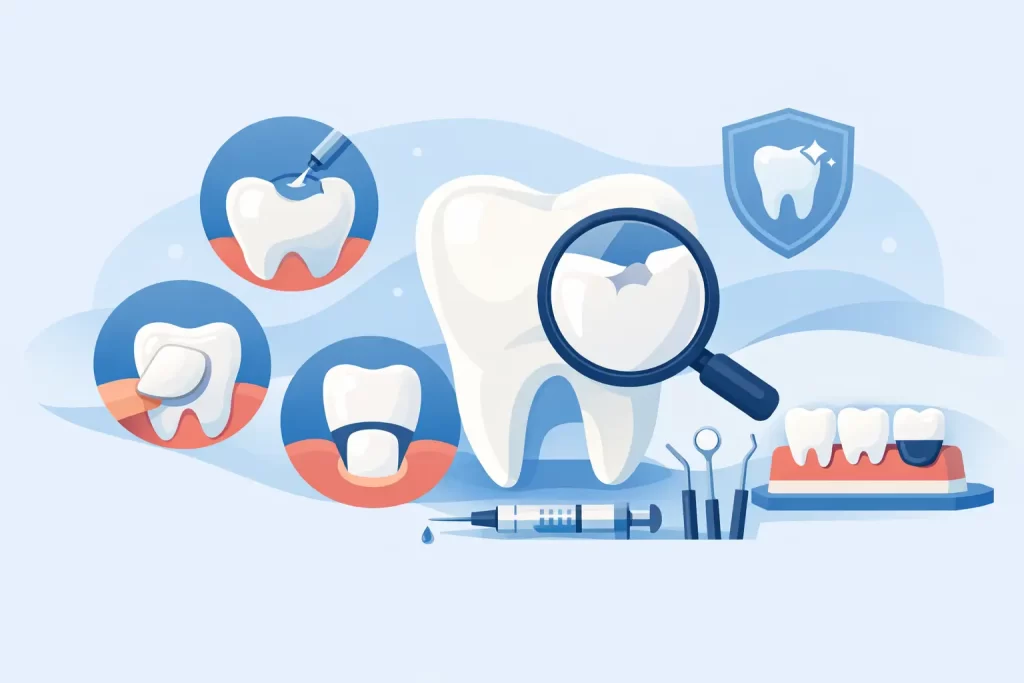
Best Treatments for Chipped Teeth Explained
A chipped tooth can happen in one quick moment: a bite on something hard, a fall, an old filling giving way, or an unexpected knock during sports. The best treatments for chipped teeth depend on how much tooth structure is missing, whether the nerve is affected, and where the chip sits in your smile. Fortunately, many chips can be repaired comfortably and conservatively, often in a single visit.
A prompt dental assessment is the best first step, even when the tooth does not hurt. Small chips can leave a sharp edge that irritates your tongue or cheek, while deeper damage may expose the inner layers of the tooth and become more serious over time. Early care gives your dentist more options to preserve your natural tooth and restore the appearance of your smile.
What to Do When You Chip a Tooth
Rinse your mouth gently with warm water and, if possible, save any broken piece of tooth. A cold compress against the outside of your face may help with swelling or discomfort. Avoid chewing on that side, especially hard, crunchy, sticky, or very hot and cold foods.
Do not try to file the tooth yourself or use household glue to reattach a fragment. Temporary dental repair materials may be useful in limited situations, but they should not replace professional care. A dentist can examine the tooth, check the surrounding teeth and gums, and use digital X-rays if needed to see whether damage extends below the surface.
Seek prompt care if you have severe pain, a loose tooth, swelling, bleeding that does not stop, or a chip caused by a significant facial injury. These signs can mean the tooth needs more than a cosmetic repair.
Best Treatments for Chipped Teeth: Choosing the Right Repair
There is no single treatment that is best for every chipped tooth. A tiny chip on a front tooth is managed very differently from a large fracture in a back tooth that takes heavy chewing pressure. Your dentist will consider the size and location of the damage, the strength of the remaining tooth, your bite, and your goals for appearance and longevity.
Dental Contouring for Very Small Chips
For a minor chip, dental contouring may be all that is needed. The dentist gently smooths and reshapes the rough edge so it feels comfortable and blends more naturally with the tooth. This option is conservative, quick, and usually does not require anesthesia.
Contouring works best when only a small amount of enamel is affected. It cannot rebuild a noticeably missing corner or protect a tooth with a deeper crack, but it can be an excellent solution when the concern is primarily a sharp or uneven edge.
Composite Bonding for Natural-Looking Repairs
Composite bonding is one of the most popular treatments for small to moderate chips, particularly on visible front teeth. A tooth-colored resin is carefully applied, shaped to restore the missing area, and hardened with a special light. The material can be color-matched to your surrounding teeth for a natural result.
Bonding is often completed in one appointment and usually requires little to no removal of healthy enamel. It is a practical option for repairing a chipped corner, closing a small gap, or improving the shape of a tooth. With good oral hygiene and mindful eating habits, bonding can look attractive for years.
The trade-off is that composite resin is not as strong or stain-resistant as porcelain. It may chip, dull, or pick up color over time, especially if you bite nails, chew ice, smoke, or frequently drink deeply colored beverages. It can generally be touched up or replaced when needed.
White Fillings for Chips Caused by Decay or Failed Restorations
Sometimes what looks like a chipped tooth is actually an area weakened by decay or an old filling that has fractured. In these cases, your dentist may remove the damaged or decayed material and place a white filling to restore the tooth’s shape and function.
Modern tooth-colored fillings are designed to blend into your smile while helping protect the remaining tooth structure. The right choice depends on how much of the tooth remains. If the damaged area is too large for a filling to support reliably, a stronger restoration may be recommended.
Veneers for Front-Tooth Cosmetic Concerns
Porcelain veneers can be a strong cosmetic option when a front tooth has a chip along with concerns about color, shape, spacing, or several worn edges. A veneer is a thin, custom-made porcelain shell bonded to the front surface of the tooth. It can create a polished, balanced appearance while covering the damaged area.
Veneers are not usually the first choice for every small chip. They require more planning than bonding and commonly involve removing a small amount of enamel. They are best suited for patients who want a longer-term cosmetic improvement and understand that veneers are a permanent commitment to maintaining a restoration.
Dental Crowns for Larger Breaks
When a substantial portion of a tooth has broken away, a dental crown may offer the most dependable protection. A crown covers the entire visible portion of the tooth, restoring its shape, strength, and ability to handle normal biting forces. Crowns are especially common for heavily damaged back teeth, where chewing pressure is greatest.
A crown may also be recommended when a tooth has a large old filling, a deep crack, repeated fractures, or too little healthy structure left to hold a filling securely. While a crown involves more preparation than bonding, it can help prevent the remaining tooth from breaking further. Restorative Dental Jamaica can discuss materials and treatment timing based on your smile, bite, and budget.
Root Canal Therapy When the Nerve Is Involved
A deep chip can expose or inflame the tooth’s pulp, the soft tissue inside that contains nerves and blood vessels. Warning signs may include lingering sensitivity to hot or cold, pain when biting, spontaneous toothache, or a darkening tooth. In some cases, the tooth may not hurt right away, which is why an examination matters.
If the pulp is damaged or infected, root canal therapy can remove the unhealthy tissue, clean the inside of the tooth, and help preserve it. A crown is often placed afterward to protect the weakened tooth. Root canal treatment is not automatically needed for every deep chip, but it can be the tooth-saving treatment when the nerve has been affected.
How Dentists Protect the Tooth, Not Just the Appearance
A repair should do more than make a chip disappear in photos. Your dentist will check whether your bite is placing excess force on the damaged tooth and look for signs of grinding or clenching. If those habits contributed to the problem, a custom night guard may be recommended to protect the repair and your natural enamel.
For patients who play contact sports, a well-fitting sports mouthguard can reduce the risk of future dental injuries. If a chip happened after biting hard foods or using teeth to open packages, small habit changes can also make a meaningful difference. Teeth are strong, but they are not tools.
When a Chipped Tooth Needs Same-Day Attention
Not every chip is an emergency, but certain symptoms deserve prompt evaluation. Contact a dentist as soon as possible if you notice:
- Severe or persistent pain, especially pain that wakes you at night
- A tooth that feels loose, has moved, or hurts significantly when you bite
- Swelling in the gums, face, or jaw, or a fever
- A visible pink, red, or dark spot inside the broken tooth
Children should also be evaluated promptly after a chipped tooth, even if they seem comfortable. A family dentist can assess both the tooth and any effect on developing teeth or surrounding tissues.
Make Your Next Step a Comfortable One
A chipped tooth does not have to mean living with discomfort or hiding your smile. Whether your repair calls for simple smoothing, natural-looking bonding, a veneer, or a protective crown, the goal is to choose care that feels right for your tooth and your future dental health. Scheduling an assessment soon gives you clear answers, a personalized plan, and the reassurance of knowing your smile is being looked after.
Leave a reply








Leave a reply