
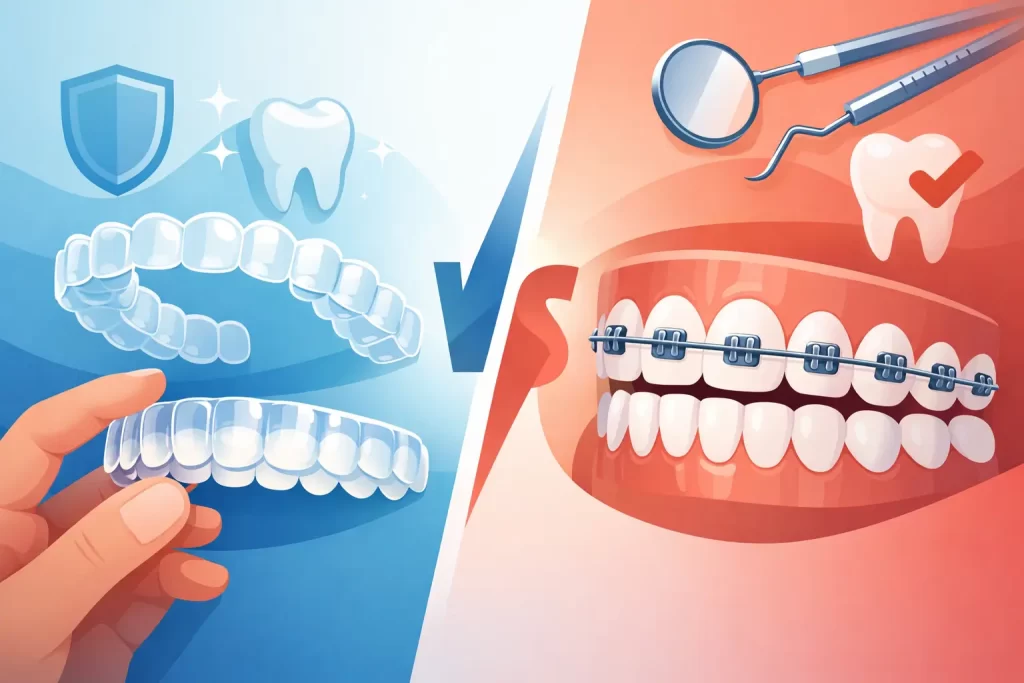
Aligners vs Braces: Which Is Right for You?
A straighter smile can change more than a photograph. It can make cleaning easier, improve how your teeth come together, and help you feel more comfortable speaking and smiling. When weighing aligners vs braces, the best choice is not simply the one that looks better. It is the treatment that can safely and predictably address your specific teeth, bite, lifestyle, and goals.
At Restorative Dental Jamaica, we believe an orthodontic decision should feel clear, personal, and never rushed. A professional assessment can show what is happening beneath the surface and help you choose a path that supports both your smile and long-term oral health.
Aligners vs Braces: The Key Difference
Clear aligners are a series of custom-made, removable trays that gradually move teeth into their planned positions. Each set is worn for a prescribed period before moving on to the next one. They are transparent, close-fitting, and designed around your individual smile.
Braces use brackets attached to the teeth and a wire that applies steady pressure over time. Your dentist adjusts the system during scheduled visits to guide the teeth and bite. Modern braces may be smaller and more comfortable than many people remember, but they remain visible and fixed in place throughout treatment.
Both options can create excellent results. The difference is in how they move teeth, what conditions they can manage most effectively, and how much responsibility falls to the patient each day.
When Clear Aligners May Be a Good Fit
Aligners are often appealing to adults and working professionals who want a more discreet way to straighten their teeth. Because the trays are clear, they are less noticeable in everyday conversations, meetings, and photos. They can also be removed for meals, brushing, flossing, and special occasions.
That removability makes daily hygiene more familiar. You can brush and floss without working around brackets and wires, which may be especially helpful for patients focused on keeping their gums and teeth healthy throughout treatment. There are no food restrictions while the aligners are out, so you can still enjoy crunchy or sticky foods without worrying about damaging orthodontic hardware.
However, removable only works when it is taken seriously. Aligners generally need to be worn for about 20 to 22 hours a day. Taking them out too often or forgetting to put them back in can slow progress and affect the final result. They must also be cleaned regularly and stored safely when not in use. A tray wrapped in a napkin at lunch can easily be lost.
Clear aligners can be a very effective choice for mild to moderate crowding, spacing, and certain bite concerns. They may also be suitable for some more involved cases when treatment is carefully planned. The right answer depends on the position of your teeth, the health of your gums, and the way your upper and lower teeth meet.
When Braces May Be the Better Choice
Braces are a dependable option for a wide range of orthodontic needs. Because they remain attached to the teeth, they work continuously without relying on patients to remember to wear them. This can be reassuring for parents considering treatment for a teenager, or for adults who know a removable appliance may not suit their routine.
They can offer excellent control for complex tooth movement, significant crowding, rotations, and more challenging bite problems. In cases where teeth need substantial movement or the bite needs close correction, braces may provide the most predictable approach.
There is a learning period. Brackets and wires can initially feel unfamiliar, and minor soreness is common after adjustments. Patients need to avoid hard, chewy, and sticky foods that can loosen brackets or bend wires. Brushing and flossing also require more care, since plaque can collect around the hardware if cleaning is rushed.
For many people, these trade-offs are worth it. Braces are not dependent on daily wear-time choices, and their proven ability to manage complex cases makes them a valuable treatment option.
Appearance, Comfort, and Daily Routine
For patients deciding between aligners vs braces, appearance is often the first consideration. Clear aligners are usually the more subtle choice, while braces are more noticeable. Yet appearance should not be the only deciding factor. The healthiest, most confident outcome comes from choosing a treatment that can meet your clinical needs.
Comfort is personal. Aligners have smooth edges and no wires, though each new set may create a feeling of pressure for a day or two. Braces can occasionally irritate the cheeks or lips, especially early on, but orthodontic wax and a little time can make a meaningful difference. Both treatments use gradual pressure, so temporary tenderness is a normal sign that teeth are moving.
Your routine matters as well. Aligners require consistency, cleaning, and careful handling. Braces require thoughtful food choices and more detailed brushing. Neither option is completely maintenance-free, but the type of commitment is different.
Treatment Time and Results
Treatment time varies widely. Some patients need a shorter course to correct small gaps or mild crowding, while others need more time to improve a complicated bite. Clear aligners and braces can both take months or longer depending on the case, the treatment plan, and how closely instructions are followed.
With aligners, wearing the trays as directed is essential. With braces, keeping appointments, avoiding broken brackets, and maintaining good oral hygiene helps treatment stay on track. Missed visits, damaged appliances, or inconsistent aligner wear can extend the process.
It is also worth remembering that straight teeth need retention. Once active treatment is complete, a retainer helps hold your teeth in their new positions. Whether you choose aligners or braces, wearing your retainer as instructed protects the time, commitment, and investment you have made in your smile.
Oral Health Comes First
Before starting orthodontic treatment, your teeth and gums should be assessed carefully. Active decay, gum inflammation, cracked teeth, or untreated dental pain may need attention first. Moving teeth is most successful when it begins with a healthy foundation.
This is especially important for adults who may have existing crowns, fillings, missing teeth, or previous dental work. A personalized examination and digital imaging can help identify the most appropriate sequence of care. Sometimes restorative treatment is completed before orthodontics; in other situations, straightening teeth first can create a better position for future cosmetic or restorative work.
Good home care remains essential during treatment. Brush thoroughly twice a day, clean between your teeth daily, and attend regular dental visits. Your smile should not only look straighter at the end of treatment – it should be healthy, clean, and comfortable too.
How to Make a Confident Choice
Start with the outcome you want, then let your dental needs guide the method. If discretion and removability are priorities, and you can commit to wearing trays consistently, clear aligners may be an excellent option. If your case is more complex or you prefer a fixed treatment that works around the clock, braces may be the stronger choice.
The most useful next step is a professional consultation rather than relying on photos, social media comparisons, or a friend’s experience. Every smile has different spacing, tooth shapes, bite patterns, and health considerations. What worked beautifully for someone else may not be the most effective option for you.
A thoughtful treatment plan gives you more than straighter teeth. It gives you the reassurance of knowing your smile is being cared for with comfort, precision, and your long-term health in mind.
Leave a reply







Leave a reply