A Missing Tooth Replacement Guide for Adults
A missing tooth can change more than the way your smile looks in photos. You may find yourself chewing on one side, avoiding certain foods, speaking less confidently, or feeling self-conscious when you laugh. This missing tooth replacement guide explains the practical options available and how a personalized dental assessment can help you choose the one that feels right for your health, comfort, lifestyle, and budget.
Replacing a tooth is not only a cosmetic decision. Each tooth helps support the teeth around it and contributes to a balanced bite. When a space is left untreated, neighboring teeth can slowly shift, chewing forces may become uneven, and the bone beneath the missing tooth can gradually shrink. The right treatment can protect your smile now while helping prevent more complex concerns later.
Why Replacing a Missing Tooth Matters
It is understandable to put off treatment when the missing tooth is not visible or when the area is no longer painful. However, the mouth is designed to work as a connected system. A gap can make nearby teeth work harder, allow food to collect more easily, and alter the way your upper and lower teeth meet.
For many patients, the biggest change is daily comfort. Replacing a missing tooth can make eating feel more natural, help speech feel clearer, and restore the confidence to smile without hesitation. The ideal timing depends on the health of your gums, the condition of surrounding teeth, and whether the tooth was lost recently or years ago. Even if the space has been there for a long time, there may still be excellent options.
Missing Tooth Replacement Guide: Your Main Options
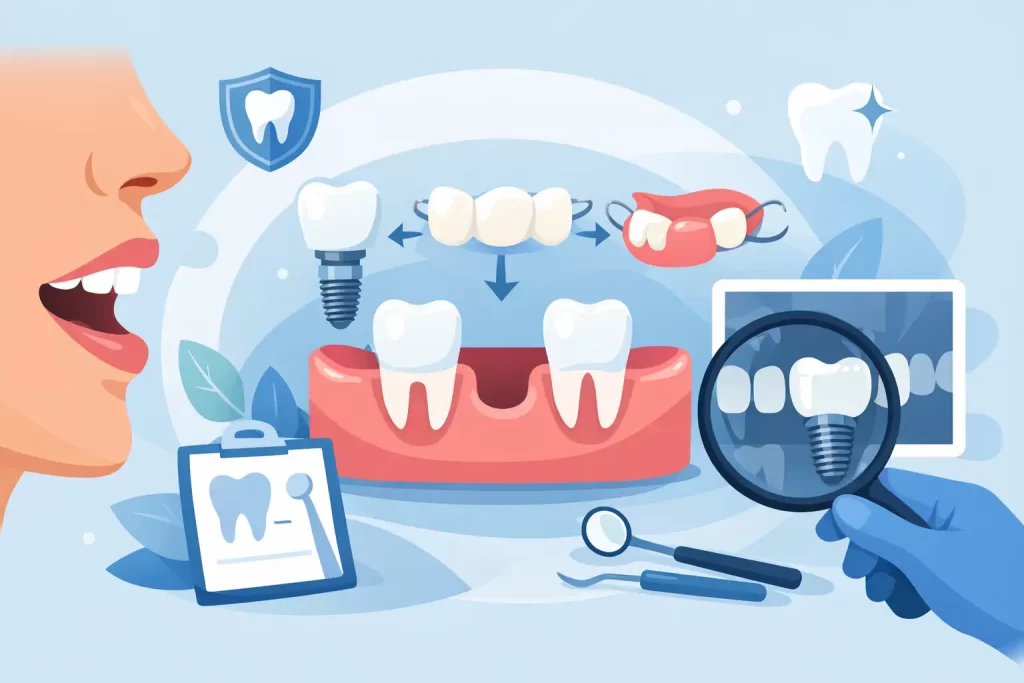
The best replacement is not automatically the most expensive one. It is the option that fits your oral health, goals, and the amount of treatment you are comfortable with. A dentist will examine the space, take digital x-rays when appropriate, and discuss what is happening beneath the gumline before recommending a plan.
Dental implants
A dental implant replaces the root of a missing tooth with a small post placed in the jawbone. After healing, a custom crown is attached to create a replacement that looks and functions much like a natural tooth.
Implants are often a strong choice for patients who want a fixed, long-term solution and have enough healthy bone to support it. Because an implant stands on its own, it does not require neighboring teeth to be reshaped. It can also help preserve bone in the area of the missing tooth.
The trade-off is time and treatment complexity. Implant treatment may involve a surgical procedure and a healing period before the final crown is placed. Some patients need bone grafting first if bone has been lost. While implants can be an excellent investment in comfort and function, they are not the right fit for every medical history, budget, or timeline.
Dental bridges
A dental bridge fills the gap by connecting a replacement tooth to crowns placed on the teeth beside it. It is fixed in place, meaning you do not remove it for cleaning, and it can restore both appearance and chewing ability.
A bridge may be especially practical when the teeth on either side of the gap already need crowns because of large fillings, cracks, or previous dental work. It can often be completed more quickly than an implant, making it a welcome option for patients who want a dependable fixed restoration without a surgical procedure.
The consideration is that traditional bridges require preparation of the supporting teeth. Cleaning under the replacement tooth also takes a little extra care. With the right home care and regular dental visits, a well-made bridge can serve a patient beautifully for many years.
Partial dentures
A removable partial denture replaces one or several missing teeth. It is custom-made to fit around the remaining teeth and can be removed for cleaning. Modern partial dentures can be designed to look natural and provide meaningful improvement in chewing and smile appearance.
This option is often useful when several teeth are missing, when implant treatment is not suitable, or when a patient needs a more budget-conscious solution. A partial denture can also be used as a temporary option while planning more permanent treatment.
Because it is removable, it may take time to get used to wearing it. It must be cleaned carefully, and adjustments may occasionally be needed as the mouth changes. For many patients, however, a properly fitted partial denture is a comfortable, practical way to restore everyday function.
Complete dentures
When all teeth in an upper or lower arch are missing, complete dentures can restore the ability to smile, speak, and eat with greater confidence. They are removable and custom-made to fit the gums and facial structure.
Traditional dentures are an accessible solution, but stability can vary, particularly for lower dentures. In some cases, implants can be used to support a denture and improve its security. Your dentist can explain whether a conventional denture, an implant-supported option, or another treatment approach best matches your needs.
How to Choose the Right Treatment
A good decision begins with a thorough conversation, not pressure. Your dentist should ask about what matters most to you. Are you hoping for the closest feel to a natural tooth? Do you need a solution without surgery? Is your main concern replacing several teeth affordably? Do you need treatment completed by a particular date?
Your oral health also guides the recommendation. Healthy gums, bone levels, bite alignment, and the strength of nearby teeth all matter. For example, an implant may be ideal for one person with a single missing tooth and healthy bone, while a bridge may make more sense for someone whose adjacent teeth already need crowns.
Cost deserves an honest discussion too. The initial price is only one part of the picture. Consider expected maintenance, the likely lifespan of the restoration, possible future treatment, and the value you place on fixed versus removable teeth. Flexible payment options may make it easier to move ahead with care that protects your smile without unnecessary stress.
What to Expect at Your Dental Assessment
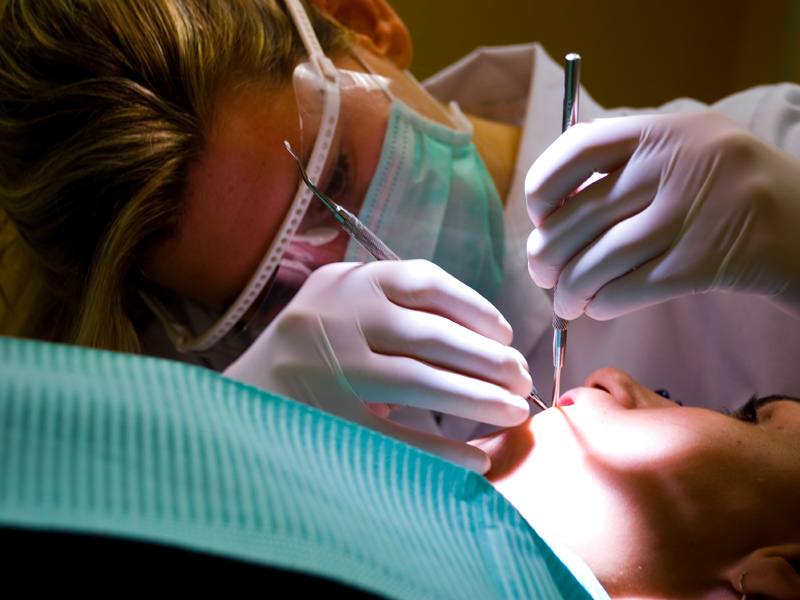
The first visit is your opportunity to get clear answers. A dental assessment typically includes an examination of your teeth and gums, a review of your health history, and digital x-rays or intraoral images when needed. These tools help reveal concerns that cannot be seen by looking at the surface alone, such as bone changes, hidden decay, or infection.
Your dentist will then explain the suitable options in plain language. You should know what each treatment involves, how long it may take, how to care for it, and what investment to expect. If you feel nervous about dental treatment, say so. A comfortable, patient-centered practice will take the time to help you feel informed and at ease before moving forward.
Caring for Your Replacement Tooth
A replacement tooth still needs regular care. Brush twice daily with a soft toothbrush, clean between teeth every day, and attend routine checkups and cleanings. Bridges need special attention beneath the replacement tooth, while removable dentures should be cleaned daily and stored as advised by your dental team.
If you have an implant, keeping the gums around it healthy is essential. Bleeding, tenderness, persistent bad breath, looseness, or a change in your bite should be checked promptly. Early attention can often prevent a small issue from becoming a larger repair.
When Should You Book an Appointment?
Book an assessment if you have recently lost a tooth, have a tooth that feels loose or severely damaged, or have been living with a gap and are ready to explore your options. It is also wise to seek care quickly if you have swelling, severe pain, fever, or signs of infection.
At Restorative Dental Jamaica, treatment planning is centered on preserving your natural teeth whenever possible and replacing missing teeth with care, clarity, and respect for your goals. A restored smile is not about chasing perfection. It is about feeling comfortable when you eat, speak, and smile again.
Leave a reply







Leave a reply