
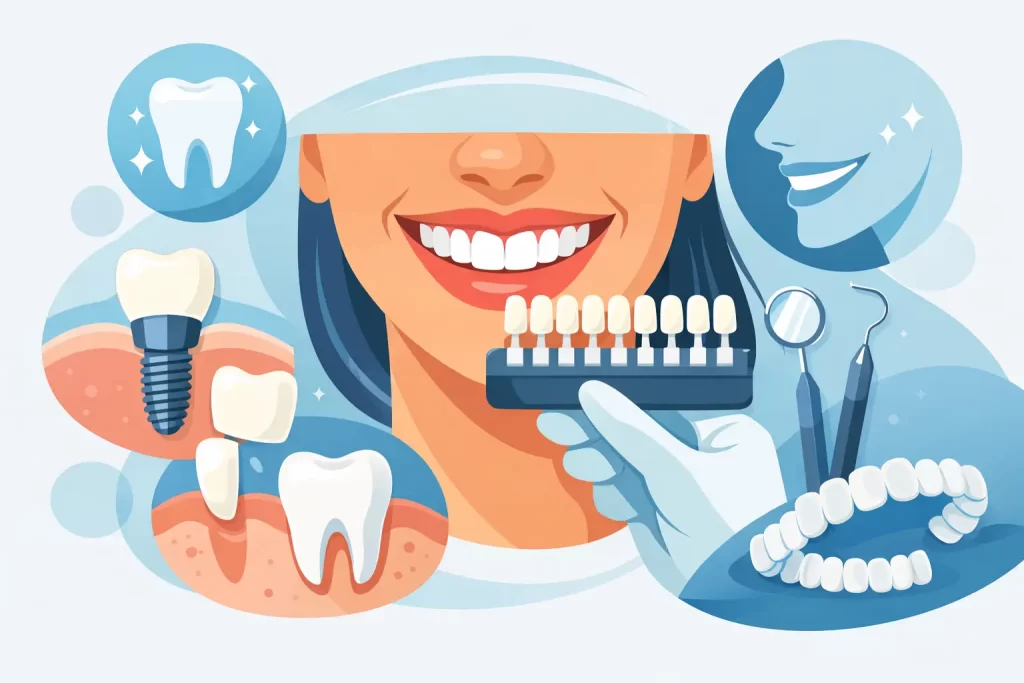
A Guide to Cosmetic Dental Treatments
A brighter smile is not always about vanity. For many patients, it is about feeling comfortable in photos, speaking without covering their mouth, or finally fixing a tooth that has bothered them for years. This guide to cosmetic dental treatments is designed to help you understand what each option can improve, what it cannot, and how to choose a treatment that fits your goals, timeline, and budget.
Cosmetic dentistry works best when it is personalized. Two people may both want a better-looking smile, but one may need whitening for surface stains while the other may benefit more from bonding, veneers, or aligners. The right treatment depends on the condition of your teeth, the health of your gums, and the result you want to see when you look in the mirror.
What cosmetic dental treatments can improve
Cosmetic dental care focuses on the appearance of your teeth and smile, but appearance is only part of the story. Many treatments also help restore confidence and, in some cases, support function. Depending on your needs, cosmetic treatment may improve tooth color, shape, size, spacing, minor chips, uneven edges, and the look of mild crowding.
That said, cosmetic treatment is not always purely cosmetic. If you have decay, gum disease, worn enamel, or a cracked tooth, those concerns usually need to be addressed first. A healthy foundation matters. Whitening a tooth with untreated decay or placing veneers on teeth with active gum problems is not the best path forward.
A practical guide to cosmetic dental treatments
The most common cosmetic options each solve different problems. Some are quick and conservative. Others involve more planning and a bigger investment. Understanding the trade-offs can help you make a decision with confidence.
Teeth whitening
Teeth whitening is often the first treatment people ask about because it can make a noticeable difference without changing the structure of the tooth. It works best for yellowing and many common external stains caused by coffee, tea, wine, tobacco, and normal aging.
Professional whitening is usually more predictable than over-the-counter products because the materials are stronger and the treatment is supervised. It can brighten your smile several shades, but results vary. Teeth with deep internal discoloration, gray tones, or staining related to trauma may not respond the way patients expect.
Whitening is also not permanent. Foods, drinks, and lifestyle habits affect how long the result lasts. Some people need touch-ups over time. If you already have crowns, veneers, or tooth-colored fillings in visible areas, whitening will not change their shade, which may need to be factored into the plan.
Dental bonding
Bonding uses tooth-colored resin to improve the look of chipped, worn, uneven, or slightly gapped teeth. It is one of the more conservative cosmetic options because it usually requires little to no removal of healthy tooth structure.
For the right case, bonding can be an excellent choice. It is often faster and more affordable than veneers, and the results can look very natural. It is especially useful for small corrections, such as smoothing an edge, masking a minor flaw, or reshaping a tooth that looks too short.
The trade-off is durability. Bonding does not typically resist staining and wear as well as porcelain. It can chip over time, particularly if you bite your nails, chew ice, or grind your teeth. If you want a long-lasting solution for a larger smile makeover, veneers may be worth considering.
Veneers
Veneers are thin coverings placed on the front surface of teeth to improve color, shape, size, and overall symmetry. They are often chosen when patients want a more dramatic change or when several cosmetic concerns need to be corrected at once.
Porcelain veneers are known for their lifelike appearance and stain resistance. They can create a bright, even smile while still looking natural when planned carefully. For patients with discoloration that does not respond well to whitening, worn edges, or teeth that appear uneven, veneers can offer a strong aesthetic result.
However, veneers are not the right choice for everyone. They usually require some enamel adjustment, which means the decision should be made thoughtfully. They also require good oral health and healthy habits. If you clench or grind heavily, your dentist may recommend protection such as a night guard to help preserve the result.
Teeth aligners
Clear aligners are a popular option for patients who want straighter teeth without the look of traditional braces. They can improve mild to moderate crowding, spacing, and certain bite concerns, making them both cosmetic and functional in many cases.
What patients often like most is the convenience. Aligners are removable, so eating and brushing are easier than with fixed braces. They also tend to be less noticeable in daily life, which appeals to working professionals and adults who want a discreet option.
Still, aligners require commitment. They only work well if they are worn as directed. Not every case is suitable for them, and complex movement may require other orthodontic solutions. Straightening also takes time, so this is not the treatment for someone looking for a same-week smile change.
Crowns and other restorative-cosmetic treatments
Some treatments sit at the intersection of restoration and cosmetics. A dental crown, for example, may be recommended when a tooth is weakened, broken, or heavily filled. While the main goal is to protect and restore the tooth, a well-made crown also improves appearance.
This matters because not every smile concern should be solved with a purely cosmetic procedure. If a front tooth has significant structural damage, choosing a restoration that strengthens it may be smarter than choosing a treatment that only changes the surface look. In many cases, the best cosmetic result starts with preserving the natural tooth and restoring it properly.
How to choose the right treatment
The best cosmetic dental plan starts with a full assessment, not a guess. Photos on social media can create the impression that one treatment is the answer for everyone, but dentistry does not work that way. What looks ideal for one patient may be unnecessary, too aggressive, or simply not suitable for another.
A dentist will usually consider several factors before recommending treatment: your tooth and gum health, the cause of the concern, your bite, your habits, and your expectations. Budget and maintenance matter too. A quick fix is not always the best value if it needs frequent repairs, and a premium treatment is not always necessary if a simpler option will do the job well.
If your goals are modest, whitening or bonding may be enough. If you want a more complete transformation, veneers or aligners may make more sense. If a tooth is damaged, a crown or other restorative care may be the better route. It depends on what your smile needs, not just what is trending.
What to expect at a cosmetic consultation
A good consultation should feel informative, not pressured. You should leave understanding your options, what each one can realistically achieve, and what kind of upkeep is involved.
In a modern practice, digital x-rays and intraoral cameras can help patients see exactly what the dentist sees. That makes the process more transparent and easier to understand. When people feel informed, they usually feel more comfortable making decisions about their care.
This is also the time to talk honestly about concerns such as sensitivity, treatment length, or cost. Cosmetic treatment should feel exciting, but it should also feel sensible. The right provider will help you balance appearance with long-term oral health and comfort.
A few common mistakes to avoid
One of the biggest mistakes is choosing treatment based only on price. Cost matters, but value matters more. A cheaper option that does not suit your teeth can lead to disappointment or added expense later.
Another mistake is skipping routine care while planning cosmetic work. Clean teeth, healthy gums, and regular exams support better results. If you invest in your smile, protecting that investment with good home care and follow-up visits is part of the process.
It also helps to avoid chasing an overly white or overly uniform look. The most attractive cosmetic results usually look balanced and natural. A smile should suit your face, not look copied from someone else.
At Restorative Dental Jamaica, we believe cosmetic care should feel both comfortable and clear. Patients deserve thoughtful recommendations, modern technology, and treatment plans that protect oral health while helping them feel more confident in their smile.
If you have been thinking about improving your smile, start with one honest conversation and a professional evaluation. The right treatment is not always the biggest one. Often, it is the one that helps you feel like yourself again, only more at ease when you smile.
Leave a reply







Leave a reply