
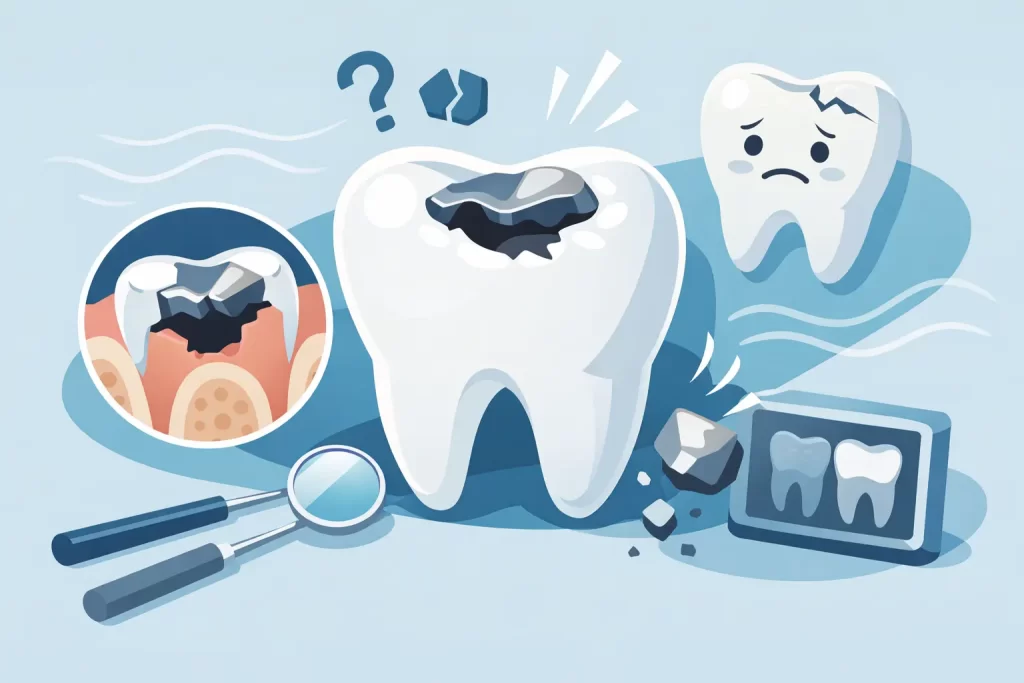
Why Do Fillings Fall Out?
A filling rarely falls out at a convenient time. It usually happens when you are chewing lunch, biting something crunchy, or noticing a rough edge with your tongue late at night. If you have ever wondered why do fillings fall out, the short answer is that fillings do not last forever, and the tooth around them can change over time.
That does not always mean someone did something wrong. A lost filling can happen because of normal wear, new decay, pressure from grinding, or a tooth structure that has weakened since the original treatment. The important thing is knowing what may have caused it, what to do next, and how to protect the tooth before the problem gets worse.
Why do fillings fall out over time?
A filling works by restoring a part of the tooth that has been damaged by decay or minor fracture. Even when it is placed well, it still has to stand up to daily chewing, temperature changes, and years of use. That is a lot to ask from any dental material.
One of the most common reasons fillings come loose is simple wear and tear. Small fillings can last many years, but every bite puts force on the tooth. Over time, the bond between the filling and the tooth can weaken, especially in areas that take heavy pressure.
Another common cause is recurrent decay. This means a new cavity develops around or under the existing filling. When that happens, the tooth structure supporting the filling becomes softer or breaks down, and the filling may loosen or fall out completely. In many cases, the filling is not the real problem. The tooth underneath needs attention.
Teeth can also flex slightly under pressure. If you clench or grind your teeth, especially at night, that repeated force can stress both the filling and the remaining tooth. Eventually, the edges may crack, the filling may shift, or the restoration may no longer fit securely.
There are also cases where the original filling was very large. A large filling leaves less natural tooth behind, and the larger the restoration, the greater the chance of breakdown over time. Sometimes a tooth that once managed well with a filling eventually needs a crown because it no longer has enough strong structure left.
Common reasons a filling may come loose
Tooth decay under the filling
This is one of the biggest concerns. If bacteria get into tiny gaps at the edges of a filling, decay can start again. You may not notice it early because the filling is already in place and the cavity is hidden. By the time the filling falls out, the tooth may have more damage than expected.
Chewing hard or sticky foods
Biting hard candy, chewing ice, or pulling on sticky foods can dislodge a filling, especially one that is already weakened. It is not always the food alone. Often, the filling was close to failure already, and that final bite simply exposed the problem.
Teeth grinding and clenching
Many adults grind their teeth without realizing it. Morning jaw tension, worn teeth, headaches, or a partner hearing grinding at night can all be clues. These forces are strong enough to crack enamel, chip fillings, and shorten the life of dental work.
Age of the filling
Dental materials improve over time, but no filling is permanent. Older fillings may wear down, fracture, or lose their seal. Some last a very long time, but age still matters, especially when combined with heavy use or changes in the tooth.
A cracked or weakened tooth
Sometimes the filling falls out because the tooth itself has developed a crack. If the surrounding tooth breaks, the filling loses support. This is one reason a dentist may recommend something stronger than another filling if too much of the tooth has been compromised.
Signs your filling may be failing before it falls out
Not every filling drops out suddenly. In many cases, the tooth gives warning signs first. You may notice sensitivity to cold, sweets, or pressure. Food may start catching in one area. The edge of the filling may feel rough, sharp, or slightly raised.
Some patients notice a change when floss starts shredding around a certain tooth, or when a tooth feels tender during chewing. Others see a dark line near the filling or realize part of the tooth looks chipped. These signs do not always mean the filling will come out right away, but they do mean it should be checked.
Pain is more unpredictable. A loose filling may cause no pain at all, while a small change in the seal can make the tooth quite sensitive. It depends on how close the issue is to the nerve and whether there is active decay or a crack involved.
What to do if a filling falls out
First, try not to panic. In many situations, the tooth can still be repaired very successfully. Rinse your mouth gently with warm water and avoid chewing on that side. If the area feels sharp, be careful with your tongue and choose softer foods until you are seen.
If you still have the filling, do not try to glue it back yourself. Household adhesives are not safe for dental use and can make treatment more difficult. Over-the-counter temporary dental material may help cover the area for comfort, but it is only a short-term measure.
The most important step is to arrange a dental visit as soon as possible. A lost filling leaves the tooth exposed. That can lead to sensitivity, further fracture, food trapping, and faster progression of decay.
Why quick treatment matters
When a filling falls out, the opening in the tooth is often larger than it appears. Bacteria and debris can collect there easily. What starts as a straightforward replacement may become a deeper repair if treatment is delayed.
Sometimes the tooth can simply receive a new filling. In other situations, the dentist may recommend a crown, especially if the cavity is large or the tooth has fractured. If decay has reached the nerve, root canal therapy may be needed before restoring the tooth. This is why early evaluation matters. It protects your options.
A modern exam may also include digital x-rays or close-up imaging to assess what is happening below the surface. That helps your dentist see whether the problem is only the missing filling or whether the tooth structure has been affected more extensively.
Can a filling always be replaced with another filling?
Not always, and this is where the answer depends on the condition of the tooth. If enough healthy tooth remains and the area is still suitable, replacing the filling may be the most conservative option. That is often the ideal approach because preserving natural tooth structure is always the goal.
However, if the filling was already large, if the tooth has cracked, or if there is repeated breakdown in the same area, a stronger restoration may be the better long-term choice. A crown covers and protects more of the tooth, which can reduce the risk of future fracture.
This is not about doing more treatment than necessary. It is about choosing the option that gives the tooth the best chance of lasting comfortably and functionally.
How to reduce the chances of fillings falling out
Good home care makes a real difference. Brushing well, flossing daily, and keeping up with regular dental visits help reduce the risk of new decay forming around existing restorations. Clean margins tend to last longer than areas where plaque builds up consistently.
It also helps to be mindful of habits. Chewing ice, opening packages with your teeth, and regularly biting very hard foods can shorten the life of both fillings and natural teeth. If you grind or clench, a custom night guard may help protect your dental work from repeated stress.
Routine dental exams are especially valuable because failing fillings are often easier to manage before they become emergencies. Catching a weak margin, a small crack, or early decay can often prevent a more complicated repair later.
When to call your dentist
If your filling has fallen out, if a tooth feels sharp or sensitive, or if chewing suddenly feels different, it is worth getting checked promptly. Even if the discomfort seems mild, the tooth may be vulnerable.
At Restorative Dental Jamaica, the focus is always on preserving your natural teeth whenever possible and helping you feel comfortable while getting the care you need. A lost filling may be a small issue or a sign of a larger one, but either way, it is easier to manage when you act early.
If something in your mouth does not feel right, trust that instinct. A quick visit today can spare you a much bigger problem later.
Leave a reply








Leave a reply