
Root Canal vs Extraction: Which Is Better?
A bad tooth rarely gives you much time to think. One day it is a nagging sensitivity, and the next it is keeping you up at night. When that happens, one of the most common questions patients ask is about root canal vs extraction – which option actually makes the most sense?
The honest answer is that it depends on the condition of the tooth, your comfort, your budget, and your long-term goals. In many cases, saving the natural tooth is the preferred choice. In others, removing it may be the healthier and more practical path. What matters most is making a decision based on a proper dental exam, clear imaging, and a treatment plan that looks beyond immediate pain relief.
Root canal vs extraction: what each treatment does
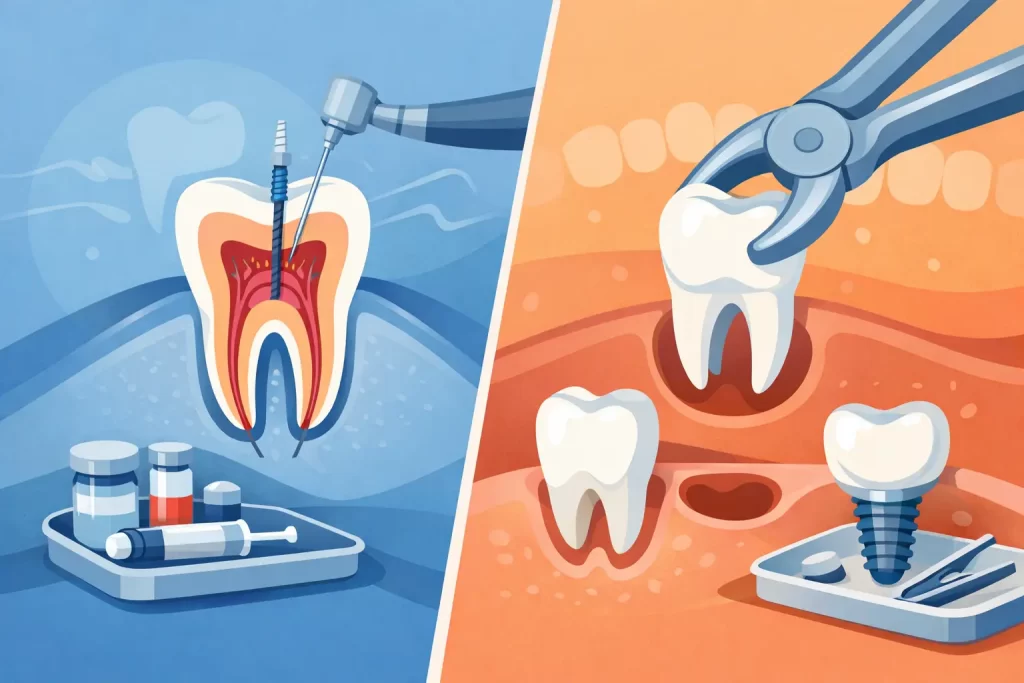
A root canal is designed to save a tooth that has deep decay, infection, or damage inside the pulp. During treatment, the infected tissue is removed, the inside of the tooth is cleaned and sealed, and the tooth is usually restored with a filling or crown. The goal is to keep your natural tooth in place while stopping pain and infection.
An extraction removes the tooth entirely. This may be recommended when a tooth is too broken down to restore, severely loose from gum disease, split below the gumline, or affected by a large infection that has left too little healthy structure behind. Extraction can also be a practical option when a patient is not able to proceed with restorative treatment right away.
Both treatments can solve pain. The difference is what happens afterward. A root canal aims to preserve your bite and smile with your own tooth. An extraction creates a gap unless the tooth is later replaced with an implant, bridge, or denture.
Why saving the natural tooth is often preferred
Whenever possible, preserving a natural tooth usually gives you the most stable and conservative result. Your natural teeth help maintain normal chewing, support alignment, and distribute bite pressure properly. Once a tooth is removed, neighboring teeth can begin to shift over time, and that can affect both function and appearance.
There is also the question of bone support. When a tooth is extracted, the jawbone in that area can gradually shrink because it is no longer being stimulated by the tooth root. That bone loss may not be obvious right away, but it can complicate future treatment and change the look of your smile over time.
This is one reason many dentists recommend root canal therapy when the tooth can still be predictably restored. Keeping your own tooth is often simpler for chewing, speech, and long-term comfort than removing it and planning for a replacement later.
When a root canal may be the better choice
A root canal may be recommended when the tooth has enough healthy structure left to support a restoration. That includes cases of deep cavities, infection from untreated decay, trauma to the tooth, or severe sensitivity caused by pulp damage.
Many patients are surprised to learn that root canal treatment is often no more uncomfortable than getting a filling, especially with modern local anesthesia and careful technique. The bigger issue is usually not the procedure itself, but waiting too long and allowing the infection to worsen.
A root canal may be the better choice if you want to keep your natural smile, avoid a gap, and reduce the need for more complex treatment later. It can be especially valuable for back teeth, which do a great deal of the heavy chewing. Losing a molar may not seem urgent at first, but it often affects function more than patients expect.
That said, a root canal is only as successful as the tooth that remains around it. If the tooth is badly fractured or has very little sound structure left, saving it may not be the right investment.
When extraction may make more sense
There are times when removing the tooth is the more realistic and responsible option. If a tooth is cracked vertically into the root, destroyed below the gumline, or severely weakened by advanced decay, a root canal may not offer a dependable long-term result.
Extraction may also be recommended if gum disease has caused major bone loss and looseness around the tooth. In that situation, even if the infection inside the tooth could be treated, the surrounding support may not be strong enough to keep the tooth functional.
For some patients, cost and timing matter too. An extraction may seem more affordable upfront than a root canal and crown. But it is important to look at the full picture. If the missing tooth should later be replaced, the total cost can become significantly higher than saving the tooth in the first place.
Root canal vs extraction: cost is not just the first bill
Cost is often one of the biggest deciding factors, and understandably so. A root canal usually involves more than one part of treatment, especially if the tooth needs a crown afterward. That can make it feel like the more expensive option at first.
An extraction is often less costly on the day of treatment. But if the missing tooth affects chewing, appearance, or alignment, replacement may become necessary. An implant, bridge, or denture adds another layer of time and expense.
This is where long-term planning matters. The less expensive treatment today is not always the less expensive decision overall. A careful dental assessment helps you understand what each option is likely to cost now and later, so you are not choosing based on short-term relief alone.
What about pain, healing, and recovery?
Many people assume extraction is easier because the tooth is simply removed. In reality, recovery depends on the case. A straightforward extraction may heal quickly, but some extractions involve swelling, soreness, and several days of limited eating. Surgical extractions can take longer to recover from.
Root canal therapy usually causes mild tenderness for a short period, especially if the tooth was infected beforehand, but many patients return to normal routine quickly. Since the tooth stays in place, you avoid the healing process that comes with an open extraction site.
Pain should never be the reason to avoid treatment altogether. Whether you need a root canal or an extraction, modern dentistry is focused on keeping you comfortable throughout the process. A calm environment, clear communication, and the right technology can make a significant difference in how confident you feel.
The role of technology in making the right call
This decision should never be made by guesswork. Digital x-rays and detailed imaging help show the amount of decay, the shape of the roots, the extent of any infection, and whether the surrounding bone can support the tooth.
An intraoral camera can also help patients see what the dentist is seeing. That matters because treatment decisions feel less overwhelming when you understand the reason behind them. Instead of hearing that a tooth “might need to come out,” you can look at the damage and talk through the options with confidence.
At a patient-focused practice like Restorative Dental Jamaica, that kind of clarity matters. When people feel informed and cared for, they are more comfortable moving ahead with treatment before a small problem becomes a larger one.
Questions to ask before choosing
If you are weighing root canal vs extraction, it helps to ask a few practical questions during your visit. Is the tooth restorable? Will it need a crown? What is the long-term outlook if you save it? If it is removed, do you need to replace it right away, or can that wait?
You should also ask how the treatment fits your daily life. Working professionals and busy families often want to know how many appointments are needed, how soon pain will improve, and how recovery may affect eating or returning to work. These are reasonable questions, and good dental care should make room for them.
The best treatment plan is not only clinically sound. It should also be realistic for your schedule, your finances, and your comfort level.
Which option is better?
There is no universal winner in root canal vs extraction. If the tooth can be saved predictably, preserving it is often the better choice for function, appearance, and long-term oral health. If the tooth is too damaged or has poor support, extraction may be the safer and more effective solution.
The key is not choosing the fastest fix. It is choosing the option that gives you the healthiest, most dependable outcome for the future. A painful or infected tooth will not improve on its own, and delaying care usually narrows your options.
If you are facing this decision, the most helpful next step is a professional evaluation with a team that takes time to explain what they see, listen to your concerns, and guide you toward treatment with confidence. Relief matters, but so does keeping your smile strong for the years ahead.
Leave a reply








Leave a reply