
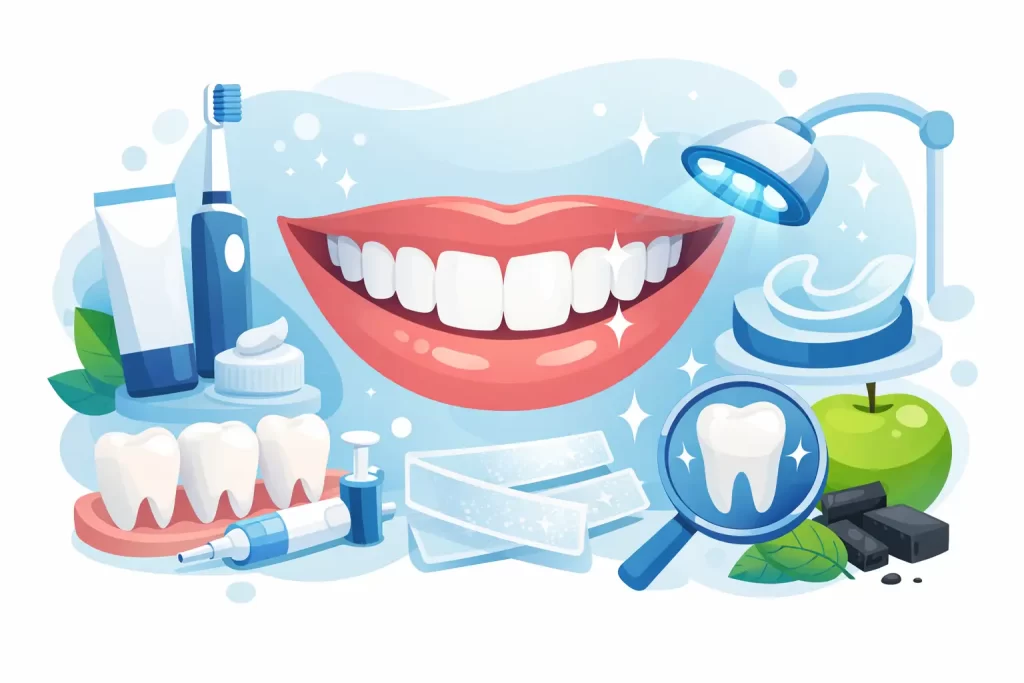
7 Best Ways to Whiten Teeth Safely
Coffee before work, tea in the afternoon, maybe a glass of red wine on the weekend – it does not take much for teeth to lose some of their brightness over time. If you have been looking into the best ways to whiten teeth, the right answer depends on what is causing the discoloration, how quickly you want results, and how sensitive your teeth are to treatment.
Whitening can make a real difference in how your smile looks, but not every option works the same way. Some methods are effective and professionally supervised. Others are inexpensive but limited. A few can do more harm than good if used too often or without proper guidance. Knowing the difference helps you choose a treatment that improves your smile without creating new dental problems.
The best ways to whiten teeth start with the cause
Before choosing a whitening method, it helps to understand why teeth look darker or more yellow in the first place. Surface stains are often caused by coffee, tea, red wine, tobacco, and deeply pigmented foods. These stains sit on the outer enamel and usually respond well to cleaning and whitening.
Other discoloration goes deeper. Aging naturally thins enamel, which makes the yellow dentin underneath more visible. Some medications, old dental trauma, and changes inside the tooth can also affect color. In these cases, whitening may help, but the results can be less predictable.
This is why an exam matters. Teeth do not all whiten evenly, and crowns, fillings, veneers, and bonding do not respond to whitening products at all. If you have visible dental work in your smile, a personalized plan is usually the best way to avoid a patchy result.
Professional whitening gives the fastest visible change
For many adults, in-office whitening is the most effective option when they want noticeable results without weeks of trial and error. This treatment uses stronger whitening agents than over-the-counter products and is carefully applied to reduce irritation to the gums.
The biggest advantage is speed. Many patients see a brighter smile after a single visit, which makes professional whitening appealing before weddings, interviews, photos, or other important events. It is also done under dental supervision, which means your teeth and gums can be assessed first to make sure whitening is a good fit.
That said, stronger treatment is not always the right choice for everyone. If you already have tooth sensitivity, gum recession, untreated cavities, or enamel wear, those concerns should be addressed before whitening begins. A brighter smile should never come at the expense of comfort or long-term tooth health.
Custom take-home trays offer a balanced approach
If you want professional-grade whitening with more flexibility, custom trays from your dentist are often one of the best ways to whiten teeth at a comfortable pace. These trays are made to fit your teeth closely, which helps the whitening gel stay where it should and reduces leakage onto the gums.
This option works well for patients who prefer gradual change over several days or weeks. It can also be easier for people with mild sensitivity, since wear time and gel strength can often be adjusted. The fit is a major upgrade from one-size-fits-all trays sold in stores, which can be messy and uneven.
Another benefit is control. If you have one darker tooth, areas of dental work, or concerns about over-whitening, a dentist can guide you on how to use the system safely and realistically. You still get convenience at home, but with a more predictable result.
Whitening toothpaste can help, but it has limits
Whitening toothpaste is often the first product people try, and it can be useful for maintaining brightness or lifting light surface stains. Most of these toothpastes rely on mild abrasives or polishing agents rather than deep bleaching ingredients.
That means they can improve the appearance of everyday staining, especially from coffee or tea, but they usually do not change the natural underlying shade of your teeth. If your goal is a dramatic before-and-after result, toothpaste alone is unlikely to get you there.
There is also a trade-off. Some whitening toothpastes are more abrasive than others, and aggressive daily use can contribute to enamel wear over time, especially if you brush hard. Used thoughtfully, they can support your routine. Used too heavily, they can create sensitivity without much extra benefit.
Whitening strips are convenient for mild to moderate staining
Whitening strips are popular because they are easy to find, simple to use, and less expensive than professional treatment. For mild to moderate staining, they can produce visible improvement over time.
The challenge is fit. Strips are made for the average smile, not your smile. If they do not sit evenly, some areas may whiten more than others. They can also miss the natural curves of the teeth, particularly near the gumline or between teeth.
Sensitivity is another consideration. Even when used as directed, some people notice temporary zingy discomfort or gum irritation. If that happens, it is worth pausing rather than pushing through. Whitening works best when it is done carefully, not aggressively.
A professional cleaning may be the most overlooked first step
Sometimes the smile does not need whitening first. It needs a proper cleaning. Plaque, tartar, and surface buildup can make teeth look dull, and a scale and polish can remove stains that at-home brushing simply cannot.
This is especially true if you have not had a dental cleaning in a while. Many patients are surprised by how much brighter their smile looks after a professional cleaning alone. Even if you still plan to whiten afterward, starting with a clean surface usually helps you get better, more even results.
It also creates a safer foundation. Whitening over untreated decay, inflamed gums, or heavy buildup is not ideal. A dental visit can identify those issues early and help you move forward with confidence.
What to avoid when searching for the best ways to whiten teeth
There is no shortage of whitening advice online, and not all of it is safe. Lemon juice, charcoal, baking soda scrubs, and other DIY methods are often promoted as natural solutions, but natural does not always mean gentle.
Acidic ingredients can weaken enamel. Abrasive powders can scratch the surface of the teeth. Once enamel is worn down, it does not grow back. Ironically, that damage can make teeth look more yellow over time by exposing more of the dentin beneath.
If a whitening trend sounds harsh, extreme, or too good to be true, it usually is. The best results come from methods that protect enamel while improving color gradually or under professional supervision.
How to keep teeth whiter after treatment
Whitening is not permanent, especially if the habits that caused staining stay the same. The good news is that maintenance does not have to be complicated.
Brushing twice a day, flossing daily, and keeping up with regular cleanings all help preserve results. If you drink coffee, tea, cola, or red wine often, rinsing with water afterward can reduce how long pigments sit on the teeth. Using a straw for cold dark beverages may also help limit contact with the front teeth.
Tobacco is one of the fastest ways to stain teeth again, so reducing or stopping use makes a visible difference. For patients who have already whitened successfully, occasional touch-ups may be enough to maintain the look they want without starting from scratch each time.
Choosing the right whitening option for your smile
The best whitening method is not always the strongest one. It is the one that matches your teeth, your goals, and your comfort level. If you want quick results for a major event, in-office treatment may make sense. If you prefer a gradual approach, custom take-home trays may be a better fit. If staining is mild, a cleaning or store-bought option may be enough.
What matters most is starting with healthy teeth and realistic expectations. Not every smile responds the same way, and that is normal. If you have fillings, crowns, sensitivity, or uneven discoloration, a personalized assessment can save you time and frustration.
At Restorative Dental Jamaica, patients often feel more comfortable moving forward once they understand what will work best for their specific smile, not just what is popular online. Whitening should feel like a confident step, not a gamble.
If your teeth have been looking dull, yellow, or stained, the next best step is a simple one – get clear advice based on your teeth, not someone else’s social media routine.
Leave a reply







Leave a reply