
Cosmetic Dental Options That Suit Your Smile
A brighter smile is not always about vanity. For many people, exploring cosmetic dental options starts after a chipped front tooth, years of staining, small gaps that draw the eye, or teeth that no longer feel like the best version of themselves. The right treatment can improve appearance, but it can also restore confidence in everyday moments like speaking, laughing, and taking photos.
The key is knowing that cosmetic dentistry is not one single treatment. It is a range of solutions, and the best choice depends on your teeth, your goals, your timeline, and your budget. Some patients want a subtle refresh. Others want a more dramatic change. Most do best when they choose a plan that balances aesthetics with long-term oral health.
What cosmetic dental options can improve
Cosmetic treatments are designed to address concerns that affect the look of your smile. That may include stained or yellow teeth, chips and cracks, uneven edges, worn enamel, small gaps, mild crowding, or teeth that appear misshapen. In some cases, a treatment can improve both appearance and function, especially when a damaged tooth also needs support.
This is where a personalized assessment matters. A treatment that looks ideal online may not be the right fit in the dental chair. Teeth with decay, gum disease, heavy wear, or bite problems often need those issues addressed first. Cosmetic care works best when it is built on a healthy foundation.
Cosmetic dental options for common smile goals
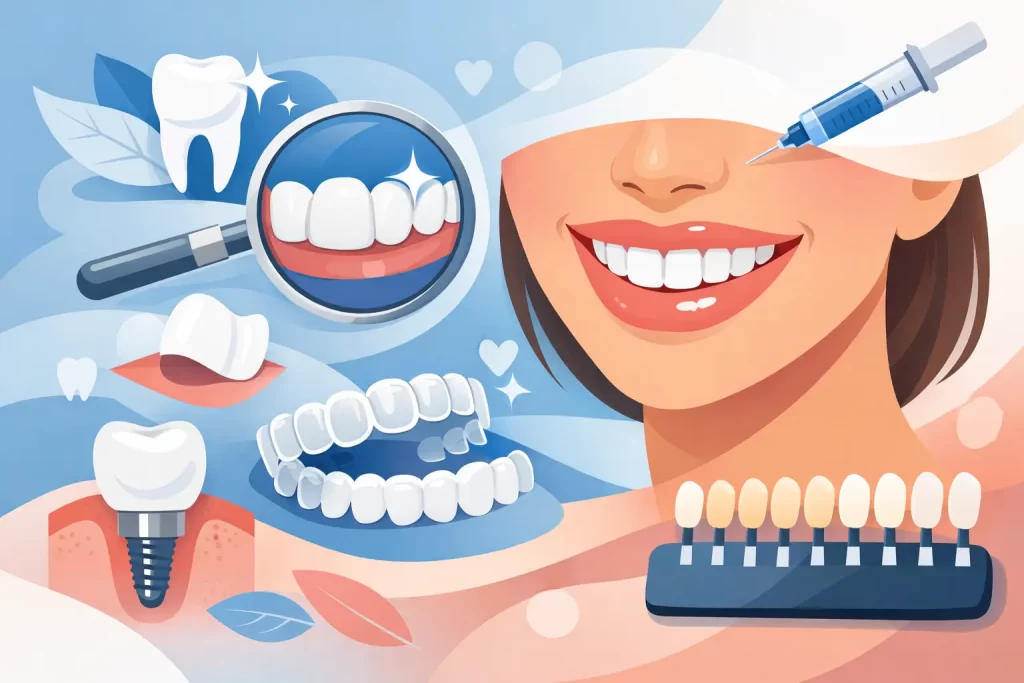
If your main concern is tooth color, teeth whitening is often the simplest place to start. Professional whitening can lift stains from coffee, tea, wine, smoking, and age-related discoloration more predictably than over-the-counter products. It is a good option when the shape and position of the teeth are already pleasing and the issue is mainly shade. Whitening is fast and conservative, but it does not change the shape of teeth or fix bonding, crowns, or veneers that are a different color.
If you have small chips, worn corners, slight gaps, or uneven surfaces, cosmetic bonding may be worth considering. Bonding uses a tooth-colored material to reshape areas of the tooth in a natural-looking way. It is usually more affordable than veneers and can often be completed quickly. The trade-off is that bonding may stain over time and may not be as durable as porcelain in high-pressure areas.
For patients who want a more polished transformation, veneers are one of the most versatile options. Veneers are thin coverings placed on the front of the teeth to improve color, shape, size, and overall symmetry. They can be a strong choice when teeth are deeply stained, slightly misaligned, uneven, or difficult to improve with whitening alone. Veneers can create beautiful results, but they require careful planning and are not the right answer for every smile. If someone grinds their teeth heavily or wants a very minimal approach, another treatment may make more sense.
When alignment is the issue, clear aligners can help straighten teeth gradually without traditional braces in certain cases. They are popular with working adults who want a discreet option for crowding, spacing, or minor bite concerns. The result can be both cosmetic and practical because straighter teeth are often easier to clean. Still, aligners require consistency. If trays are not worn as instructed, treatment may take longer or fall short of expectations.
Sometimes the most attractive result comes from restorative care with a cosmetic benefit. A crown, for example, may be recommended for a tooth that is damaged, heavily filled, or weakened. While its purpose is to protect the tooth, it also improves the tooth’s appearance. This matters because not every visible concern should be treated as purely cosmetic. In a quality dental practice, health and appearance should work together.
How to choose among cosmetic dental options
The best treatment starts with a simple question: what exactly do you want to change? Some patients say they want a better smile, but that can mean many different things. One person wants whiter teeth. Another wants straighter edges. Someone else wants their smile to look natural, just fresher and more balanced.
Clarity helps avoid overtreatment. If your only concern is surface staining, veneers may be far more than you need. If your teeth are uneven in shape and color, whitening alone may leave you disappointed. A good consultation should narrow the focus and explain what each option can and cannot achieve.
Timeline matters too. Whitening and bonding can often deliver noticeable improvements quickly. Veneers and aligners typically involve more planning and more than one visit. If you have a wedding, interview, graduation, or major event coming up, your dentist can help prioritize what is realistic in the time available.
Budget also plays a role, and there is no reason to be embarrassed about that. Cosmetic care should be discussed honestly. In many cases, a staged approach works well. You might start with cleaning and whitening, then consider bonding or aligners later. The goal is not to pressure you into the biggest treatment plan. It is to help you make an informed decision that feels comfortable.
What to expect at a cosmetic consultation
A proper cosmetic consultation should feel informative, not rushed. Your dentist will usually examine your teeth and gums, review your concerns, and look at factors that affect the final result, including bite, enamel condition, existing dental work, and oral hygiene. Digital x-rays or intraoral images may also help identify issues that are not obvious at a glance.
This step matters because cosmetic dentistry is highly individual. Two people may ask for the same treatment and need completely different recommendations. A chipped tooth might be ideal for bonding in one patient and better treated with a crown in another. A whiter smile might be safe and effective for one person, but another may need gum treatment or replacement of old visible fillings first.
At Restorative Dental Jamaica, this kind of planning is part of a patient-centered approach. The goal is not simply to improve how your smile looks for a week or a month. It is to recommend treatment that feels natural, suits your features, and supports long-term oral health.
The balance between natural and noticeable
One of the biggest concerns patients have is looking too done. That worry is understandable. Most people do not want a smile that looks artificial or out of proportion to their face. They want to look like themselves, only more refreshed and confident.
That is why conservative cosmetic dentistry often delivers the most satisfying result. Subtle whitening, carefully shaped bonding, or veneers designed with restraint can make a meaningful difference without drawing attention for the wrong reason. The best cosmetic work usually does not announce itself. It simply makes your smile look healthy, balanced, and cared for.
Caring for your results
Whatever treatment you choose, maintenance affects how long it lasts. Whitening results are influenced by diet, smoking, and oral hygiene. Bonding and veneers benefit from good brushing habits, regular dental visits, and avoiding habits like chewing ice or using teeth to open packages. Aligners require follow-through during treatment and retainers afterward.
This is another reason to choose cosmetic dentistry with a long view. The treatment itself is only part of the outcome. The habits that follow are just as important. When patients understand how to protect their investment, they usually stay happier with their results.
When cosmetic dentistry is worth it
Cosmetic care is worth it when it solves a problem that genuinely affects your confidence or comfort. It is not about chasing perfection. It is about choosing thoughtful improvements that fit your life and feel worthwhile every time you smile.
The right cosmetic dental options should never feel confusing or intimidating. With the right guidance, you can choose a treatment that matches your goals, respects your budget, and keeps your oral health at the center. If you have been thinking about changing your smile, a conversation with a trusted dentist can turn uncertainty into a plan that feels practical, personal, and reassuring.
Leave a reply







Leave a reply