
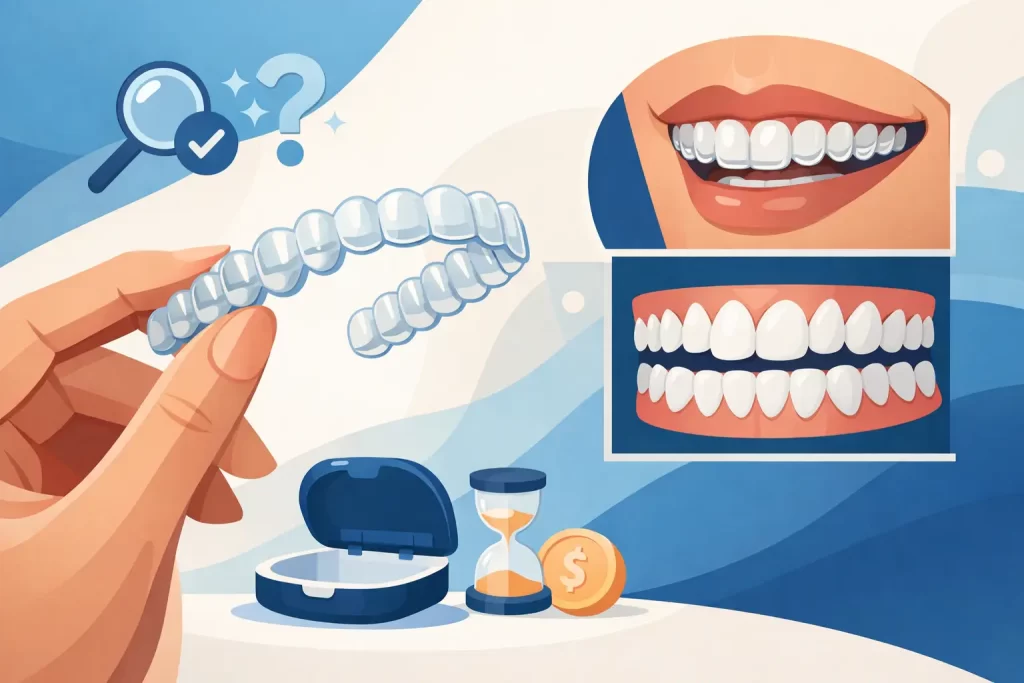
Teeth Aligners Review: Are They Worth It?
If you have been putting off straightening your teeth because you do not want metal braces, a teeth aligners review can be a helpful place to start. Most adults are not just asking whether aligners work. They want to know if they are comfortable, if the results look natural, if the process will disrupt work or family life, and whether the investment feels worthwhile.
That is the right way to think about it. Teeth aligners can be an excellent option, but they are not the right fit for every smile or every lifestyle. The best decision comes from understanding both the advantages and the trade-offs before treatment begins.
Teeth aligners review: what people like most
The biggest reason adults choose clear aligners is simple. They are discreet. For many patients, that matters just as much as the clinical result. If you spend your day in meetings, work with customers, attend social events, or simply want a straighter smile without drawing attention to the process, aligners are appealing for that reason alone.
Comfort is another major advantage. Aligners are made from smooth plastic, so there are no metal wires or brackets rubbing against the cheeks and lips. Most patients still feel pressure when switching to a new set, especially during the first day or two, but that pressure is usually manageable and expected. It is a sign the teeth are moving.
Convenience also deserves a fair mention in any teeth aligners review. Because the trays are removable, eating is easier than it is with traditional braces. You do not have to work around brackets when brushing and flossing, and there are no food restrictions while the aligners are out. For adults with busy schedules, that flexibility can make treatment feel much easier to live with.
Then there is the cosmetic benefit during treatment. Clear aligners let many patients improve the position of their teeth without feeling self-conscious in the process. That can be especially valuable for people who delayed treatment for years and now want a more polished smile in a way that feels low profile and professional.
Where aligners can fall short
This is where honest guidance matters. Aligners only work well when they are worn consistently. If you remove them often, forget to put them back in, or leave them out for long stretches, your treatment can slow down or become less predictable. In other words, aligners give you freedom, but they also require discipline.
Some patients are surprised by how much commitment is involved. In most cases, aligners need to be worn for around 20 to 22 hours a day. That means taking them out for meals, drinks other than water, and oral hygiene, then putting them back in promptly. If that routine feels unrealistic for your lifestyle, braces may actually be the simpler option.
Not every case is ideal for aligners either. Mild to moderate crowding, spacing, and certain bite concerns often respond well, but more complex tooth movement may need a different approach or a combination of treatments. A proper assessment is essential because online promises can make aligners sound more universal than they really are.
There is also the adjustment period. Some patients notice a slight lisp at first. Others find the first few days with each new tray mildly uncomfortable. Neither issue is usually a dealbreaker, but both are worth knowing in advance so expectations stay realistic.
Cost and value: are aligners worth the money?
Cost matters, and patients are right to ask direct questions about it. Clear aligners can be a meaningful investment, especially when treatment includes digital planning, follow-up visits, refinements, and retainers. The exact fee depends on how complex your case is and how long treatment is expected to take.
The more useful question is not just what aligners cost, but what you are getting for that cost. A professionally supervised treatment plan includes diagnosis, monitoring, and adjustments based on how your teeth are actually moving. That level of oversight can protect you from frustration, poor results, or problems that were never properly identified at the start.
For many adults, the value comes from a combination of appearance, comfort, and convenience. If aligners help you straighten your teeth in a way that fits your professional image and daily routine, the investment can feel justified. If you are unlikely to wear them as directed, the same investment may feel wasted.
Results: what kind of changes can you expect?
When aligners are well planned and worn properly, results can be very impressive. Patients often see improvement in crowding, small gaps, and overall smile balance. The change is usually gradual, which many people appreciate because it feels natural rather than dramatic overnight.
That said, treatment timelines vary. Some cases may improve in several months, while others take much longer. Teeth do not all move at the same speed, and refinements are sometimes needed to fine-tune the final result. A good dentist will explain that clearly rather than promising a perfect smile on an unrealistic schedule.
It is also worth remembering that straight teeth are not only about appearance. Better alignment can make cleaning easier in some cases, which may support long-term oral health. If teeth are crowded or overlapping, plaque can collect in areas that are harder to reach. Improving alignment may help reduce that challenge, although it does not replace regular dental care.
Who is a good candidate for clear aligners?
Adults with mild to moderate alignment concerns are often strong candidates, especially if they want a discreet treatment option and are prepared to follow instructions carefully. Patients who are motivated, organized, and consistent tend to do especially well because the success of aligners depends so much on daily wear.
They can also be a good option for people who want to improve their smile without the look of braces during work or social activities. For professionals, parents, and adults returning to dental care after a long gap, aligners often feel more approachable.
On the other hand, patients with complex bite problems, severe crowding, untreated gum disease, active decay, or low compliance may need a different plan first. This is why an in-person assessment matters. Straightening teeth should never be treated like a one-size-fits-all purchase.
What to look for before starting treatment
A good aligner experience starts with a thorough examination. That should include a clear look at your teeth, gums, bite, and overall oral health. Digital imaging and photographs can be very helpful because they allow treatment to be planned with more precision and help patients understand what is being recommended.
You should also expect a clear conversation about what aligners can and cannot do in your case. If a provider skips over limitations, rushes the consultation, or makes the process sound effortless for everyone, that is a reason to pause. Good dental care is reassuring, but it is also honest.
Ask how progress will be monitored, what happens if your teeth do not track as expected, and whether retainers are included at the end. Retention is a crucial part of treatment. Teeth can shift back after alignment if retainers are not worn as instructed, and patients deserve to know that from the beginning.
At Restorative Dental Jamaica, that patient-first approach matters because comfort and trust are part of good care, not extras. Feeling informed and supported can make the process far easier from start to finish.
Our honest take on this teeth aligners review
If you want a discreet, modern way to straighten your teeth and you are willing to wear the trays consistently, aligners are often well worth considering. They offer real advantages in appearance, comfort, and convenience, and many adults find them easier to accept than traditional braces.
Still, the best teeth aligners review is not one that promises perfection. It is one that tells the truth. Aligners work best when the case is suitable, the planning is careful, and the patient is committed. They are not magic, but in the right situation, they can deliver a confident smile with less disruption than many people expect.
If you have been thinking about improving your smile, the next step does not have to feel overwhelming. A calm, professional consultation can give you clarity, and sometimes that clarity is what finally makes moving forward feel easy.
Leave a reply








Leave a reply