
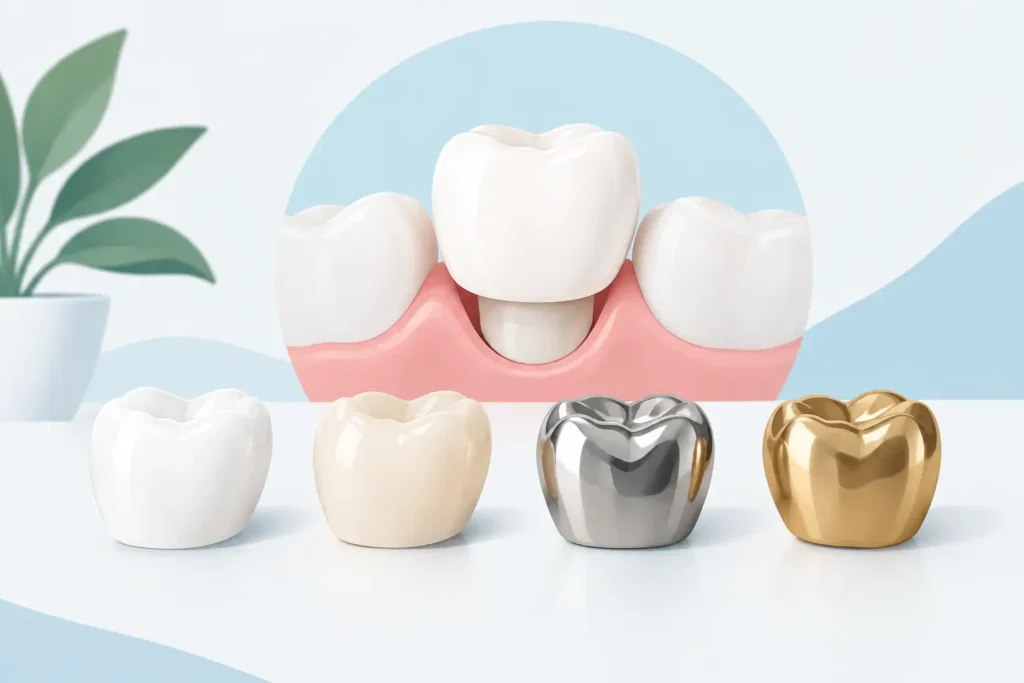
Dental Crown Material Options That Fit Your Smile
A crown is not simply a cap placed over a tooth. It is a carefully chosen restoration designed to help you chew comfortably, protect a weakened tooth, and feel confident when you smile. With several dental crown material options available, the best choice depends on where the tooth is located, how much biting force it handles, your cosmetic goals, and the condition of the tooth underneath.
For a front tooth, a natural-looking result may be the priority. For a back molar, strength and durability may matter most. Your dentist will look at the full picture before recommending a material, so your crown is made to suit your smile and your everyday life.
Why crown material matters
Dental crowns are commonly used to restore teeth that are badly decayed, cracked, heavily filled, worn down, or treated with root canal therapy. A crown covers the visible part of the tooth, helping it withstand normal chewing forces while restoring its shape and appearance.
Every material has benefits and trade-offs. Some materials offer excellent strength but may not match natural enamel as closely. Others create a beautiful, lifelike appearance but may be better suited to areas with less intense biting pressure. The right material is rarely about choosing the most expensive option. It is about choosing the option that serves your tooth well over time.
Common dental crown material options
All-ceramic and all-porcelain crowns
All-ceramic or porcelain crowns are valued for their natural appearance. They can be color-matched to surrounding teeth and reflect light in a way that closely resembles enamel. This makes them a popular choice for front teeth and other visible areas of the smile.
Modern ceramic materials can also be quite strong, particularly when your dentist selects a high-strength ceramic appropriate for your bite. Still, not every ceramic is ideal for every situation. A patient who grinds their teeth heavily or needs a crown on a powerful back molar may benefit from a different material or a specific high-strength ceramic design.
For patients focused on cosmetic results, ceramic crowns offer a metal-free option with no dark line near the gumline. They are also a good consideration for people with sensitivities to certain metals.
Zirconia crowns
Zirconia is a type of ceramic known for its impressive strength. It is often recommended for molars and other teeth that manage significant chewing pressure. It can also be used in visible areas, as newer zirconia options provide improved translucency and a more natural appearance than earlier versions.
The main advantage of zirconia is durability. For patients with a strong bite, a history of broken restorations, or nighttime clenching and grinding, zirconia may provide dependable protection. Its appearance can be very attractive, although highly translucent porcelain may still be preferred for a front tooth where fine cosmetic detail is the main concern.
A zirconia crown must be designed and polished properly to work comfortably with opposing teeth. Your dentist will consider your bite carefully, helping protect both the crowned tooth and the teeth it meets when you chew.
Porcelain-fused-to-metal crowns
Porcelain-fused-to-metal crowns, often called PFM crowns, combine a strong metal framework with a porcelain outer layer. For many years, they were a standard choice because they balanced strength with an enamel-colored appearance.
They can be useful in certain situations, especially where additional support is needed. However, the porcelain layer may chip over time, and a dark edge can sometimes become visible near the gumline as gums naturally change. For a very visible front tooth, this may be a cosmetic concern.
PFM crowns are still a practical option for some patients, but advances in ceramic and zirconia materials have given dentists more metal-free choices than ever before. The best recommendation depends on the tooth, your bite, and the appearance you hope to achieve.
Full metal crowns
Gold alloy and other metal crowns are exceptionally durable. They withstand heavy chewing forces well and usually require less removal of natural tooth structure than some other crown types. Because metal does not look like a natural tooth, these crowns are generally considered for back teeth that are not easily seen when smiling.
A full metal crown may be appropriate for a patient whose top priority is long-term function on a rear molar. It is a trusted option, but it is not usually selected when cosmetic blending is important. The choice may also be influenced by personal preference, metal sensitivities, and cost.
Composite resin crowns
Composite resin can be used for certain restorations and temporary crowns. It can be matched to tooth color and may be a more affordable option in selected cases. However, it does not offer the same long-term wear resistance as ceramic, zirconia, or metal.
For a permanent crown, composite is typically not the first choice when the tooth needs substantial strength. It may be helpful as an interim restoration while a final crown is being made, or when clinical needs and budget call for a conservative short-term solution.
How your dentist helps you choose
The material is only one part of a successful crown. Proper preparation, a precise fit, accurate bite adjustment, and healthy gums all influence how the restoration feels and performs. A beautiful crown that does not fit well can cause sensitivity, food trapping, or discomfort when chewing. That is why personalized planning matters.
During your assessment, your dentist may consider the location of the tooth, the amount of healthy tooth structure remaining, whether you have had root canal treatment, and how your upper and lower teeth come together. Digital x-rays and intraoral images can help reveal concerns that are not visible from the surface alone.
Your lifestyle is relevant, too. If you grind your teeth, play contact sports, or frequently chew hard foods or ice, your crown should be selected with those habits in mind. A night guard may also be recommended to protect your new crown and your natural teeth from the pressure of grinding.
Appearance, strength, and cost: finding the balance
Patients often ask which crown material is best. The honest answer is that it depends. The strongest material is not automatically the most natural-looking, and the most cosmetic material is not always the ideal choice for a heavily loaded molar.
Cost can also vary depending on the material, the complexity of the case, laboratory work, and whether other treatment is needed first. For example, a tooth may require buildup material, gum treatment, or root canal therapy before it can be safely crowned. Discussing the treatment plan and payment options in advance can make the process feel more manageable.
It is also worth remembering that a crown protects what remains of your natural tooth. When a tooth can be preserved, a well-planned crown can be an investment in comfort, function, and confidence.
Caring for a dental crown
A crown cannot develop decay itself, but the tooth and gum tissue around it still need consistent care. Brush twice daily with fluoride toothpaste, clean between teeth every day, and keep regular dental visits. Pay special attention to the edge where the crown meets your natural tooth, since plaque can collect there.
Avoid using your teeth to open packages or bite hard objects. If you notice sensitivity that does not settle, pain when biting, a loose crown, or a chipped area, arrange a dental visit promptly. Addressing a small concern early can help prevent a larger repair later.
At Restorative Dental Jamaica, we take time to explain your options in clear, reassuring terms, so you can make a decision that feels right for your health, comfort, and smile. A thoughtful conversation with your dentist is the best first step toward a crown that looks natural, feels comfortable, and helps you enjoy every meal and every smile with greater ease.
Leave a reply







Leave a reply