
What an Intraoral Camera Dental Exam Shows
A tooth can look perfectly fine in the mirror and still have a small crack, early decay, or worn filling that deserves attention. An intraoral camera dental exam gives you and your dentist a close-up view of areas that are easy to miss, so the conversation about your oral health feels clearer from the very beginning.
For many patients, the greatest benefit is simple: you are not asked to make a decision based only on what you are told. You can see what your dentist sees on a chairside screen, ask questions, and better understand why a particular treatment may be recommended.
What Is an Intraoral Camera Dental Exam?
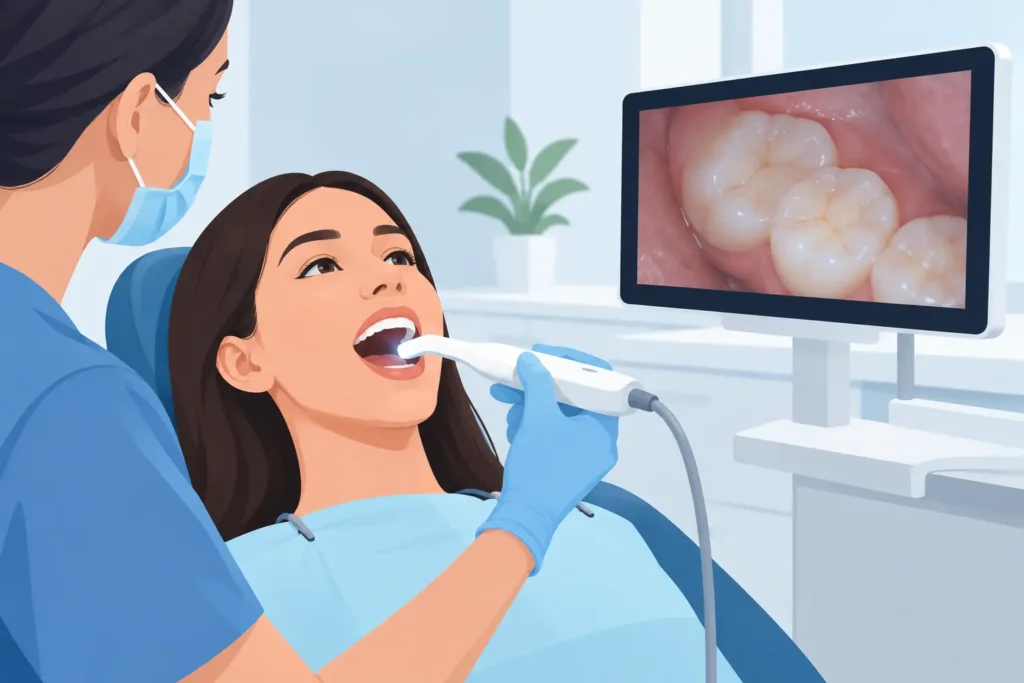
An intraoral camera is a small handheld device with a tiny camera at its tip. It is gently moved around the mouth to capture magnified images of your teeth, gums, existing crowns, fillings, and other visible areas. The images appear on a monitor in real time.
The camera is much smaller than most people expect. It does not involve needles, drilling, or radiation, and it is typically a comfortable part of a routine dental assessment. Your dentist may use it to document a specific concern, compare changes over time, or explain what is happening in an area that cannot be easily seen in a standard mirror.
At Restorative Dental Jamaica, technology is used to support a more personal conversation, not replace one. Clear images help us explain your options with care and give you the confidence to move forward at a pace that feels right for you.
What Your Dentist May See With an Intraoral Camera
The camera can reveal visible concerns in greater detail than a quick visual check alone. Small fractures around a tooth, staining at the edge of an older filling, plaque buildup near the gumline, and early changes in the gums may all be easier to show on screen.
This is especially helpful when a tooth is not painful. Dental problems do not always announce themselves with a sharp ache. A chipped filling or a worn crown may be noticeable to your dentist long before it becomes an urgent problem. Seeing the image can make preventive care feel more practical: treating a small issue early is often simpler, more comfortable, and more conservative than waiting for it to worsen.
An intraoral camera can also be useful for cosmetic discussions. If you are considering whitening, bonding, veneers, or replacing a visible restoration, close-up images provide a useful starting point. Together, you can look at tooth color, edge wear, old filling discoloration, and smile details that matter to you.
Why Seeing the Images Matters
A dental exam should never feel like a mystery. When you can view an image of a cracked tooth or a worn restoration, the reason for a recommendation becomes easier to understand. That does not mean every image requires treatment right away. Some findings can be monitored, while others may benefit from prompt care.
The camera supports informed choices. Your dentist can point to the exact area of concern, explain what may happen if it is left untreated, and discuss suitable options. For example, a small cavity may be managed with a white filling, while a tooth with more extensive damage may need a crown to protect the remaining structure. The right approach depends on the tooth, the extent of the damage, your bite, your comfort, and your long-term goals.
This visual approach can be particularly reassuring for parents bringing children for dental visits. Instead of using complicated terms, the dentist can show families where brushing needs improvement or where a sealant may help protect a vulnerable back tooth.
Intraoral Cameras and Digital X-Rays Work Differently
An intraoral camera is valuable, but it is not a replacement for digital X-rays. The camera shows the visible surfaces of teeth and gums. X-rays help your dentist evaluate areas that cannot be seen directly, including between teeth, beneath fillings, and around tooth roots and bone.
Think of the camera as a close-up view and an X-ray as a look beneath the surface. Depending on your needs, your dentist may recommend one, both, or neither during a particular appointment. A patient with a visible chipped tooth may benefit immediately from camera images. Someone with pain when biting or a concern between teeth may also need an X-ray for a complete assessment.
Using the right diagnostic tools helps avoid guesswork. It also supports a treatment plan focused on preserving healthy natural tooth structure whenever possible.
What to Expect During Your Appointment
The process is straightforward. During your exam, your dentist or dental team member may use the camera to take images of specific teeth or move around the mouth for a broader visual record. You can usually watch the screen as the images are captured.
If something needs attention, your dentist will explain what the image shows in plain language. You may discuss whether the concern should be monitored, addressed with preventive treatment, or restored with care such as a filling, crown, root canal treatment, or another appropriate service.
There is no need to prepare in a special way for the camera itself. Brushing before your visit is always appreciated, but you do not need to worry about having a perfect smile. Dental exams are for real mouths, including old fillings, sensitive teeth, crowded areas, and the everyday signs of life.
When a Camera Exam Is Especially Helpful
An intraoral camera dental exam can be useful at routine checkups, but it is also particularly valuable if you have a tooth that feels rough, a filling that seems different, bleeding gums, persistent bad breath, or sensitivity to hot, cold, or pressure. It may help document a broken tooth after an accident or show the condition of a restoration that has been in place for many years.
It is also a helpful tool when you are deciding whether to repair or replace older dental work. A restoration may still look acceptable from a distance while showing wear at the edges up close. On the other hand, an image may provide reassurance that a tooth or filling can simply be watched for now. Good dentistry is not about recommending treatment for every imperfection. It is about identifying what truly needs care and protecting what is still healthy.
A More Comfortable Way to Talk About Your Smile
Dental visits can feel more relaxed when you know what is happening and why. Intraoral images turn an abstract explanation into a shared view of your oral health. They make it easier to ask, “What am I looking at?” and receive an answer you can understand.
If it has been a while since your last checkup, or you have noticed a change in your smile, a detailed exam can offer useful clarity without pressure. A small camera may reveal a lot, but the most valuable part is the conversation that follows: thoughtful guidance, personalized options, and care centered on helping you keep your natural smile healthy and confident.
Leave a reply







Leave a reply