
What Are Fissure Sealants? A Parent’s Guide
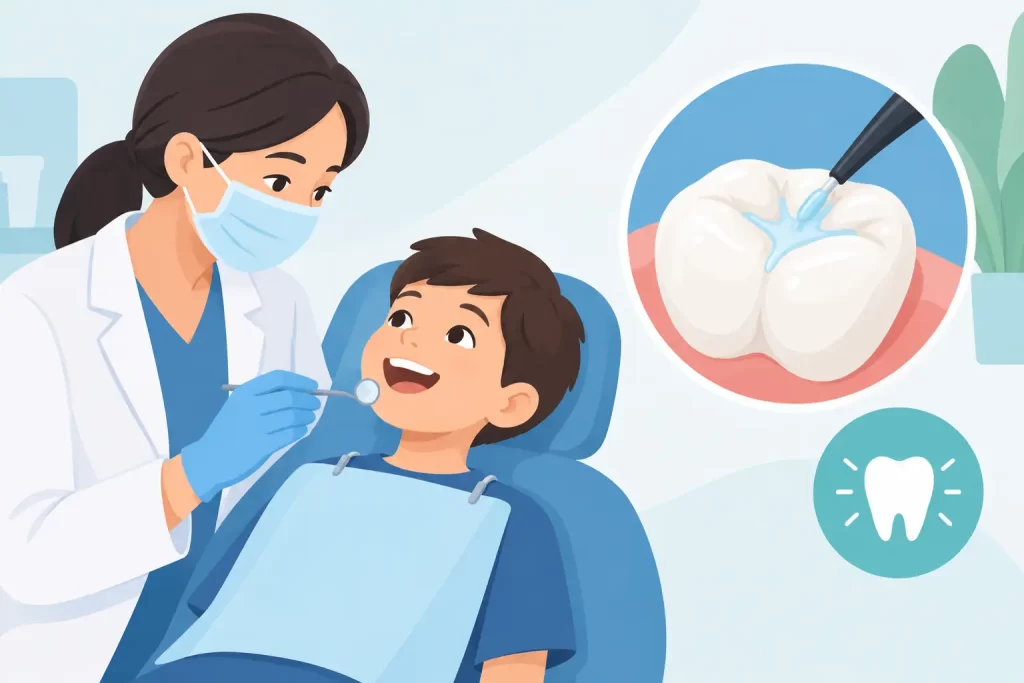
The chewing surfaces of back teeth are not smooth. They have tiny grooves and pits that can hold food and plaque, even when a child brushes carefully. So, what are fissure sealants? They are thin protective coatings placed over these vulnerable grooves to help keep decay-causing bacteria out.
For many families, fissure sealants are a simple way to give permanent molars an extra layer of protection during the years when cavities are most likely to develop. The treatment is quick, comfortable, and usually requires no drilling or anesthetic. It is one of the most practical preventive options we can offer when a tooth is healthy but at higher risk of decay.
What Are Fissure Sealants and How Do They Work?
Fissure sealants are made from a dental resin material that flows into the natural pits and grooves on the biting surface of a tooth, most often a molar or premolar. Once placed, the material is hardened with a special curing light and becomes a smooth protective barrier.
Think of it as covering the narrow spaces where a toothbrush bristle may not easily reach. The sealant does not replace brushing, flossing, fluoride, or regular dental visits. Instead, it helps prevent plaque and food particles from settling deeply into the fissures of the tooth.
Molars are particularly good candidates because they do most of the chewing and have the most detailed chewing surfaces. Those grooves can be deeper than they appear, which means a tooth may look clean while bacteria remain trapped below the surface.
Who Can Benefit From Fissure Sealants?
Children and teenagers are the most common candidates for sealants, especially when their first and second permanent molars come through. Permanent molars typically arrive before a child has fully developed consistent brushing habits, so protecting them early can make a meaningful difference.
However, fissure sealants are not only for children. Adults with deep grooves in healthy back teeth may also benefit, particularly if they have a history of cavities or find it difficult to keep certain areas clean. The best choice depends on the tooth itself, your cavity risk, your oral hygiene routine, and whether there is already decay or a filling present.
A dentist may recommend sealants for a child soon after a new permanent molar has erupted. This timing matters because the tooth can be protected before decay has a chance to begin. In some cases, baby teeth with very deep grooves may also be considered, especially if a child is prone to cavities.
The Fissure Sealant Procedure Is Simple
One reason parents appreciate sealants is that the appointment is usually straightforward. There is no recovery time, and children can return to school, meals, and normal activities right away.
First, the tooth is cleaned and dried. The dentist then applies a gentle conditioning solution that helps the sealant bond securely to the enamel. After rinsing and drying the tooth again, the sealant material is painted into the grooves and hardened with a blue curing light.
The process often takes only a few minutes per tooth. Most patients feel little more than the sensation of having the tooth cleaned and kept dry. Because the tooth structure is not being removed, sealants are considered a conservative preventive treatment.
What Fissure Sealants Can and Cannot Do
Fissure sealants can reduce the chance of decay on the chewing surfaces of treated teeth. They are especially useful in grooves that are narrow, deep, or difficult to clean. By creating a smoother surface, they make it harder for plaque to collect in those areas.
Still, sealants do not make a tooth immune to cavities. Decay can develop between teeth, along the gumline, or in any area where plaque remains. A sealed molar still needs thorough brushing with fluoride toothpaste, daily cleaning between the teeth, a balanced diet, and routine dental examinations.
Sealants are also not a solution for every cavity. If a tooth already has significant decay, the dentist may recommend a filling or another restorative treatment instead. During an examination, digital x-rays and careful visual assessment can help determine whether the tooth is suitable for a sealant or needs more involved care.
How Long Do Sealants Last?
Fissure sealants can last for several years, but they should be checked at every regular dental visit. Over time, a sealant can wear down, chip, or partially come away, particularly on teeth exposed to strong chewing forces.
If a sealant is no longer fully intact, it can often be repaired or replaced quickly. This is one reason routine checkups are so valuable. A dentist can monitor the sealant, assess the health of the tooth underneath, and address small changes before they become larger problems.
Chewing, brushing, and normal daily use do not require special restrictions after a sealant is placed. However, habits such as chewing ice, biting pens, or eating very hard foods can damage teeth and dental materials alike. Protecting teeth from unnecessary stress helps sealants and natural enamel last longer.
Are Fissure Sealants Safe?
Fissure sealants have been used in preventive dentistry for decades and are widely regarded as a safe treatment option. The material is placed only on the tooth surface and is hardened before you leave the chair.
Parents sometimes worry that placing a sealant could trap decay beneath it. A careful dental examination comes first. Sealants are intended for teeth that are healthy or, in limited situations, have very early changes that can be safely monitored. If a cavity is present and requires treatment, sealing over it would not be the appropriate approach.
At Restorative Dental Jamaica, we believe patients and parents should understand why a treatment is being recommended. We take time to assess each tooth, explain the options clearly, and make sure you feel comfortable with the plan for your family’s smile.
Sealants, Fluoride, and Good Home Care
Preventive dental care works best when several small habits work together. Fluoride strengthens enamel and can help reverse the earliest stages of mineral loss. Brushing removes plaque from accessible surfaces. Flossing or another recommended interdental cleaner removes plaque between teeth. Sealants protect the deep grooves that are often hardest to clean.
For children, supervision can be especially helpful. Young children may brush independently but still need an adult to check that all tooth surfaces are being reached. A pea-sized amount of fluoride toothpaste is generally used for children ages 3 and older, while younger children need only a tiny smear. Your dentist can give guidance based on your child’s age and needs.
Snacking patterns matter, too. Frequent sugary drinks, sticky sweets, and repeated grazing give oral bacteria more opportunities to produce acids that attack enamel. Sealants help on the chewing surfaces, but they cannot offset frequent sugar exposure across the rest of the mouth.
When Should You Ask About Fissure Sealants?
Ask at your child’s next dental assessment if a first or second permanent molar has recently erupted, if cavities have occurred before, or if you notice deep grooves in the back teeth. Adults can also ask whether their healthy molars would benefit from additional protection.
A personalized recommendation is always better than assuming every tooth needs the same treatment. Some grooves are shallow and easy to maintain with excellent brushing. Others are naturally deep and may be more vulnerable despite good home care. Your dentist can help you weigh the benefit based on the shape and condition of each tooth.
A small preventive step can spare a child from an uncomfortable cavity and preserve more natural tooth structure for the future. If you are unsure whether sealants are right for you or your child, a relaxed dental visit can provide the clarity and reassurance you need.
Leave a reply







Leave a reply