
How Same Day Crown Technology Saves Your Time
A cracked tooth rarely chooses a convenient moment. It may happen just before an important meeting, during a family meal, or when you are already managing a busy week. Same day crown technology can make restoring that tooth more efficient by allowing some patients to receive a custom crown in a single appointment, without the traditional wait for a dental laboratory.
For patients who need a durable restoration but want fewer visits and less disruption to their routines, this approach can be an appealing option. The right treatment still begins with a careful examination, because comfort, function, and the long-term health of your natural tooth matter more than rushing the process.
What Is Same Day Crown Technology?
A dental crown is a custom cover that fits over a tooth that has been weakened by decay, a large filling, a fracture, or root canal treatment. It restores the tooth’s shape, strength, and ability to handle normal biting forces. Traditionally, crowns require at least two appointments: one to prepare the tooth and take an impression, and another to fit the permanent crown after a dental laboratory creates it.
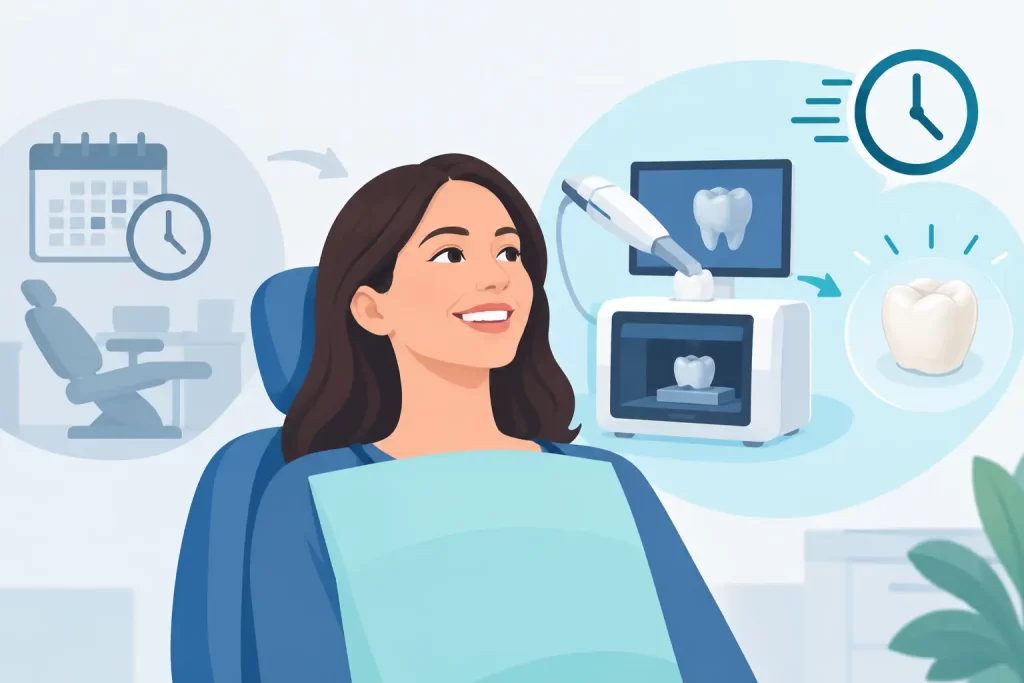
Same day crown technology uses digital tools to shorten that timeline. After the tooth is prepared, your dentist captures a detailed digital image of your mouth rather than using conventional impression material. The crown is then designed on a computer and crafted from a strong ceramic block using an in-office milling system. Once it is finished, the dentist checks the fit, bite, color, and comfort before bonding it securely into place.
The result is a carefully designed restoration completed in one visit for eligible cases. It is not simply about speed. The purpose of the technology is to support precise planning and give patients a high-quality option when the tooth and treatment needs are suitable.
Why Patients Appreciate Same Day Crown Technology
The most obvious benefit is convenience. A single-visit crown may mean less time away from work, school, family responsibilities, or travel plans. For busy professionals and parents in Kingston, avoiding a second crown appointment can make dental care easier to fit into an already full schedule.
It can also eliminate the need for a temporary crown. Temporary crowns are useful, but they require a little extra care. Patients often need to avoid very sticky foods, floss carefully around the temporary, and contact the office if it loosens. With a same-day restoration, there is generally no waiting period between preparation and placement of the final crown.
Digital imaging can improve the patient experience as well. Many people find digital scans more comfortable than traditional impressions. The images also allow the dentist to review the planned restoration in detail, helping ensure that the crown supports a natural-looking smile and a balanced bite.
A crown should not feel bulky, interfere with chewing, or look noticeably out of place. Whether the tooth is visible when you smile or located toward the back of your mouth, thoughtful design matters. The goal is a restoration that feels like part of your own tooth.
Is a Same-Day Crown Right for Every Tooth?
Not always. Same-day treatment is an excellent solution in many situations, but every tooth is different. Your dentist will consider the size and location of the damage, the amount of healthy tooth structure remaining, your bite, gum health, and the type of material most appropriate for the restoration.
For example, a tooth with a very deep fracture may need additional treatment before it can be crowned. A tooth that has infection or significant pain may require root canal therapy first. In other cases, a laboratory-made crown may be recommended because of complex cosmetic requirements, the need for a particular material, or the way the tooth meets the opposing teeth.
This is why an examination and digital X-rays are so valuable. They allow your dentist to look beyond what is visible on the surface. A quick answer is reassuring, but a well-planned answer protects your tooth more effectively.
Crowns Are Often Recommended When a Filling Is No Longer Enough
Modern white fillings can restore many teeth beautifully. However, when decay or an old filling has removed too much of the tooth, a filling may not provide enough support on its own. A crown wraps around the remaining tooth structure and helps reduce the risk of further breakage.
Crowns are also commonly used after root canal treatment. A root canal removes infection from inside the tooth and can relieve pain, but the tooth may become more vulnerable to fracture afterward, especially if it is a back tooth used for chewing. Placing a crown at the right time can help preserve that tooth for years to come.
What to Expect During Your Appointment
Your visit begins with a conversation about your symptoms, concerns, and treatment goals. If you have sensitivity, pain when biting, a broken filling, or a tooth that has changed color, share those details. They help your dentist identify what may be happening and determine whether a crown is the best solution.
After examining the tooth and reviewing any necessary X-rays, the dentist will explain the treatment plan. If a same-day crown is appropriate, the tooth is gently prepared under local anesthetic so you remain comfortable. Any damaged or weakened areas are removed, and the tooth is shaped to create room for the crown.
A digital scan captures precise images of the prepared tooth and the surrounding teeth. Your dentist uses these images to plan the crown’s contours, contact points, and bite. The crown is then milled from ceramic, finished, and checked carefully in your mouth.
Before the final bonding, your dentist will ask you to bite down and move your jaw naturally. Small adjustments may be made to help the crown feel comfortable when you chew. Once the fit is confirmed, the crown is bonded in place. You leave with your final restoration, not a temporary one.
The full appointment length varies based on the tooth and the amount of treatment needed. If you are scheduling around work or family commitments, ask the dental team what timing to expect for your specific case.
Comfort and Quality Still Come First
A single visit should never mean a rushed visit. Creating a crown that supports your bite requires careful attention at every stage, from diagnosis and tooth preparation to digital design and final placement.
At Restorative Dental Jamaica, the focus is on preserving natural teeth whenever possible and helping patients feel informed throughout their care. Advanced tools, including digital imaging, can support more comfortable and precise treatment, but the dentist’s assessment remains central to a successful result.
If anxiety has kept you from addressing a damaged tooth, let the team know before treatment begins. A caring dental office can explain each step, answer questions clearly, and help you feel more at ease in the chair. Addressing a crack or failing filling early is usually more comfortable and less complicated than waiting for severe pain.
Caring for Your New Crown
A well-made crown is strong, but it still benefits from good daily care. Brush twice a day with fluoride toothpaste, clean between your teeth daily, and keep regular dental checkups and cleanings. The gumline around the crown remains vulnerable to plaque buildup, just like the gumline around natural teeth.
Try to avoid using any tooth as a tool to open packages or bite hard objects. If you clench or grind your teeth at night, a custom night guard may help protect both your crown and your natural teeth from excess pressure.
Some mild sensitivity after crown placement can occur, particularly if the tooth was already irritated. However, call your dentist if your bite feels uneven, the crown feels loose, or you experience persistent pain. Small concerns are best addressed early.
A Damaged Tooth Deserves Timely Attention
Same day crown technology offers a practical way to restore certain damaged teeth with fewer appointments and no temporary crown. Still, the best choice depends on your tooth, your oral health, and the result that will serve you well over time.
If a tooth is cracked, heavily filled, painful when chewing, or no longer supporting your smile with confidence, arranging an assessment is a positive next step. The sooner you understand your options, the sooner you can make a comfortable, informed decision for your smile.
Leave a reply







Leave a reply