
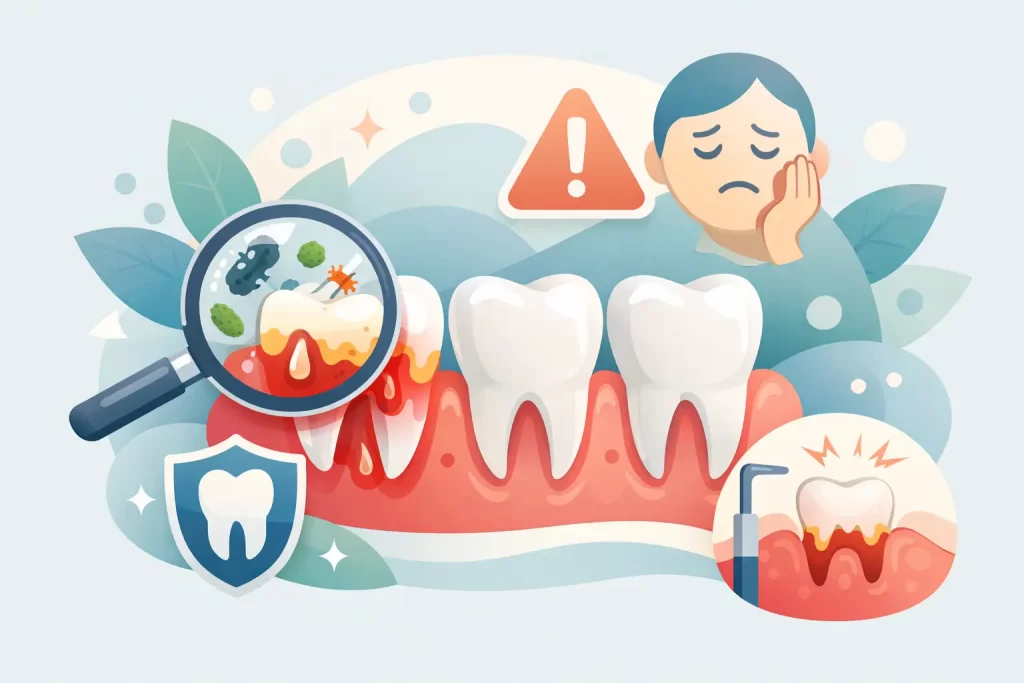
Gum Disease: Signs You Should Not Ignore
Bleeding gums are easy to explain away. You may blame a new toothbrush, brushing a little too firmly, or flossing after a long break. But when bleeding, swelling, bad breath, or tenderness keep returning, your gums may be asking for professional attention. Gum disease can begin quietly, often without severe pain, yet it can affect the foundation that keeps your natural teeth secure.
The reassuring news is that early care can make a meaningful difference. With regular dental visits, a thorough cleaning, and guidance that fits your routine, many patients can protect their gums and avoid more complex treatment later.
What Is Gum Disease?
Gum disease is an infection and inflammation of the tissues around the teeth. It usually starts when plaque, a sticky film of bacteria, remains along the gumline. If plaque is not removed thoroughly with brushing, flossing, and professional cleanings, it can harden into tartar. Tartar cannot be removed with a toothbrush at home and gives bacteria a rough surface to collect on.
The earliest stage is called gingivitis. At this point, gums may be red, puffy, tender, or likely to bleed during brushing and flossing. Gingivitis can often be reversed with improved home care and a professional scale and polishing appointment.
When inflammation is left untreated, it may progress to periodontitis. This more advanced form of gum disease can damage the gum tissue and bone that support the teeth. The gums may begin to pull away from the teeth, creating deeper spaces where bacteria can collect. Over time, teeth may loosen or be lost. Treatment is still available, but it becomes more involved, which is why early action matters.
Early Signs of Gum Disease
Healthy gums are generally pink or coral in color, firm, and comfortable. They should not bleed regularly when you brush or floss. A single episode of bleeding does not automatically mean you have gum disease, but recurring changes deserve a dental assessment.
Common warning signs include bleeding during brushing or flossing, gums that look swollen or red, persistent bad breath, a bad taste in the mouth, gum tenderness, and gums that appear to be receding. Some people also notice that their teeth look longer than before or that spaces are developing between teeth.
More advanced concerns can include pus around the gums, changes in the way your teeth fit together when you bite, or loose teeth. These symptoms should not be watched and waited on. Prompt care gives your dentist the best opportunity to protect your natural teeth and restore comfort.
It is also worth remembering that gum disease does not always hurt. Many busy adults in Kingston only realize there is a concern when a hygienist or dentist points out bleeding, tartar buildup, or deeper gum pockets during a routine visit. That is one reason preventive appointments are so valuable, even when your teeth feel fine.
Why Gum Health Affects More Than Your Smile
Your gums are not simply the background to your teeth. They are part of the support system that allows you to chew comfortably, speak confidently, and maintain a healthy-looking smile. When gum disease progresses, the effect can move beyond surface-level bleeding to bone loss around the teeth.
There is also a practical and financial side to early care. A routine cleaning and focused home-care plan are usually simpler than managing advanced periodontal damage, replacing missing teeth, or repairing teeth that have become difficult to save. Prevention is not about perfection. It is about responding early, before a manageable issue becomes a larger one.
Certain factors can make gum problems more likely. Smoking or tobacco use, diabetes, hormonal changes, some medications that cause dry mouth, family history, and crowded teeth can all play a role. Stress and inconsistent oral hygiene may also contribute. These risk factors do not mean gum disease is unavoidable. They mean your dental care should be personalized rather than one-size-fits-all.
How Gum Disease Is Treated
Treatment depends on the stage of the condition. Your dentist will examine your gums, look for plaque and tartar, assess any bleeding or recession, and may use digital x-rays to check the bone supporting your teeth. Intraoral images can also help you see what your dental team sees, making your treatment options clearer.
For gingivitis and mild buildup, a professional scale and polishing may be enough to remove deposits and help your gums begin to heal. Your dental team can also show you where plaque tends to collect and recommend changes to your brushing or flossing technique.
If deeper pockets or periodontitis are present, treatment may involve more detailed cleaning below the gumline and closer follow-up visits. In some cases, referral to a gum specialist may be recommended. This is not a sign that you have failed at oral care. It is simply the appropriate next step for protecting the teeth and bone you still have.
If gum disease has contributed to decay, broken teeth, or tooth loss, restorative care can help rebuild function and confidence. Depending on your needs, that may include fillings, crowns, root canal therapy, dentures, or other treatment options. The right plan depends on the health of your gums, the condition of each tooth, your goals, and your budget.
Everyday Habits That Protect Your Gums
Professional care works best alongside steady home habits. Brush twice a day using a soft-bristled toothbrush and fluoride toothpaste, taking time to clean gently along the gumline. Floss or use another dentist-recommended interdental cleaner once a day. If your gums bleed when you start flossing, do not stop automatically. Gentle, consistent cleaning can reduce inflammation, but persistent bleeding should be evaluated.
Replace your toothbrush or electric brush head regularly, especially when the bristles become worn. A frayed brush does not clean effectively and may be harsh on your gums. If you use mouthwash, choose one recommended for your needs. Mouthwash can be helpful, but it does not replace brushing, cleaning between teeth, or professional visits.
Diet matters too. Frequent sugary snacks and drinks feed the bacteria that contribute to plaque buildup and tooth decay. Drinking water, particularly after meals, can help rinse away food particles. If you smoke or use tobacco, seeking support to stop is one of the strongest steps you can take for your gums and overall health.
When to Schedule a Dental Visit
Schedule an appointment if your gums bleed repeatedly, feel sore, look swollen, or if bad breath does not improve with consistent brushing and flossing. You should also be seen if your gums are receding, teeth feel loose, or you notice a change in your bite. Do not wait for pain. Gum disease often advances without it.
For families, regular checkups help children learn healthy habits early and allow adults to stay ahead of concerns that may be easy to miss. At Restorative Dental Jamaica, the focus is on comfortable, personalized care that helps patients understand their oral health and make confident decisions about treatment.
A healthy smile starts with a strong foundation. If something about your gums feels different, a timely dental assessment can provide clarity, reassurance, and a practical path forward.
Leave a reply







Leave a reply