
Dentures vs Dental Bridges for Your Smile
A missing tooth can affect far more than a photograph. It may change how you chew, speak, smile, or feel when meeting someone new. When weighing dentures vs dental bridges, the right choice depends on how many teeth are missing, the health of your remaining teeth, your comfort preferences, and the kind of daily care that suits your life.
Both options can restore the appearance and function of your smile. A personalized dental assessment helps turn a confusing decision into a clear treatment plan that protects your oral health and helps you feel confident again.
Dentures vs Dental Bridges: The Main Difference
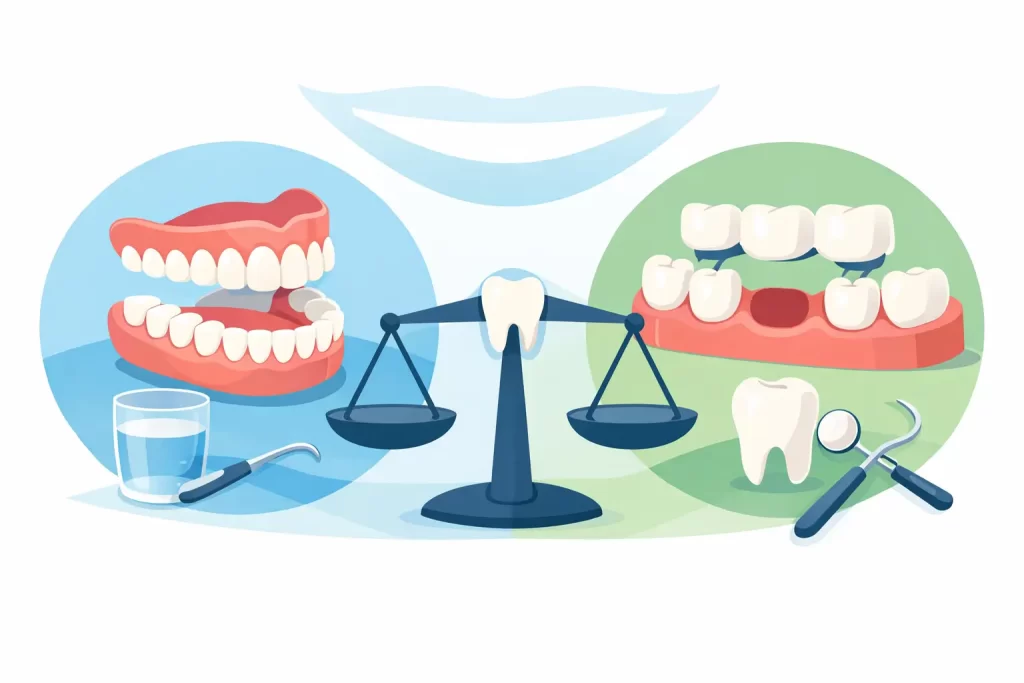
Dentures are removable appliances used to replace some or all missing teeth. Partial dentures fill spaces when natural teeth remain, while complete dentures replace an entire upper or lower arch. Modern dentures are designed to look natural and fit comfortably, although they require an adjustment period and regular care.
A dental bridge is a fixed restoration. It replaces one or more missing teeth by securing an artificial tooth, or teeth, to neighboring teeth or to dental implants. Unlike dentures, a traditional bridge stays in place and is not removed for cleaning.
The simplest distinction is this: dentures are removable and can replace a larger number of teeth, while bridges are fixed and are often an excellent choice for smaller gaps. Neither is automatically better. Your mouth, goals, budget, and long-term oral health all matter.
When Dentures May Be the Better Choice
Dentures can be a practical solution when several teeth are missing in different areas of the mouth or when an entire arch needs replacement. A partial denture may help restore chewing ability while preventing nearby teeth from shifting into open spaces. Complete dentures can restore the look of a full smile after all teeth in an arch have been lost or removed.
One advantage is that dentures usually do not require reshaping neighboring teeth, which can be valuable when those teeth are healthy. They can also be adjusted over time as the mouth changes. For patients replacing many teeth, dentures may be more affordable initially than several separate fixed restorations.
That said, dentures require commitment. They must be removed and cleaned daily, and partial dentures may have clasps that need careful handling. New dentures can feel unfamiliar at first, especially when speaking or eating. A proper fit and follow-up adjustments make a meaningful difference in comfort.
Dentures can also become loose as the gums and jawbone gradually change after tooth loss. Regular dental visits help identify when a reline, repair, or replacement is needed. You should never try to adjust a denture yourself, as this can damage the appliance and irritate your gums.
Who may benefit from dentures?
Dentures may be suitable for someone missing many teeth, someone who needs a removable option, or someone whose remaining teeth are not strong enough to support a bridge. They may also be used as an immediate solution after extractions while the mouth heals, depending on the treatment plan.
When a Dental Bridge May Be the Better Choice
A dental bridge is often considered when one tooth, or a small group of neighboring teeth, is missing. For a traditional bridge, the teeth on either side of the gap are prepared to hold crowns, with the replacement tooth suspended between them. The result is a stable restoration that feels more like natural teeth than a removable appliance.
Many patients appreciate that a bridge does not need to be removed at night. It can make chewing and speaking feel more predictable, and it may restore the shape of your smile quickly. By filling the space, it also helps prevent adjacent teeth from drifting and changing your bite.
A bridge does require healthy support. The neighboring teeth must be strong enough to carry the restoration, and the gums and bone around them need to be in good condition. If those teeth have large fillings, cracks, or existing crowns, a bridge may be a sensible way to restore and protect them at the same time.
However, if the adjacent teeth are completely healthy and untouched, preparing them for a traditional bridge may not be the first recommendation. An implant-supported replacement could be discussed in some cases, although suitability, healing time, and cost vary from person to person.
Caring for a bridge
Brushing twice daily remains essential, but cleaning under the false tooth is equally important. A dentist may recommend floss threaders, interdental brushes, or other tools to remove plaque beneath the bridge. Without consistent cleaning, the supporting teeth and gums can develop decay or gum disease.
With good home care and routine dental visits, a bridge can serve you well for many years. Its lifespan depends on oral hygiene, bite forces, diet, and the health of the teeth supporting it.
Comparing Comfort, Appearance, and Daily Life
Comfort is personal. A well-made bridge is fixed, so many people find it easier to forget it is there. Dentures rest on the gums and may shift slightly, especially early on, but careful design and adjustments can improve stability and comfort substantially.
Both choices can look natural. Modern tooth shades and materials allow a restoration to blend with your smile. For a partial denture, the visibility of clasps and the placement of replacement teeth are considered during planning. For a bridge, the dentist will consider tooth color, shape, bite, and gumline so the restoration looks balanced rather than artificial.
Food choices are another consideration. A bridge generally handles everyday chewing well once you are comfortable, though hard foods, ice, and sticky sweets can still damage natural teeth and dental work. Denture wearers may need to begin with softer foods and take smaller bites while adapting. Over time, many people return to a broad, enjoyable diet with sensible care.
Speech can improve with either option because replacing missing teeth helps support normal pronunciation. It is common to need a few days or weeks of practice, particularly with a new denture. Reading aloud at home can help your tongue adapt to the new shape of your mouth.
Cost Is Only One Part of the Decision
It is reasonable to ask about cost early. Dentures and bridges have different upfront fees, maintenance needs, and expected replacement timelines. A removable denture may cost less initially when many teeth are missing, while a bridge can be a worthwhile fixed option for a smaller space.
The least expensive option is not always the best value if it does not meet your needs for comfort, function, or long-term oral health. A clear examination can identify decay, gum concerns, bite issues, and the condition of neighboring teeth before treatment begins. That information helps avoid surprises and supports a recommendation built around your actual needs, not a one-size-fits-all answer.
Ask your dental team what is included in your treatment plan, how follow-up visits work, and what ongoing care may be needed. Flexible payment options can also make necessary restorative care easier to plan for.
How to Choose Between Dentures and a Bridge
Start with the number and location of missing teeth. A single missing tooth surrounded by healthy, suitable support teeth may be a strong bridge candidate. Multiple missing teeth across the mouth may point toward a partial denture or another broader treatment option.
Next, consider your priorities. If you want a fixed restoration and are comfortable with the care it requires, a bridge may fit well. If you need to replace many teeth, prefer a removable option, or want to avoid preparing adjacent teeth, dentures may be more appropriate.
Your oral health sets the foundation for either choice. Healthy gums, appropriate bone support, and a stable bite help restorations last. If there is active gum disease, untreated decay, or a damaged supporting tooth, those concerns should be addressed first.
At Restorative Dental Jamaica, we take time to examine your smile, discuss your concerns, and explain the treatment options in clear, reassuring terms. The goal is not simply to fill a gap. It is to help you eat comfortably, speak clearly, protect your remaining teeth, and smile without holding back.
The best next step is a personal consultation. Bring your questions, share what matters most to you, and let your treatment plan be guided by comfort, health, and the future you want for your smile.
Leave a reply







Leave a reply