
Can Cavities Be Treated Early? Yes, Here’s How
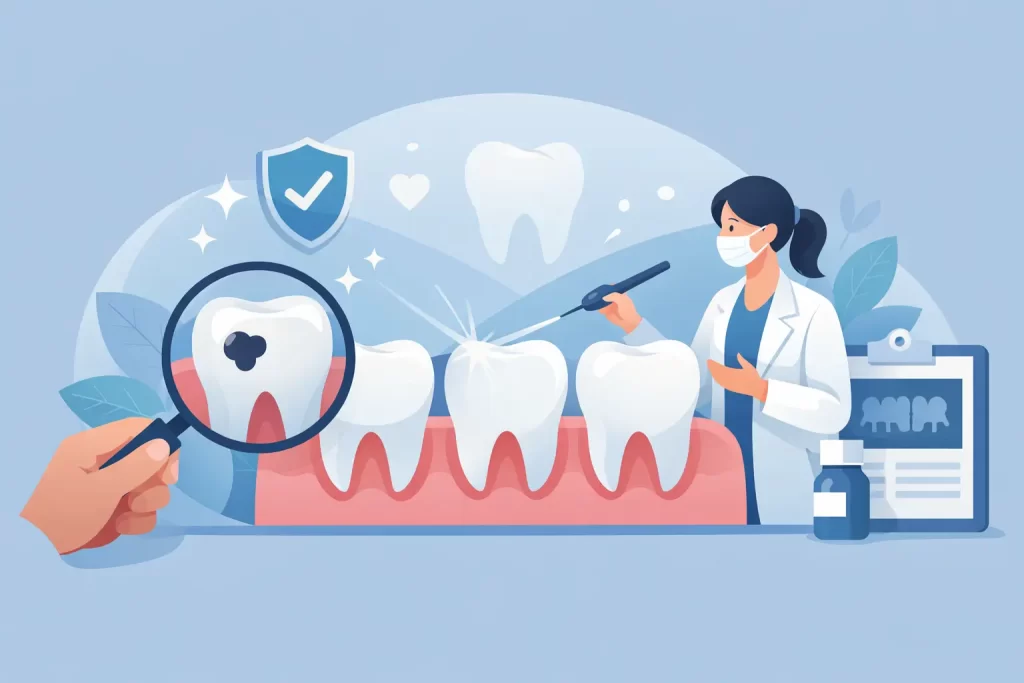
A cavity does not usually begin as a painful hole in a tooth. It often starts quietly, as minerals are lost from the enamel. So, can cavities be treated early? In many cases, yes. When decay is caught before it creates a permanent opening in the enamel, a dentist may be able to strengthen the tooth and prevent the need for a filling.
That is one reason routine dental visits matter, even when your teeth feel fine. Early decay can be difficult to see and may not cause discomfort at all. With a careful examination, digital x-rays, and intraoral imaging when needed, your dentist can spot changes early and recommend the most conservative treatment for your smile.
What “Early Cavity” Really Means
Tooth decay develops when bacteria in plaque use sugars and starches from food and drinks to produce acids. Over time, those acids draw minerals out of the tooth’s protective enamel. The earliest visible sign may be a chalky white spot, often near the gumline or in the grooves of a back tooth.
At this stage, the enamel may be weakened, but its surface may still be intact. This is sometimes called an early lesion or beginning decay. Because enamel can take in minerals again under the right conditions, early damage may be slowed, stopped, or even reversed.
Once decay breaks through the enamel and forms a true hole or soft area, however, the tooth cannot rebuild that missing structure on its own. A filling is generally needed to remove the decayed material and restore the tooth. Treating it promptly usually means a smaller restoration and more of your natural tooth preserved.
Can Cavities Be Treated Early Without a Filling?
Sometimes. The right approach depends on where the decay is, how deep it is, whether the enamel surface has broken down, and your overall risk for future cavities. Your dentist will not recommend a filling simply because a tooth has a faint early change. They will assess whether it is active, stable, or likely to progress.
For early enamel changes, treatment may focus on remineralization. Fluoride is a key part of this process because it helps enamel become more resistant to future acid attacks. A dentist may recommend a professional fluoride treatment, a fluoride toothpaste, or another fluoride product based on your needs.
Daily habits matter just as much. Brushing twice a day with fluoride toothpaste, cleaning between teeth once a day, and reducing frequent sugary snacks or sweet drinks all help create a healthier environment for enamel. The concern is not only how much sugar you have, but how often your teeth are exposed to it. Sipping a sweetened beverage throughout the day gives cavity-causing bacteria repeated opportunities to produce acid.
For children and teens, and sometimes for adults with deep grooves in their molars, fissure sealants can be an excellent preventive option. These thin protective coatings help keep food and bacteria out of the narrow pits and grooves where brushing may not reach effectively.
When a Filling Is the Better Choice
A white filling becomes the reliable option when decay has created a cavity, reached dentin beneath the enamel, or continued to spread despite preventive measures. Dentin is softer than enamel, so decay can move more quickly once it gets there.
A small filling is not a failure of prevention. It is a practical way to stop decay from advancing and protect the healthy part of the tooth. Modern tooth-colored fillings can blend naturally with your smile while restoring normal function.
Waiting too long can change a straightforward filling into more extensive treatment. If bacteria reach the nerve inside the tooth, pain, sensitivity, or infection may develop. At that point, root canal therapy and a crown may be needed to save the tooth. In severe cases, extraction may become the safest choice. Early care gives you more options and is usually more comfortable, less complex, and less costly than waiting for a dental emergency.
Signs You Should Schedule a Dental Assessment
Early decay frequently has no symptoms, which is why regular checkups are your best defense. Still, certain changes deserve attention. Sensitivity to cold, sweets, or heat can indicate enamel wear or decay. A tooth that catches floss, feels rough with your tongue, or causes discomfort when biting should also be evaluated.
You may notice a dark spot, a white patch, or food repeatedly getting trapped in one area. These signs do not always mean you have a cavity. Staining, gum recession, worn enamel, and older dental work can look or feel similar. A professional assessment provides clarity without guesswork.
Pain that keeps you awake, facial swelling, a bad taste in the mouth, or a pimple-like bump on the gums should be addressed promptly. These can be signs that a dental problem has progressed beyond early decay and needs timely care.
How Dentists Find Decay Before It Hurts
A visual exam is useful, but it does not reveal everything. Decay between teeth or beneath the surface can be hard to detect with the naked eye. Digital x-rays allow your dentist to examine areas that are not visible during a routine look inside the mouth, often identifying problems while they are still small.
Intraoral cameras can also help you see what your dentist sees. For many patients, viewing an enlarged image of a tooth makes treatment recommendations easier to understand. It supports a more informed conversation about whether monitoring, fluoride care, sealants, or a filling is the most appropriate next step.
At Restorative Dental Jamaica, we believe clear communication helps patients feel more relaxed and confident. You should understand the condition of your tooth, the available options, and why a recommended treatment is right for you.
Everyday Habits That Help Stop Early Decay
Preventing a cavity from progressing is rarely about one perfect brushing session. It is the result of consistent care. Brush for two minutes twice daily with fluoride toothpaste, paying special attention to the gumline and back teeth. Clean between your teeth every day with floss or another tool recommended by your dentist, since toothbrush bristles cannot fully clean those contact areas.
Try to keep sugary foods and drinks to mealtimes rather than grazing throughout the day. Water is a tooth-friendly choice between meals, especially after coffee, juice, soda, or snacks. If dry mouth is a concern, mention it at your visit. Saliva naturally helps wash away food particles and neutralize acids, so reduced saliva can raise cavity risk.
Regular scale and polishing appointments also support prevention by removing hardened buildup that cannot be removed with brushing alone. For patients who have had several cavities, wear braces or aligners, experience dry mouth, or have gum recession, a dentist may suggest more frequent visits or a personalized fluoride plan.
Do Not Wait for a Toothache
A toothache can be a late signal. By the time a cavity is painful, it may already be close to the nerve or associated with a crack, infection, or another condition that needs more involved treatment. A painless checkup offers the best opportunity to preserve healthy tooth structure.
If you have noticed sensitivity, a rough spot, or simply have not had a dental exam in some time, scheduling an assessment is a positive step. Early attention can protect your natural teeth, keep treatment simpler, and help you continue smiling with confidence.
Leave a reply







Leave a reply