
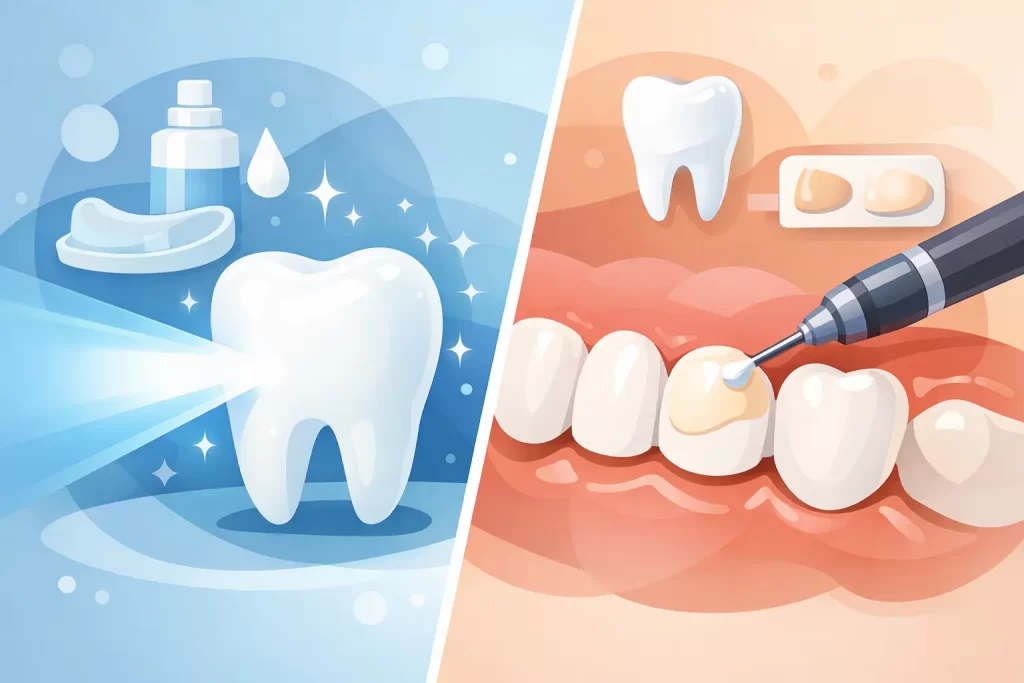
Teeth Whitening vs Bonding for Your Smile
A bright smile can feel like a small change with a big effect – especially before a wedding, interview, reunion, or an important photo. But when you are deciding between teeth whitening vs bonding, the right choice depends on more than how white you want your teeth to look. It depends on whether the concern is staining, damage, uneven shape, old dental work, or a combination of all four.
Both treatments can create a fresher, more confident smile, but they work in very different ways. Whitening changes the shade of natural tooth enamel. Bonding adds tooth-colored material to improve the shape, surface, or appearance of a tooth. A personalized dental assessment can help you avoid paying for a treatment that does not address the issue you actually see in the mirror.
Teeth Whitening vs Bonding: The Key Difference
Professional teeth whitening uses carefully selected whitening agents to lift stains from natural teeth. It is often a good option for yellowing caused by coffee, tea, wine, tobacco, aging, or certain foods and drinks. Whitening does not change the shape of teeth, repair a chip, close a gap, or cover a dark filling.
Dental bonding uses a durable composite resin that is matched to your tooth color. Your dentist applies, shapes, and polishes the material directly on the tooth. Bonding can repair a small chip, soften a rough edge, cover a spot that will not whiten, close a small space, or make a tooth appear more balanced with the surrounding smile.
Put simply, whitening works on the color already present in healthy natural enamel. Bonding changes the visible surface of a tooth. One is not automatically better than the other. The best treatment is the one that solves your specific concern while protecting as much healthy tooth structure as possible.
When Teeth Whitening May Be the Better Choice
Whitening is usually the more conservative option when your teeth are healthy, evenly shaped, and simply look darker or more stained than you would like. It can brighten several teeth at once, creating a more consistent overall shade without placing material over the enamel.
Professional treatment is especially helpful when store-bought products have given you uneven results, caused sensitivity, or failed to make a noticeable difference. Your dentist can examine your teeth and gums first, recommend a suitable approach, and help you set realistic expectations for your natural shade.
Whitening may be a strong fit if you want to:
- Lift general yellowing or surface stains across your smile
- Brighten natural teeth before a special event
- Refresh your smile without changing tooth shape
- Choose a treatment that preserves the existing tooth surface
There are limits. Whitening does not make crowns, veneers, fillings, or bonding lighter. If you have a visible front-tooth restoration, whitening can make the natural tooth beside it brighter while the restoration stays the same shade. That difference may be noticeable, which is why treatment planning matters.
Whitening can also cause temporary tooth sensitivity for some patients. This is usually manageable, but patients with exposed roots, untreated decay, gum irritation, or significant sensitivity should have those concerns addressed first. A brighter smile should never come at the expense of comfort or oral health.
When Dental Bonding May Be the Better Choice
Bonding is often the more targeted answer when color is only part of the problem. A single tooth may be chipped, worn, slightly shorter, oddly shaped, or marked by a white or dark spot that whitening will not correct. In these cases, changing the tooth’s surface can make a more meaningful cosmetic difference than lightening the enamel alone.
Because bonding is usually completed directly on the tooth, it can often be a conservative alternative to more extensive cosmetic treatment for small improvements. Your dentist selects a composite shade, applies it carefully, and shapes it to blend naturally with the neighboring teeth.
Bonding may be appropriate for a small chip from an accident, a worn edge, a narrow gap between teeth, minor unevenness, or discoloration that does not respond well to whitening. It can also replace a noticeable old filling in certain situations.
The trade-off is maintenance. Composite resin is strong, but it is not as stain-resistant as natural enamel or porcelain. Coffee, tea, red wine, and smoking can gradually affect its appearance. Bonding may also chip or wear over time, particularly if you bite your nails, chew ice, or grind your teeth. A night guard may be recommended for patients who clench or grind.
Should You Whiten Before Bonding?
In many cosmetic cases, whitening first makes sense. Once your natural teeth have reached a shade you are happy with, the bonding material can be matched to that brighter color. This gives the smile a more harmonious result and helps prevent the need to replace bonding soon after treatment simply because you later decided to whiten.
For example, if one front tooth has a small chip and the rest of your smile looks yellowed, whitening the natural teeth first can establish the right shade. Bonding can then repair the chip and blend with the refreshed smile.
However, the sequence is not identical for every patient. If a tooth is damaged, painful, decayed, or structurally weak, restoring and protecting it takes priority over cosmetic whitening. Your dentist may recommend addressing the health concern first, then discussing the best way to improve color and appearance.
Appearance, Durability, and Cost Considerations
When comparing teeth whitening vs bonding, it helps to think in terms of your goal rather than looking for a one-size-fits-all solution. Whitening is designed for broad color improvement. Bonding is designed for precise correction. Some smiles benefit from one treatment, while others look best with both.
Whitening results can last months to a few years depending on your diet, oral hygiene, and exposure to staining habits. Periodic touch-ups may help maintain the shade you enjoy. Bonding can last for several years with good care, but its lifespan depends on the tooth’s location, bite pressure, and daily habits. It may eventually need polishing, repair, or replacement.
Cost also varies because the treatments are planned differently. Whitening is generally priced as a smile-wide cosmetic service, while bonding is often priced by the tooth and by the amount of reshaping required. A dental consultation gives you a clearer picture of what is needed and helps you make a decision that respects both your smile goals and your budget.
Why an Examination Comes First
It can be tempting to choose treatment based on a photo or a friend’s results, but teeth that look discolored do not always need whitening. A dark tooth may have internal discoloration. A rough edge may be a sign of wear. A spot near the gumline may be decay rather than a cosmetic flaw. Treating the underlying issue protects your health and creates a better-looking result.
At Restorative Dental Jamaica, a thorough assessment may include digital X-rays or intraoral images when appropriate, along with a close look at your teeth, gums, bite, and existing dental work. This allows your dentist to recommend care based on what will look natural, feel comfortable, and support your long-term oral health.
Caring for Your Refreshed Smile
Whether you choose whitening, bonding, or a combination, daily care makes a visible difference. Brush twice a day with fluoride toothpaste, clean between teeth daily, and keep regular professional cleanings. If you have bonding, avoid using your teeth to open packages or bite hard objects. If you have whitened your teeth, rinsing with water after staining drinks and maintaining good hygiene can help protect your results.
The most flattering smile is not necessarily the brightest possible shade or the most dramatic change. It is a healthy smile that looks like it belongs to you. A thoughtful consultation can help you choose treatment with confidence, so your result feels natural every time you speak, laugh, and smile.
Leave a reply








Leave a reply