
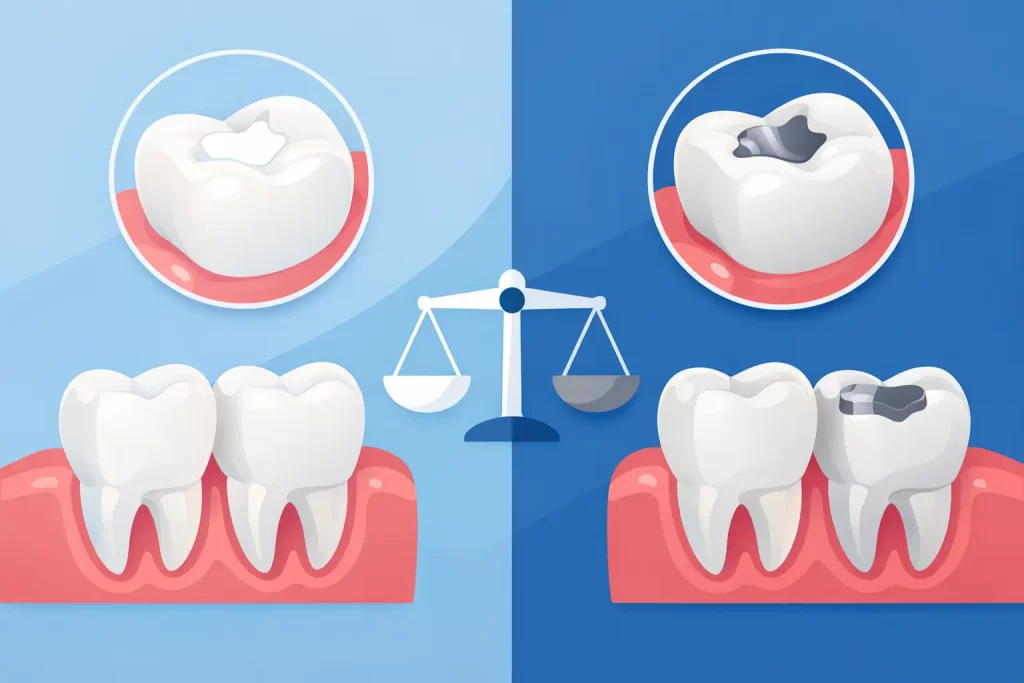
White Fillings vs Silver Fillings
If your dentist tells you that you need a filling, one of the first questions that comes up is simple: which kind should you choose? When comparing white fillings vs silver fillings, most patients want to know what will look better, what will last longer, and what makes the most sense for their budget and long-term dental health.
The answer is not always the same for every tooth or every patient. A filling is not just about closing a cavity. It is about restoring strength, protecting the remaining tooth, and helping you stay comfortable when you chew, smile, and speak. That is why the best choice depends on where the cavity is, how large it is, how much pressure that tooth handles, and what matters most to you.
White fillings vs silver fillings: what is the difference?
White fillings are usually made from a tooth-colored composite resin. They are designed to blend in with your natural tooth, which makes them a popular choice for visible areas of the mouth. Many patients also prefer them for back teeth when appearance matters.
Silver fillings, often called amalgam fillings, are made from a mixture of metals. They have been used in dentistry for many years and are known for their strength and durability. Because they are metallic in color, they are much more noticeable when you open your mouth or laugh.
Both types are used to treat decay and restore damaged teeth. Both can be effective. The difference is in how they look, how they bond to the tooth, how they wear over time, and how they fit into your treatment goals.
Appearance matters more than many patients expect
For most adults, the biggest difference between white fillings vs silver fillings is appearance. White fillings are made to match the shade of your tooth, so they tend to look natural. In many cases, someone speaking with you would not notice that you had a filling at all.
Silver fillings stand out. On molars tucked far in the back, that may not bother you. On premolars or teeth that show when you smile, it often does. Many patients who had silver fillings placed years ago now ask about replacing them because they want a cleaner, more natural look.
This is not only about cosmetics. Feeling confident when you smile matters. If a restoration helps you protect your tooth and feel better about your appearance, that has real value.
Strength and durability are not one-size-fits-all
Silver fillings have a long-standing reputation for durability, especially in back teeth that handle heavy biting pressure. In some cases, they can last for many years. That history is one reason they were commonly used for large cavities in molars.
White fillings are also durable, but they behave differently. Because composite resin bonds directly to the tooth, it can support the remaining tooth structure in a more conservative way. That means less healthy tooth may need to be removed during treatment. For small to medium cavities, white fillings often perform very well.
The trade-off is that very large restorations on teeth under heavy pressure may need something stronger than either a standard white or silver filling. In those cases, your dentist may discuss other options, such as an onlay or crown, to better protect the tooth.
So if you are asking which filling lasts longer, the honest answer is that it depends. The size of the cavity, your bite, whether you grind your teeth, and how well you care for your mouth all play a part.
How each filling interacts with your tooth
One of the practical advantages of white fillings is that they bond to the tooth. This can help preserve more natural tooth structure because the filling is attached directly rather than held mainly by shape.
Silver fillings do not bond to the tooth in the same way. To keep them in place, the tooth often needs to be shaped differently, which may require removing a bit more healthy structure. That does not mean silver fillings are bad. It simply means the treatment approach is different.
For a practice focused on preserving natural teeth, this detail matters. Keeping as much healthy tooth as possible is often a smart long-term goal.
Sensitivity, comfort, and everyday feel
Some patients ask whether one type of filling feels better than the other. In everyday use, both should feel comfortable once the tooth settles and your bite is adjusted properly. But there can be differences.
Silver fillings conduct temperature more easily, so some people notice sensitivity to hot or cold after placement. White fillings can also cause short-term sensitivity, especially after deeper cavity treatment, but they are generally less conductive.
Another consideration is expansion and contraction. Metal can respond to temperature changes differently than tooth structure. Over time, that may contribute to stress within the tooth in some situations. Composite fillings behave differently and are often chosen when a more conservative, bonded restoration is preferred.
If you have a history of tooth sensitivity, this is worth discussing before treatment. Small details like this can make a difference in your comfort.
Cost and value over time
Cost is part of the decision for many families and working adults, and it is a reasonable question to ask. In some settings, silver fillings may cost less upfront than white fillings. That can make them appealing when immediate affordability is the main concern.
White fillings may cost more initially, especially when placed with careful shade matching and modern adhesive techniques. But value is more than the day-one price. If a filling gives you a natural appearance, preserves more tooth structure, and supports your confidence, many patients feel the added investment is worthwhile.
It is also helpful to think long term. A cheap restoration is not automatically the most economical option if it does not suit the tooth or your goals. The best value is the treatment that fits your needs properly and helps you avoid bigger problems later.
White fillings vs silver fillings for children and adults
For children, white fillings are often chosen because parents appreciate the natural appearance and the mercury-free material. They can be an excellent option for many cavities, especially when the restored area is visible.
For adults, the choice often comes down to a mix of cosmetic preferences, cavity size, and function. Someone in a front-facing professional role may strongly prefer tooth-colored fillings, even on back teeth that show when speaking or laughing. Another patient may be less concerned about visibility and more focused on cost or a heavily restored molar.
Neither choice should be made based on appearance alone. A good recommendation considers the whole tooth, not just the color of the material.
When replacing old silver fillings makes sense
Not every silver filling needs to be replaced. If an old amalgam filling is intact, functioning well, and the surrounding tooth is healthy, your dentist may recommend leaving it alone and monitoring it during regular exams.
Replacement becomes more worth considering when the filling is cracked, leaking, worn down, or when decay has developed around it. Some patients also replace silver fillings because they are unhappy with how they look, especially if the metal shows when they smile.
This is where modern dental technology can help. Digital x-rays and careful examination make it easier to see whether an existing restoration is still serving the tooth well or whether it is time for something new.
So which filling is better?
For many patients today, white fillings are the preferred choice because they look natural, bond to the tooth, and support a more conservative approach to treatment. They are especially appealing for visible teeth and for patients who want their dental work to blend in.
Silver fillings still have strengths. They have a long history, they can be durable in certain high-pressure areas, and they may remain a practical option in select cases. But they are more noticeable, and they do not offer the same cosmetic benefits or bonding advantages.
The better question is not whether white fillings or silver fillings are better in general. It is which one is better for your specific tooth.
A thoughtful dentist will look at the location of the cavity, the size of the damaged area, your bite, your comfort preferences, and your budget before making a recommendation. At Restorative Dental Jamaica, that kind of personalized guidance is part of helping patients feel informed, comfortable, and confident in their care.
If you need a filling, do not feel pressured to guess your way through the decision. Ask questions, understand the trade-offs, and choose the option that protects your tooth while fitting your life. The right filling should do more than repair damage – it should help you move forward with comfort and confidence.
Leave a reply








Leave a reply