
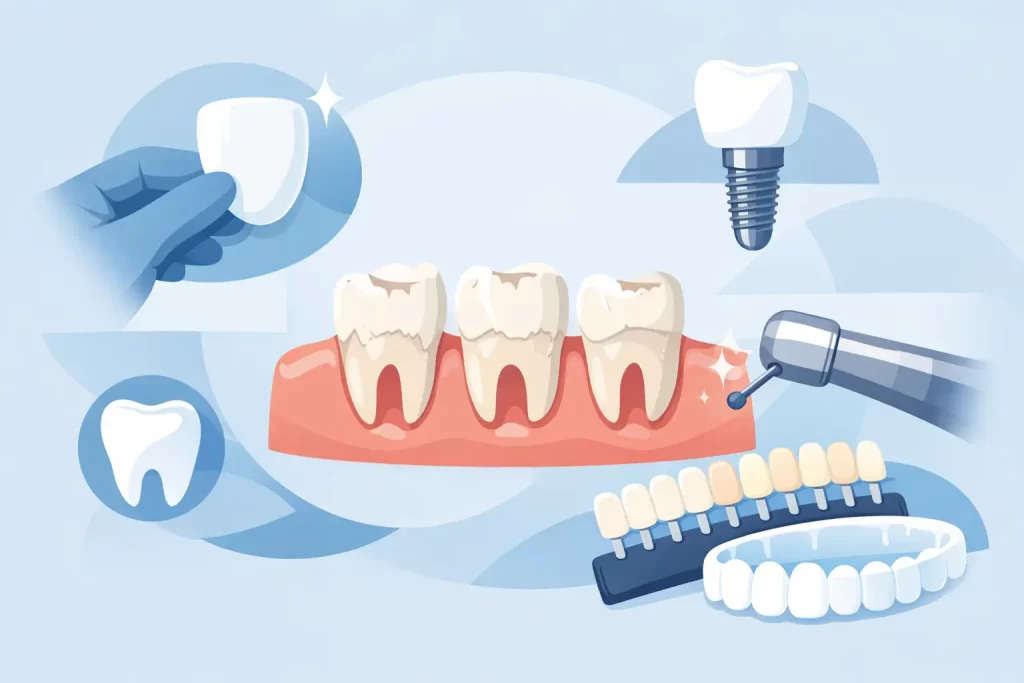
Best Treatments for Worn Teeth
You may not notice worn teeth all at once. It often starts with small changes – a tooth that looks shorter, edges that seem rougher, new sensitivity to cold drinks, or a smile that no longer feels quite like yours. When that happens, understanding the best treatments for worn teeth can help you protect your teeth early and avoid more complex problems later.
Tooth wear is common, especially in adults balancing busy schedules, stress, acidic diets, and years of normal use. The good news is that treatment is not one-size-fits-all. The right option depends on why the teeth are wearing down, how much enamel has already been lost, and whether the goal is mainly health, comfort, appearance, or all three.
What causes worn teeth?
Teeth can wear down for different reasons, and the cause matters just as much as the treatment. Some people grind or clench, often at night without realizing it. Others have wear from acidic foods and drinks, reflux, or frequent sipping of sodas, juices, or sports drinks. In some cases, years of brushing too aggressively can wear away the outer tooth surface near the gumline.
There is also normal wear that happens over time. But when wear becomes noticeable, it can lead to sensitivity, chipping, bite changes, and a smile that looks aged or uneven. If the underlying cause is not addressed, even the most attractive repair may not last as long as it should.
Best treatments for worn teeth depend on the type of damage
A patient with mild enamel wear needs a very different plan from someone with cracked edges, flattened biting surfaces, or worn teeth affecting the bite. That is why a proper dental assessment is the first step. Digital imaging, close visual examination, and bite evaluation help show not just where the wear is, but why it is happening.
In many cases, treatment works best in layers. First, your dentist looks at prevention and protection. Then they restore shape, strength, and appearance in the most conservative way possible.
Dental bonding for small chips and early wear
For mild to moderate wear, dental bonding is often one of the most practical solutions. A tooth-colored material is shaped directly onto the tooth to rebuild worn edges, smooth uneven surfaces, and improve the overall look of the smile.
Bonding can be a good choice when patients want a more affordable, minimally invasive treatment. It usually requires little to no drilling, and it can make a noticeable cosmetic difference quickly. The trade-off is that bonding is not as strong or stain-resistant as some longer-lasting options, so it may need touch-ups over time, especially if grinding is part of the problem.
White fillings when wear is localized
If wear affects specific areas of a tooth rather than the whole visible surface, white fillings may be appropriate. These are commonly used when there is a combination of tooth wear and small areas of decay, or when the worn area creates a defect that traps food or causes sensitivity.
White fillings blend naturally with the tooth and help restore function without making the tooth look artificial. They are especially useful when the goal is to preserve as much natural tooth structure as possible.
Veneers for front teeth with cosmetic wear
When worn teeth mainly affect the front smile line, veneers can be an excellent option. Veneers are thin coverings placed over the front surface of the teeth to improve shape, length, and color. They can help teeth look fuller and more even after years of edge wear.
This treatment is best for patients whose tooth wear is visible but not so advanced that the teeth have become structurally weak. Veneers are usually chosen when appearance is a major concern, but they need healthy planning behind them. If a patient is grinding heavily or has an unstable bite, those issues should be managed first to protect the result.
Crowns for moderate to severe tooth wear
When teeth are significantly worn down, weakened, or cracked, crowns are often among the best treatments for worn teeth. A crown covers and protects the entire visible portion of the tooth, restoring strength, shape, and function.
Crowns are especially useful when wear has reduced the height of the teeth or left them vulnerable to breaking. They can also help rebuild the bite in a more stable way. Compared with bonding or fillings, crowns are a bigger investment and require more tooth preparation, but they offer greater durability when the damage is advanced.
Night guards for grinding and clenching
If bruxism is contributing to tooth wear, a night guard may be one of the most important parts of treatment. This custom appliance is worn while sleeping to reduce the impact of grinding and clenching on the teeth.
A night guard does not rebuild damaged teeth on its own, but it helps protect dental work and remaining enamel from further wear. For many patients, it is the difference between a short-term fix and a treatment that lasts. If you wake up with jaw tension, headaches, or sore teeth, this step should not be overlooked.
When bite correction matters
Sometimes worn teeth are a sign of a bigger bite issue. If teeth meet unevenly, certain areas may take more force than they should. Over time, that pressure can flatten, chip, or crack the teeth.
In these cases, treatment may involve adjusting the bite, restoring multiple teeth together, or considering orthodontic alignment if crooked positioning is contributing to the problem. Teeth aligners may help in selected cases where tooth position plays a role, although they are not the answer for every patient with wear. The key is planning the bite as well as the smile.
Sensitivity and enamel loss need attention too
Worn teeth often come with sensitivity, especially to cold, sweets, or brushing. That usually means the enamel has thinned and the inner tooth structure is becoming more exposed. Even if the teeth do not look badly damaged yet, sensitivity can be an early warning sign.
Treating sensitivity may include protective restorations, fluoride support, and changes to daily habits. If acidic drinks, reflux, or aggressive brushing are part of the picture, those factors need to be addressed. Otherwise, wear tends to continue quietly in the background.
How dentists choose the right option
The best treatment plan balances four things: how much tooth structure has been lost, what caused the wear, how the bite is functioning, and what the patient wants the final result to feel and look like. Some patients need simple, conservative repairs. Others need a more complete restoration to rebuild comfort and confidence.
A careful dentist will also consider longevity. For example, bonding may be ideal for minor wear, while crowns may be safer for teeth already under strain. Veneers can look beautiful, but they are not the first answer if the bite is unstable. Good treatment planning is about more than fixing what you can see.
At a patient-centered office like Restorative Dental Jamaica, that process should feel clear and reassuring. You should understand your options, know the pros and cons, and feel comfortable asking questions before moving forward.
What you can do now to prevent more wear
Even before restorative treatment begins, a few changes can protect your teeth. Avoid brushing immediately after acidic drinks, use a soft-bristled toothbrush, and be mindful of habits like chewing ice or using teeth to open packaging. If stress-related clenching is common, mention it during your dental visit.
Routine exams matter here more than many people realize. Worn teeth often progress gradually, and early treatment is usually simpler, less invasive, and more affordable than waiting until a tooth cracks or the bite shifts.
When to book an evaluation for worn teeth
If your teeth look shorter than they used to, feel sensitive, chip easily, or appear flat along the edges, it is worth having them checked. The same is true if your jaw feels tired in the morning or your partner has noticed grinding at night.
The best treatments for worn teeth are the ones matched to your specific needs, not the most aggressive or the most expensive. In many cases, early care can preserve more of your natural tooth, improve comfort, and restore a smile that feels healthy and confident again.
If something about your teeth has changed, trust that instinct and get it assessed. A small repair today can spare you a much bigger problem later.
Leave a reply







Leave a reply