
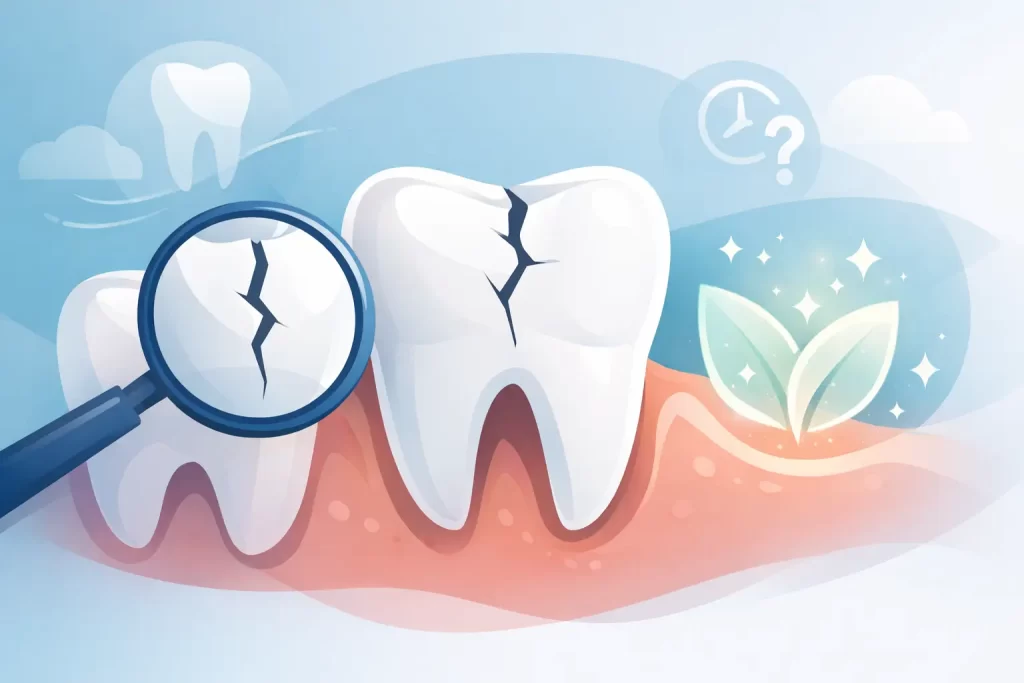
Can a Cracked Tooth Heal on Its Own?
That sharp twinge when you bite down on something ordinary, then disappears just as quickly, often leads to one worrying question: can a cracked tooth heal on its own? In most cases, the answer is no. Unlike skin or bone, a tooth cannot regenerate damaged enamel or mend a structural crack by itself. What it can do is stay stable for a time, which is why some people delay care until the crack worsens.
A cracked tooth can be small and hard to see, or deep enough to threaten the nerve and the long-term health of the tooth. The good news is that early treatment can often preserve the tooth, relieve discomfort, and prevent a much larger problem later.
Can a cracked tooth heal naturally?
A natural tooth is strong, but it does not heal the way other parts of the body do. Enamel has no living cells that can repair a fracture. Dentin, the layer beneath enamel, is also limited in how it responds to damage. If a crack forms, the tooth may not look dramatically different right away, but the weak point remains.
This matters because every day pressure from chewing, clenching, grinding, or even temperature changes can place stress on that damaged area. A minor crack can deepen over time. In some cases, bacteria can enter through the damaged area and irritate the pulp inside the tooth, leading to inflammation, infection, or the need for root canal treatment.
So if you are asking whether a cracked tooth can heal, the more useful question is whether it can be saved. Very often, yes – but not by waiting for it to repair itself.
Why cracked teeth are easy to ignore at first
One of the frustrating things about a cracked tooth is that symptoms are not always constant. You may feel pain only when releasing your bite, chewing certain foods, or drinking something cold. Then the tooth feels normal again.
That stop-and-start pattern makes people think the issue has passed. It usually has not. A crack can open slightly under pressure and then close again, which is why the discomfort comes and goes. Even when pain is mild, the tooth may still need prompt attention.
Some cracks are found during a routine dental exam before they become severe. That is one reason preventive visits matter. With digital x-rays, careful examination, and intraoral cameras, dentists can often identify damage that is difficult to spot in the mirror at home.
Signs your cracked tooth needs attention now
Not every cracked tooth feels the same, but there are common warning signs. Pain when chewing is one of the most typical. Sensitivity to cold, heat, or sweets is also common. Some patients notice swelling around the tooth or gum, or feel that one tooth suddenly seems tender when biting.
You may also see a visible line in the tooth, although many cracks are too fine or too deep to notice on your own. Sometimes a piece of tooth breaks away. Other times there is no visible damage at all, only a strange, localized discomfort that keeps returning.
If you have facial swelling, severe pain, or signs of infection, it is best not to wait. A crack that reaches the inner part of the tooth can become more urgent quickly.
What causes a tooth to crack?
Cracks are common, especially in adults who have years of normal wear on their teeth. Biting hard foods such as ice, nuts, or unpopped popcorn kernels can do it. So can habits like teeth grinding, jaw clenching, or using teeth to open packaging.
Older fillings can also leave a tooth more vulnerable if much of the natural structure is already weakened. Sudden trauma, such as a fall or sports injury, is another obvious cause. Sometimes the issue is cumulative rather than dramatic. A tooth may gradually weaken over time, then finally crack during an ordinary meal.
There is also an age factor. As teeth age, they become more prone to tiny stress lines and fractures. That does not mean a crack always leads to tooth loss. It means earlier care becomes even more valuable.
Treatment depends on how deep the crack goes
If the crack is limited and the tooth is still structurally sound, treatment may be straightforward. A bonded restoration or white filling can sometimes repair a small damaged area and restore function. In other cases, a dental crown is the best option because it covers and protects the tooth from further splitting.
When the crack extends into the pulp, root canal therapy may be needed to remove inflamed or infected tissue and keep the tooth in place. After that, a crown is often placed to strengthen it.
There are times when a crack goes too far below the gum line or splits the tooth in a way that cannot be predictably restored. In those cases, extraction may be the healthiest choice. This is never the first preference in a preservation-focused practice, but sometimes it is the most realistic way to protect your overall oral health.
Can a cracked tooth heal enough to stop hurting?
Pain can settle down temporarily, but that does not mean the crack healed. Sometimes inflammation inside the tooth decreases for a while. Sometimes you simply avoid chewing on that side without realizing it. Neither situation means the tooth is repaired.
This is where many patients get caught out. Once the pain fades, treatment feels less urgent. Then one day the tooth fractures further, the nerve becomes involved, or the discomfort returns much stronger than before. Addressing the problem early usually gives you more conservative treatment options and a better chance of keeping the tooth.
What to do if you think you cracked a tooth
Start by avoiding hard, crunchy, or sticky foods on that side. If the tooth is sensitive, stay away from very hot or very cold drinks for the moment. Keep the area clean with gentle brushing and rinsing.
If you grind your teeth at night and already have a night guard, wear it unless the tooth is too painful to tolerate pressure. Over-the-counter pain relief may help with discomfort, but it is not a fix. The next step should be scheduling a dental assessment as soon as possible.
Try not to test the tooth repeatedly by biting on it. That tends to make things worse, not better. And if a piece of the tooth has broken off, bring it with you if possible.
Can a cracked tooth heal without treatment if it is a tiny crack?
Very small craze lines in enamel are common and may not require active treatment if they are only superficial. These fine lines often affect appearance more than function. But the difference between a harmless surface line and a true crack is not always obvious at home.
That is why an evaluation matters. A tooth can look minor on the outside and still be causing internal stress or sensitivity. On the other hand, some lines are purely cosmetic. A professional exam helps separate what can be monitored from what needs prompt repair.
The value of early treatment
When patients come in quickly, treatment is often simpler and more comfortable than they expect. A crown placed before the crack spreads may prevent root canal treatment later. A small bonded repair may save more of the natural tooth than waiting until a larger portion breaks away.
Equally important, early care gives you clarity. Dental pain that comes and goes can be unsettling. A proper diagnosis helps you understand what is happening, what your options are, and what will best protect your smile going forward.
At Restorative Dental Jamaica, preserving natural teeth is always the goal when possible. That means looking carefully, explaining findings clearly, and recommending treatment based on what gives the tooth the best long-term chance.
If you suspect a crack, trust what your tooth is telling you. It may not heal on its own, but with timely care, it can often be stabilized, restored, and kept comfortably in function for years to come.
Leave a reply







Leave a reply