
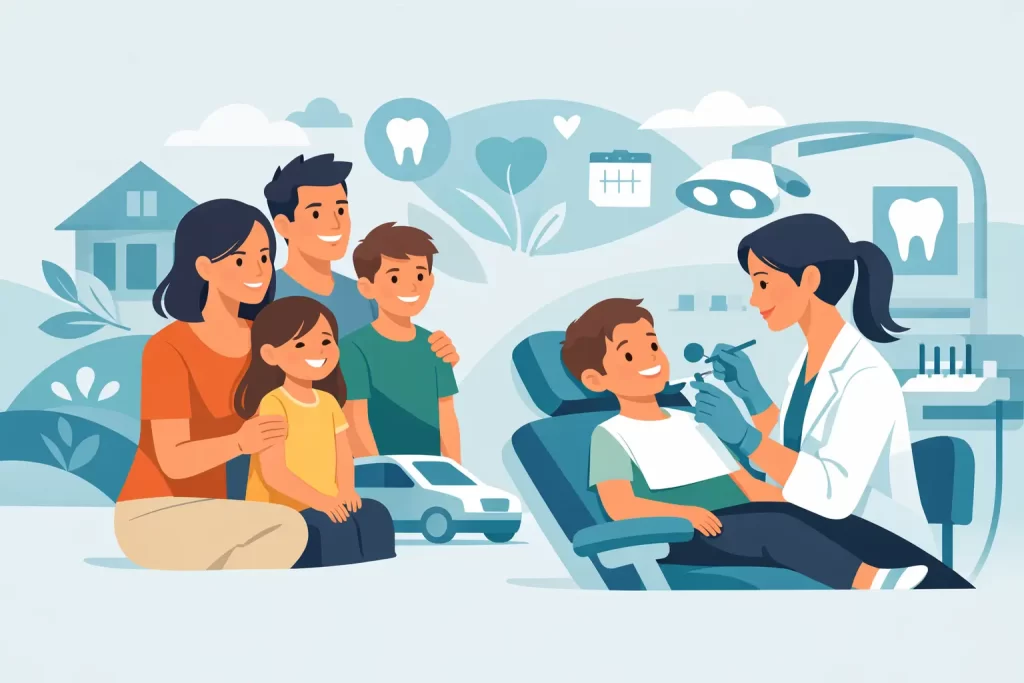
Family Dental Care That Fits Real Life
A toddler due for a first checkup, a parent putting off a crown, and a grandparent managing dentures can all have very different dental needs. Good family dental care makes room for all of them without making treatment feel rushed, confusing, or stressful.
That matters more than most people realize. When one dental office can support routine cleanings, early cavity detection, restorative treatment, and smile-focused care across different stages of life, it becomes easier to stay consistent. And in dentistry, consistency is often what helps people avoid pain, tooth loss, and bigger treatment later.
What family dental care should actually do
A lot of practices say they see patients of all ages. That is not quite the same as providing thoughtful family dental care. A strong family-focused practice does more than schedule multiple people from one household. It creates a care experience that is practical for busy families and responsive to changing needs over time.
For young children, that may mean gentle introductions to the dental chair, preventive visits, fissure sealants, and clear guidance for parents. For adults, it may mean fillings, crowns, root canal treatment, whitening, or aligners. For older patients, it may involve dentures, replacement of older dental work, and close monitoring of wear, gum health, and comfort.
The advantage is not only convenience. It is continuity. When a dentist understands a family’s patterns, concerns, and treatment history, care tends to feel more personal and more proactive.
Why prevention is the foundation of family dental care
Most people think of the dentist when something hurts. By then, treatment is often more involved than it needed to be. Preventive care changes that pattern.
Regular dental assessments, cleanings, digital x-rays when needed, and early treatment planning can catch problems while they are still manageable. A small area of decay can often be treated with a white filling. If ignored, that same tooth may later need a crown, root canal therapy, or extraction. The difference is not just cost. It is time, comfort, and the chance to preserve more of your natural tooth.
For children, prevention also shapes habits early. A child who grows up with calm, routine visits is less likely to develop dental anxiety and more likely to take oral health seriously as an adult. For parents, those visits create a chance to ask practical questions about brushing, diet, crowding, thumb-sucking, and timing for orthodontic concerns.
Preventive care is never a guarantee that no one in the family will need treatment. Genetics, lifestyle, old dental work, and even stress can all affect oral health. But prevention usually means fewer surprises and better choices when treatment is needed.
Comfort matters more than people admit
Many adults delay appointments for one simple reason: they do not want an unpleasant experience. That hesitation is common, especially for patients who have had painful treatment in the past or who feel embarrassed about the condition of their teeth.
A family practice should reduce that tension, not add to it. The atmosphere matters. So does the way the team communicates. Patients want to feel informed, not pressured. They want options explained clearly. They want to know what can be done now, what can wait, and what the likely outcome will be.
Modern tools help here as well. Digital x-rays and intraoral cameras can make diagnosis more precise and easier to understand. Seeing what the dentist sees often helps patients feel more confident about treatment recommendations. It turns a vague warning into something concrete.
Comfort also has a practical side. Appointment flow, a calm waiting area, and a respectful, friendly team can make a real difference for working adults, children, and older relatives alike. Dentistry feels easier when the environment feels organized and welcoming.
Family dental care is not just about cleanings
One of the biggest misconceptions about family dentistry is that it covers only basic maintenance. In reality, a good family practice often becomes the place where patients handle both routine care and more advanced needs.
That matters because dental needs change. A patient may come in for a cleaning and discover a cracked filling, a worn crown, or signs of grinding. Another may want to brighten a smile after years of avoiding cosmetic treatment. Someone else may be dealing with a toothache and need immediate restorative care.
When one office can provide preventive, restorative, and cosmetic solutions, patients do not have to start over somewhere new every time their needs evolve. That continuity supports better decision-making. It also helps preserve natural teeth whenever possible, which is usually the best long-term outcome.
White fillings, crowns, and root canal therapy are good examples. These treatments are not just about repairing damage. They are often what save a tooth from further breakdown or loss. Cosmetic services can also have a practical side. Bonding, veneers, whitening, and aligners are often associated with appearance, but they can improve confidence enough to encourage better maintenance and more regular care.
Choosing a family dentist means looking beyond location
Convenience matters. If a dental office is hard to reach or difficult to book with, it becomes easier to postpone care. But location alone is not enough.
Families should also look at how a practice approaches treatment planning. Does the team explain options clearly? Do they support prevention as much as treatment? Are they equipped to manage both routine and restorative needs? Do they make room for patient comfort instead of treating it as an afterthought?
It is also worth paying attention to flexibility. Many households are balancing work schedules, school runs, and budget decisions. Transparent pricing, flexible payment options, and efficient scheduling can make dental care more realistic to keep up with.
There is no perfect formula for every family. Some patients prioritize advanced technology. Others care most about warmth and communication. Many want both. The right fit usually comes down to whether the office helps you feel confident returning, not just relieved to leave.
What parents and adults should watch for between visits
Even with regular checkups, symptoms can show up in between appointments. Bleeding gums, bad breath that does not improve, sensitivity to hot or cold, pain when chewing, loose dental work, and visible dark spots on teeth all deserve attention.
For children, parents should also notice whether a child avoids chewing on one side, complains about discomfort, or struggles to brush certain areas. These signs do not always mean major treatment is needed, but waiting rarely helps.
Adults often normalize issues they should not ignore. A broken filling, a chipped tooth, or occasional sensitivity may seem minor, but these problems can worsen quietly. Early attention usually means simpler care.
The best family dental care feels personal
The strongest dental relationships are built on trust. That trust grows when patients feel remembered, listened to, and guided without judgment.
For some people, the priority is protecting a child’s oral health from the start. For others, it is finally repairing teeth that have been bothering them for years. For many, it is a mix of prevention, restoration, and a desire to feel more confident when they smile. Family care works best when it respects all of those goals.
At Restorative Dental Jamaica, that patient-first approach is part of what makes care feel more manageable. A modern, welcoming environment, combined with a focus on preserving teeth and clearly explaining treatment, can make it easier for families to stay consistent instead of waiting for dental problems to force action.
Oral health is rarely about one appointment. It is about patterns – the checkup you kept, the cavity caught early, the damaged tooth restored before it became a bigger problem, the child who grows up seeing dental visits as normal care rather than something to fear. The right dental home supports those patterns, and over time, that can make all the difference for a family’s health and confidence.
Leave a reply







Leave a reply