
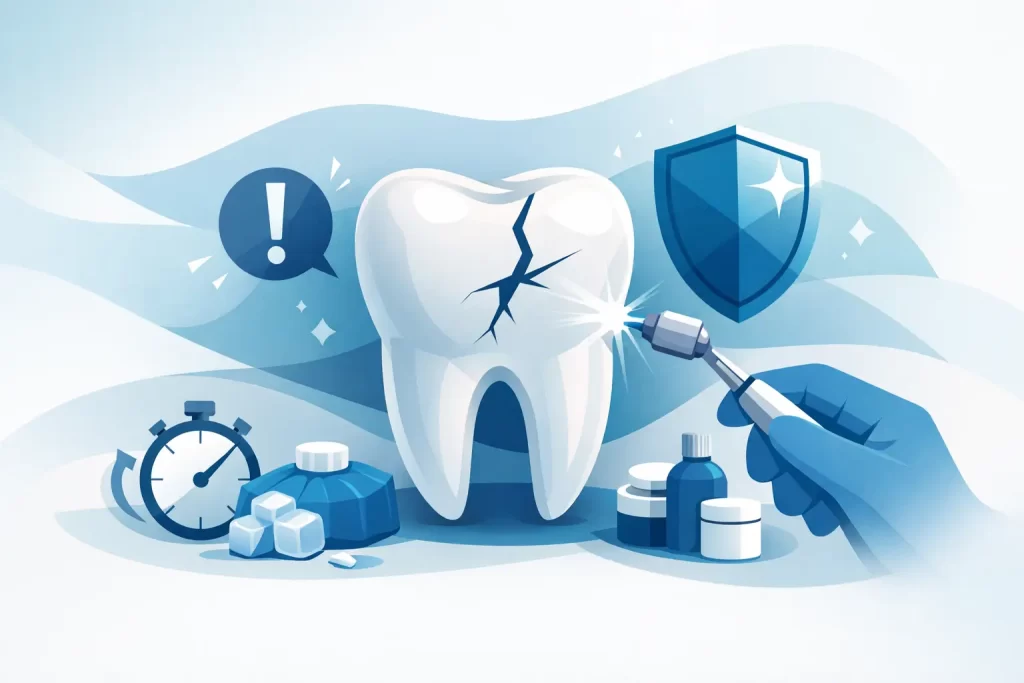
How to Save a Cracked Tooth Fast
That sharp twinge when you bite down on something ordinary – toast, ice, even a piece of fruit – can be the first sign that a tooth has cracked. If you are wondering how to save a cracked tooth, the most important thing to know is this: quick action gives your dentist the best chance of preserving the tooth and preventing a small problem from becoming a painful one.
A cracked tooth does not always look dramatic. In many cases, the damage is hard to see, but the symptoms are hard to ignore. You might feel pain when chewing, notice sensitivity to hot or cold, or feel like one tooth is suddenly different from the rest. Even if the discomfort comes and goes, it should not be brushed off. Cracks can spread under pressure, and what starts as a manageable repair can turn into a situation that requires more complex treatment.
How to save a cracked tooth before your appointment
The first goal is to protect the tooth from further stress. Avoid chewing on that side of your mouth, and stay away from hard, crunchy, or sticky foods. Nuts, popcorn, hard candy, chewing ice, and even crusty bread can make the crack worse. Softer foods and lukewarm drinks are usually easier to tolerate until you are seen.
If there is discomfort, a cold compress on the outside of the cheek can help reduce swelling. Over-the-counter pain relief may also help, as long as you follow the label directions and it is safe for you to take. If a piece of the tooth has broken off, keep it if you can, although it is not always possible to reattach it. Rinse your mouth gently with warm salt water to keep the area clean.
What you should not do matters too. Do not ignore the pain and hope it settles. Do not keep testing the tooth to see if it still hurts. And do not place aspirin directly on the gum or tooth, which can irritate the tissue. Temporary dental repair products from a pharmacy may cover a rough edge for comfort, but they are not a real fix.
Why cracked teeth need prompt dental care
Teeth are strong, but they are not indestructible. A crack can affect the enamel alone, extend into the dentin, or travel deep enough to irritate or infect the pulp, where the tooth nerve and blood supply are located. The deeper the crack goes, the more complicated treatment can become.
This is why timing matters. When patients come in early, there is often a better chance of saving the tooth with a more conservative restoration. If they wait until the crack deepens or infection develops, the tooth may need root canal treatment, a crown, or in some cases extraction. Preservation is always the goal, but the right option depends on how far the damage has progressed.
Signs your cracked tooth may be serious
Some cracks are minor and mainly affect the outer layer of the tooth. Others are more urgent. If you have pain when you release your bite, swelling around the tooth, lingering sensitivity to temperature, or pain that wakes you up at night, the crack may involve deeper structures.
A tooth that suddenly feels loose, has a visible split, or is associated with gum tenderness should be examined quickly. The same is true if the pain is increasing or the tooth has darkened in color. Those changes can suggest trauma to the nerve inside the tooth.
It is also worth noting that symptoms can be inconsistent. A cracked tooth may hurt one day and feel almost normal the next. That does not mean it has healed. Teeth do not mend themselves the way skin or bone can. Once the structure is damaged, professional treatment is needed to stabilize it.
What your dentist will look for
When you come in with a suspected cracked tooth, your dentist will not rely on symptoms alone. A proper exam may include checking how the tooth responds to pressure, looking for fracture lines, evaluating the gums around the tooth, and taking digital x-rays. In some cases, an intraoral camera can help show small details more clearly.
The reason for a careful exam is simple: not every crack is treated the same way. A minor craze line in the enamel is very different from a crack that extends toward the root. Biting pain, temperature sensitivity, the location of the crack, and whether the pulp is involved all help guide the next step.
This is one area where modern imaging and a thorough assessment make a real difference. The treatment should fit the tooth, not just the symptom.
Treatment options that can save a cracked tooth
If the crack is small and limited, dental bonding may be enough to restore shape and protect the area. This option is often used when a tooth has chipped or developed a minor fracture that does not compromise the deeper structure. Bonding can also improve appearance if the crack is visible in the smile line.
When a tooth has lost more strength, a crown is often the best way to save it. A crown covers the tooth and helps hold it together, reducing the risk of the crack spreading under chewing pressure. For many patients, this is the treatment that turns a vulnerable tooth back into a reliable one.
If the crack has reached the pulp and caused inflammation or infection, root canal therapy may be needed before the tooth is crowned. That can sound intimidating, but in practice it is often the reason a badly damaged tooth can still be preserved instead of removed. The infected tissue is treated, the inside of the tooth is sealed, and the crown protects the remaining structure.
There are cases where the crack extends too far below the gum line or splits the tooth in a way that cannot be stabilized. In those situations, extraction may be the only predictable option. Even then, early diagnosis is still valuable because it helps patients avoid prolonged pain and plan the best replacement if needed.
Can a cracked tooth heal on its own?
The short answer is no. If you are searching how to save a cracked tooth, it helps to set the right expectation from the start. The discomfort may fade temporarily, but the crack itself will not close or repair naturally.
That is why home care is only a short-term measure to protect the tooth until treatment. The real solution is to stop the movement in the cracked area and restore the tooth before everyday chewing makes the damage worse.
Common causes of cracked teeth
Sometimes the cause is obvious, like biting something hard or taking a blow to the mouth. In many cases, though, the crack forms from repeated stress over time. Teeth grinding, clenching, large old fillings, and untreated decay can all weaken a tooth and make it more likely to crack.
Age can also play a role. Teeth naturally experience years of wear, and back teeth are especially vulnerable because they absorb heavy chewing forces. Patients who have a habit of chewing ice, opening packages with their teeth, or eating very hard foods often place extra pressure on already stressed enamel.
The good news is that prevention is possible. A custom night guard for grinding, regular dental exams, and early treatment for worn or weakened teeth can all reduce the risk.
When to call right away
If a cracked tooth is causing strong pain, facial swelling, bleeding, or sensitivity that does not settle, do not wait. The same goes for a tooth that has fractured significantly or feels unstable. Prompt care can often mean the difference between saving the tooth and losing it.
For families and working professionals, it is easy to delay dental visits when life gets busy. But tooth cracks rarely improve with time. They usually either stay vulnerable or worsen. Seeking care early is the practical choice, and often the more affordable one as well.
At Restorative Dental Jamaica, the focus is always on preserving natural teeth whenever possible, using modern diagnostics and personalized treatment to help patients feel informed and comfortable at every step.
Protecting your smile after treatment
Once a cracked tooth has been treated, the next step is protecting the result. That may mean avoiding habits that caused the problem, wearing a night guard if you clench or grind, and keeping up with routine exams so any new weakness is caught early.
It also means paying attention to small changes. If a restored tooth starts feeling sensitive again, if your bite feels off, or if you notice a new rough edge, it is worth having it checked. Early adjustments are easier than emergency repairs.
A cracked tooth can feel alarming, but it is often treatable when handled promptly and properly. The best thing you can do is act early, protect the tooth, and let your dentist guide you toward the option that gives it the strongest chance to stay part of your smile.
Leave a reply







Leave a reply