
What Restorative Dental Care Meaning Is
A chipped tooth after lunch, a filling that suddenly falls out, or a dull ache that keeps getting your attention – these are the moments when restorative dental care meaning becomes very real. In simple terms, restorative dental care focuses on repairing damaged teeth, replacing missing teeth, and helping your mouth function comfortably again. It is not just about appearance. It is about chewing, speaking, preventing further damage, and protecting your long-term oral health.
Many patients hear the word restorative and assume it means major dental work. Sometimes it does involve more advanced treatment, but often it starts with something straightforward, such as a filling or a crown. The main goal is preservation whenever possible. A good dental team will usually look first at how to save and strengthen your natural teeth before moving to replacement options.
Restorative dental care meaning in everyday terms
If you want the clearest restorative dental care meaning, think of it as dental treatment that brings teeth back to health, strength, and function after decay, damage, wear, or tooth loss. Preventive care aims to stop problems before they begin. Cosmetic care focuses mainly on improving appearance. Restorative care sits in the practical middle – it repairs what has already gone wrong while often improving appearance as a welcome benefit.
That distinction matters because patients often delay treatment when they think a damaged tooth is only a cosmetic issue. A cracked tooth, cavity, or missing tooth can change the way you bite, strain nearby teeth, and make future treatment more involved. Restorative care is about addressing the problem early enough to keep it manageable.
What counts as restorative dental care?
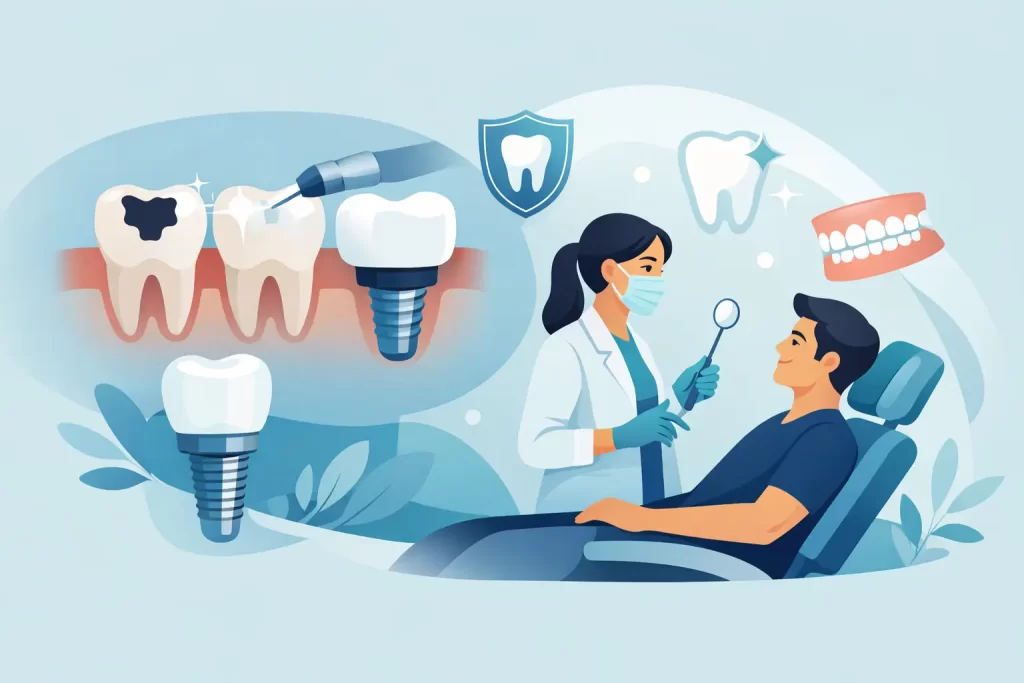
Restorative dentistry covers a range of treatments, and the right one depends on how much damage is present, where the tooth is located, and whether the tooth can still be saved. A small cavity may only need a white filling. A badly broken tooth might need a crown. If infection reaches the inner nerve, root canal therapy may be the best way to preserve the tooth rather than remove it.
Missing teeth are part of restorative care too. Dentures and other replacement options help restore chewing ability, support facial structure, and reduce the shifting that often happens when gaps are left untreated. Even an extraction can be considered part of restorative treatment when removing a severely damaged tooth is the healthiest next step before replacement.
Common restorative treatments include fillings, crowns, root canal therapy, dentures, and tooth replacement planning after extractions. The treatment itself may vary, but the purpose stays the same – restore comfort, function, and stability.
When you might need restorative care
Sometimes the signs are obvious. You may have tooth pain, sensitivity to hot or cold, swelling, a broken tooth, or trouble chewing on one side. In other cases, the issue is quieter. A cavity may not hurt yet. An old filling may be leaking around the edges. A crack may only show up on an x-ray or with an intraoral camera during an exam.
This is one reason regular dental assessments matter. Many restorative problems are easier and less costly to treat when they are found early. Waiting can turn a small repair into a larger procedure. For example, a minor cavity can often be restored with a filling, while a deeper untreated cavity may eventually require a root canal and crown.
Patients also seek restorative care after years of wear. Grinding, acidic foods, aging restorations, and everyday use can gradually weaken teeth. You do not need a dramatic dental emergency to benefit from repair.
Why restorative dentistry is not only about fixing pain
Pain gets attention fast, but restorative treatment is about more than relief. It helps restore the normal jobs your teeth perform every day. That includes biting into food, chewing efficiently, speaking clearly, and keeping your bite balanced.
A single damaged or missing tooth can affect more than you might expect. You may start chewing on the opposite side. That can create uneven wear. Neighboring teeth may shift into an empty space. A tooth with untreated decay may become infected. The earlier a problem is repaired, the more options you usually have.
There is also the confidence factor. While restorative care is function-first, patients often appreciate that repaired teeth can look natural and feel secure. Modern materials, digital imaging, and careful treatment planning make it possible to restore teeth in a way that supports both oral health and appearance.
How dentists decide which restorative treatment is right
There is no one-size-fits-all answer in restorative dentistry. The best treatment depends on the condition of the tooth, the health of the gums, your bite, your budget, and your long-term goals. A dentist may recommend the most conservative option that still gives the tooth strength and predictability.
For example, a small area of decay usually does not need a crown. A filling may be enough. But if a tooth has lost a large amount of structure, a crown can offer better protection against fracture. If the nerve inside the tooth is infected, root canal therapy may allow the tooth to remain in place instead of being extracted.
Sometimes the decision involves trade-offs. Saving a natural tooth is often ideal, but it must also be realistic. If a tooth is too damaged to restore well, removing it and planning a replacement may provide a healthier long-term result. Good care includes honest guidance, not pressure.
What to expect during restorative treatment
For many patients, the hardest part is not the treatment itself. It is the uncertainty beforehand. A clear exam, digital x-rays, and visual explanations can make a big difference in helping you understand what is happening and why a certain treatment is being recommended.
Restorative appointments are usually designed around comfort as much as clinical care. Numbing options, modern equipment, and step-by-step communication help make treatment feel more manageable. In a patient-centered office, you should feel informed, respected, and able to ask questions at every stage.
The timeline varies. Some treatments, like fillings, may be completed in one visit. Crowns may take more than one step depending on the case. Dentures and more complex treatment plans often require multiple visits to ensure fit, function, and comfort.
The difference between restorative, cosmetic, and preventive care
Patients often see these categories overlap, and that is fair. A white filling can repair decay and look natural. A crown can strengthen a tooth and improve its shape. Straightening teeth may support appearance and make oral hygiene easier.
Still, the core purpose is different. Preventive care includes cleanings, exams, sealants, and habits that help stop disease before it starts. Cosmetic care focuses mainly on improving how teeth look, such as whitening or veneers. Restorative care addresses teeth that are already damaged, decayed, infected, or missing.
In real life, treatment plans often combine all three. Someone may need a scale and polishing, a crown to repair a broken tooth, and whitening later on. The best dentistry is not about putting everything into neat boxes. It is about giving patients the right care in the right order.
Why early restorative care often saves time and money
One of the biggest misunderstandings around dental treatment is that postponing care saves money. Sometimes it only delays a larger expense. A cavity does not stay the same forever. A cracked tooth rarely strengthens on its own. An infected tooth can affect sleep, work, and daily comfort before it becomes an urgent issue.
Early restorative care is usually more conservative. It may protect more of your natural tooth and reduce the need for more extensive treatment later. That is especially valuable for busy adults and families who want dependable care without preventable complications.
At Restorative Dental Jamaica, this patient-first approach matters because treatment is not only about fixing what hurts today. It is about protecting what you can keep for tomorrow, with modern technology and a calm, supportive experience that helps patients feel confident about moving forward.
What restorative dental care meaning should tell you as a patient
The most useful way to understand restorative dental care meaning is this: it is the part of dentistry that helps you keep your mouth working the way it should after something has gone wrong. Whether the issue is decay, breakage, infection, or tooth loss, restorative care is there to repair, preserve, and rebuild.
That does not mean every problem needs major treatment. Often, the best next step is a focused exam and a clear conversation about your options. If something feels off – pain, sensitivity, a broken filling, difficulty chewing, or a tooth you have been ignoring – getting it checked sooner gives you more control over the outcome.
A healthy smile is not only about how it looks in photos. It is about comfort at breakfast, confidence in conversation, and the peace of mind that comes from knowing your teeth are being cared for properly. If restorative treatment can help you get back to that, it is worth having the conversation now rather than later.
Leave a reply







Leave a reply