
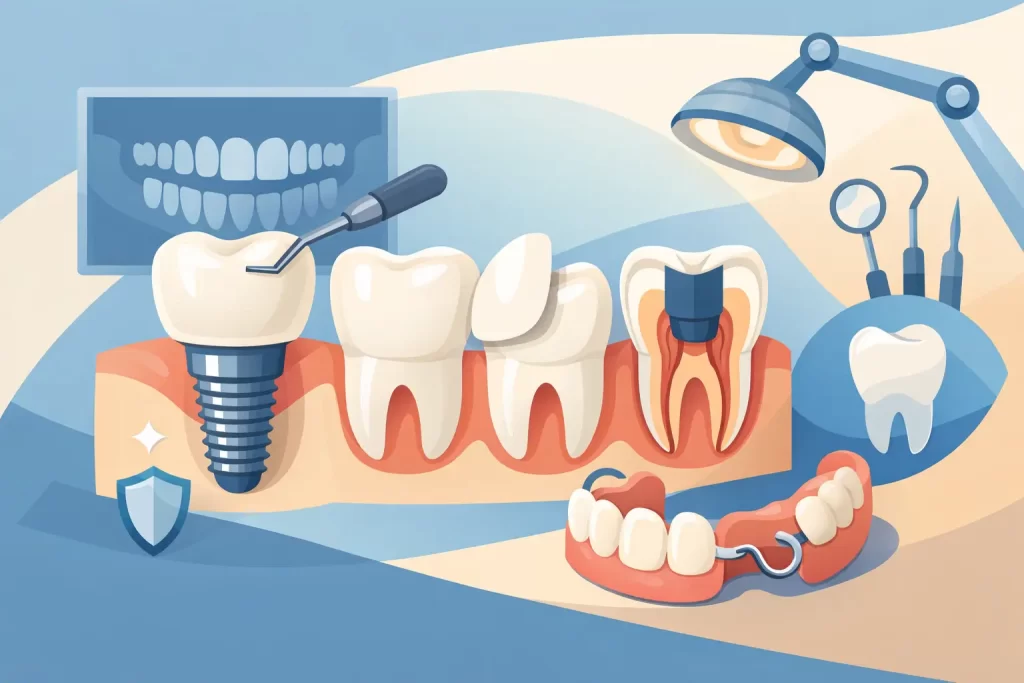
Major Restorative Dental Examples Explained
A cracked tooth during lunch, a filling that keeps falling out, or a back molar that hurts every time you chew – these are the moments when patients start asking about major restorative dental examples and what treatment actually makes sense. The answer depends on how much tooth structure is left, whether infection is present, and how strongly we can preserve your natural tooth.
Major restorative dentistry focuses on repairing teeth that are badly damaged, heavily decayed, broken, weakened, or missing. It goes beyond very small fixes and looks at rebuilding function, comfort, and appearance in a lasting way. For many patients, the goal is simple: eat comfortably, avoid worsening damage, and keep their smile healthy without feeling overwhelmed by the process.
What counts as major restorative dental work?
In everyday terms, major restorative treatment usually means a procedure that rebuilds or replaces a significant part of a tooth, or several teeth, after disease, injury, or wear. It is often recommended when a simple filling is no longer enough.
That matters because the wrong level of treatment can create repeat problems. A tooth with a very large cavity may not stay strong with only a filling. A badly infected tooth may need root canal therapy before it can be restored. A missing tooth can affect chewing, shifting, and even the health of nearby teeth over time.
Major restorative dental examples patients commonly need
Dental crowns
A crown is one of the most common major restorative dental examples because it covers and protects a tooth that has been significantly weakened. Crowns are often recommended after large cavities, fractures, root canal treatment, or years of heavy wear.
Think of a crown as a custom cap designed to restore shape, strength, and function. It allows you to keep your natural tooth while giving it more support. For back teeth that handle strong chewing forces, this can make a big difference in comfort and durability.
There is a trade-off, though. A crown usually requires more tooth preparation than a small filling. That is why a careful dental assessment matters. If a tooth can be preserved with a more conservative option, that may be the better choice. If the tooth is too weak, a crown may prevent a larger fracture later.
Root canal therapy with final restoration
When the inside of a tooth becomes infected or inflamed, root canal therapy may be needed to remove the infection and save the tooth. This is another major restorative example because it is not only about stopping pain. It is about preserving a tooth that might otherwise need extraction.
After root canal treatment, the tooth often needs a strong final restoration, commonly a crown, because it can become more brittle over time. Patients sometimes think the root canal is the complete fix, but the restoration afterward is just as important. Without proper protection, the tooth can crack.
The benefit is clear – you keep your natural tooth and restore normal use. The main consideration is timing and follow-through. Delaying the final crown or restoration can put the tooth at risk.
Dentures
Dentures replace missing teeth and are a major restorative solution when several teeth, or all teeth in an arch, have been lost. They can restore chewing ability, facial support, and smile confidence, especially when patients have been struggling with gaps for a long time.
Some patients need full dentures, while others are better suited for partial dentures if they still have healthy natural teeth remaining. The right choice depends on the number of missing teeth, gum health, bone support, comfort preferences, and budget.
Dentures can be life-changing, but they also require adjustment. Speaking and eating may feel different at first, and the fit may need periodic review over time as the mouth changes. That does not make them a poor option. It simply means they work best when patients understand the process and have realistic expectations.
Large tooth-colored fillings and complex rebuilds
Not every major restorative case needs a crown right away. In some situations, a large white filling or bonded build-up can restore a tooth that has lost a significant amount of structure while still preserving more of the natural tooth.
This approach can be especially useful when damage is moderate rather than extreme, or when a patient wants a more conservative and cost-conscious option. Tooth-colored materials also blend in naturally, which many patients appreciate.
The key question is whether the tooth can handle biting pressure long term. Large fillings are attractive and less invasive, but they may not last as well as a crown in a tooth that is already heavily weakened. It depends on where the tooth is located, how much structure remains, and whether the patient grinds or clenches.
Tooth replacement after extraction
Sometimes a tooth cannot be saved. Severe decay below the gumline, a major crack into the root, or advanced infection may leave extraction as the healthiest choice. Extraction itself is not the restoration, but it often begins a major restorative treatment plan.
Once the tooth is removed, the next step is deciding how to restore the space. For some patients, a denture is the practical answer. For others, replacing the missing tooth may be recommended to support chewing and reduce shifting.
This is where a personalized plan matters most. Not every missing tooth creates the same problem. A back tooth that is never replaced may eventually affect chewing balance. A front tooth has a more immediate cosmetic and speech impact. Good restorative care looks at the full picture, not just the extraction alone.
How dentists decide which restorative option is best
The best treatment is rarely chosen by looking at the tooth alone. We also consider your symptoms, oral hygiene, bite, timeline, and goals. A working professional may want a treatment plan that minimizes repeat visits. A parent may want the most durable option to avoid emergencies later. Another patient may need to balance treatment with a set budget.
This is where technology helps. Digital x-rays and intraoral cameras can show the extent of decay, fracture lines, bone levels, and areas that are difficult to see in a standard visual exam. Clear images help patients understand why a crown is recommended instead of another filling, or why root canal treatment may save a tooth that still looks fine from the outside.
Comfort matters too. Patients are much more likely to move ahead with needed care when they feel informed, respected, and relaxed. Dentistry should not feel rushed or confusing, especially when the treatment is significant.
When to seek care instead of waiting
Many major restorative problems begin as smaller ones. A cavity that could have been treated with a routine filling can grow until a crown or root canal is needed. A cracked tooth that only hurts occasionally can split further. A missing tooth can lead to wear and shifting that create new issues nearby.
You should not ignore persistent tooth pain, sensitivity when chewing, swelling, a darkening tooth, broken restorations, or a tooth that feels weak. These are often signs that the damage is no longer minor. Early care is usually simpler, more comfortable, and more affordable than waiting for a dental emergency.
For patients who feel nervous about treatment, that delay is understandable. But anxiety tends to ease when you know what is happening and what the next step looks like. A caring dental team should make space for questions and explain your options clearly.
Why preserving natural teeth is often the priority
One reason major restorative dentistry matters so much is that preserving your natural teeth is usually the best starting point when possible. Natural teeth help maintain bite function, jaw support, and a familiar feel when speaking and chewing.
That is why treatments like crowns, root canal therapy, and carefully planned restorations are so valuable. They are not just repairs. They are often the best chance to keep a tooth working well for years.
At Restorative Dental Jamaica, that preservation-first mindset is central to how care is approached. Patients benefit from modern imaging, attentive treatment planning, and a welcoming environment that makes even bigger procedures feel more manageable.
The real goal behind major restorative dental examples
When patients search for major restorative dental examples, they are usually not looking for textbook definitions. They want to know whether their tooth can be saved, what treatment will last, and whether they will feel comfortable again.
The real goal is not simply to repair damage. It is to restore daily life – chewing without pain, smiling without hesitation, and trusting that your teeth can do their job. If something in your mouth has been bothering you for a while, getting it evaluated now can give you more options while the problem is still manageable.
Leave a reply








Leave a reply